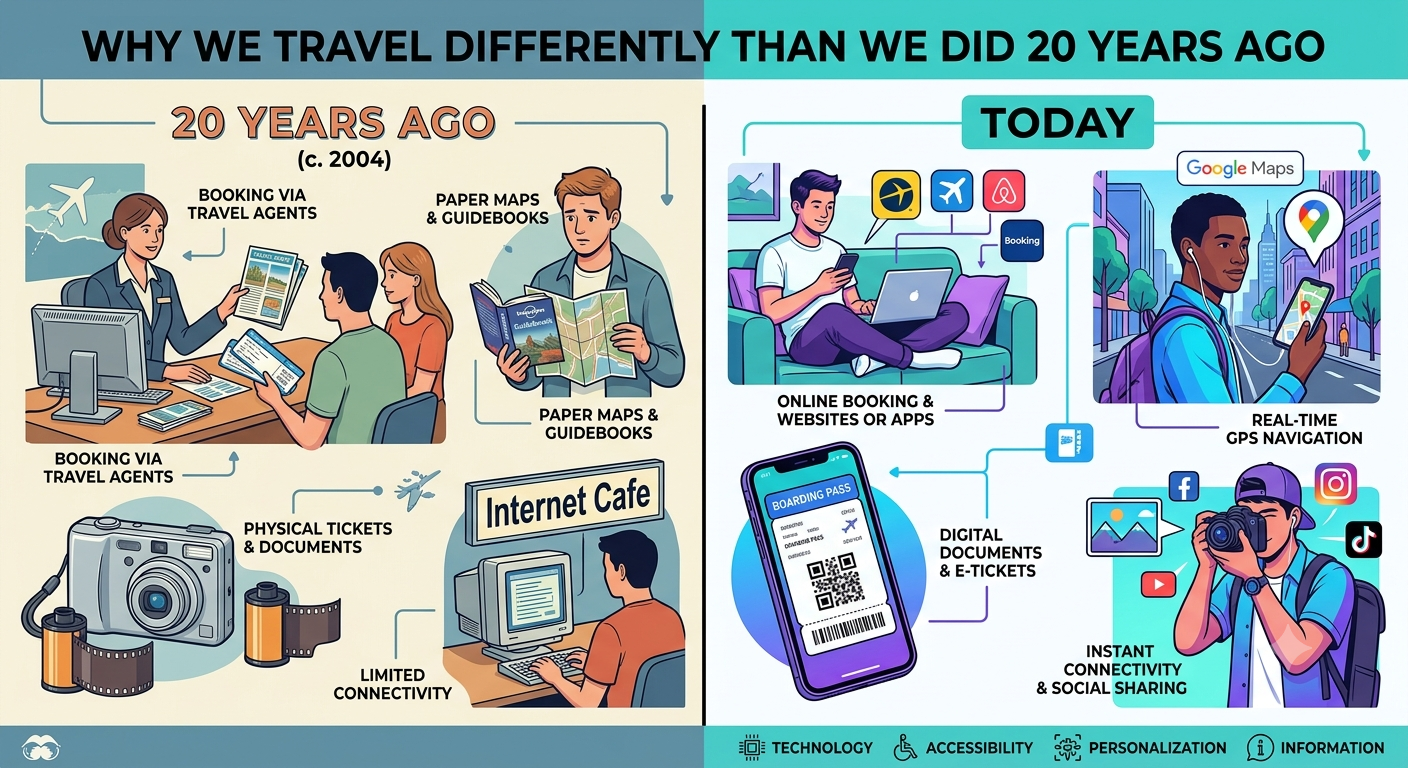

Twenty years ago, planning a holiday looked very different. Most people bought a guidebook, printed hotel confirmations, carried paper maps and exchanged money before leaving home. If you got lost, you asked a local for directions. If you wanted to tell friends about your trip, you waited until you got home to upload your photos.
Today, almost everything fits inside a smartphone.
But while technology has completely transformed the practical side of travel, the biggest change isn’t digital. It’s the way we think about travelling in the first place. Holidays are no longer just an escape from everyday life. For many people, travel has become part of the lifestyle they want to build—a trend that independent publications like The City Theory regularly explore through stories about travel, culture, remote work and modern city living.
We No Longer Plan Every Minute
Not so long ago, most holidays followed a fixed itinerary. Flights, hotels and sightseeing were booked months in advance because making changes on the road wasn’t always easy.
Now, plans can change in minutes.
Need another hotel? Open an app. Want to stay an extra week? Change your booking. Looking for somewhere to eat? Thousands of reviews are already waiting.
Ironically, the easier it has become to organise travel, the less people feel the need to organise everything in advance.
Many travellers now prefer leaving room for spontaneous decisions, unexpected discoveries and recommendations from locals rather than following a strict schedule.
Travel Is No Longer Limited to Annual Leave
One of the biggest shifts over the past two decades has been the rise of remote work.
For millions of people, travel is no longer something that happens once or twice a year. It’s something that fits around work instead of replacing it.
Digital nomads have become a familiar part of life in cities from Bali to Lisbon, while flexible working arrangements allow many professionals to spend weeks or months abroad without taking extended holidays.
This has completely changed what people look for in a destination. Fast Wi-Fi, coworking spaces, affordable accommodation and reliable public transport often matter just as much as beaches or famous landmarks.
People Want to Experience a Place, Not Just Visit It
Twenty years ago, many travellers measured a successful trip by the number of attractions they managed to see.
Today, the opposite is often true.
Instead of rushing through five cities in ten days, people are spending longer in one place. They shop at local markets, discover neighbourhood cafés, use public transport and settle into a temporary routine.
There’s a growing appreciation for everyday experiences that rarely appear in traditional travel brochures.
Sometimes the best memories come from finding a favourite bakery, chatting with locals or watching daily life unfold in a city square rather than standing in another queue for a famous monument.
Social Media Has Changed the Way We Choose Destinations
In the early 2000s, travel inspiration usually came from television programmes, magazines or recommendations from family and friends.
Now a single video can introduce millions of people to a destination overnight.
This has helped many lesser-known places become popular, but it has also changed travellers’ expectations.
Some people chase the same famous viewpoints they’ve seen online, while others deliberately avoid them, searching instead for quieter places that haven’t yet appeared on everyone’s feed.
The idea of finding authentic experiences has become just as important as ticking famous destinations off a bucket list.
Comfort Has Become Part of the Journey
Modern travellers often expect more than just a bed for the night.
Reliable internet, comfortable workspaces, healthy food options and good coffee have become surprisingly important, especially for people combining work and travel.
Accommodation has also evolved. Instead of staying exclusively in hotels, travellers now choose apartments, guesthouses, boutique stays and long-term rentals that feel more like home.
Travel has become less about temporarily escaping everyday routines and more about taking those routines somewhere new.
Slow Travel Is Growing
For many people, travel has become less about covering distance and more about spending time.
Rather than visiting several countries in one holiday, travellers increasingly choose one destination and stay long enough to understand it.
This slower pace often leads to deeper cultural experiences, less stress and a more sustainable approach to tourism.
It also reminds us that sometimes seeing less allows us to experience much more.
Experiences Matter More Than Souvenirs
There was a time when returning from holiday meant bringing gifts for everyone and filling your suitcase with souvenirs.
Today, people are often happier spending that money on memorable experiences.
Cooking classes, hiking adventures, local festivals, wildlife encounters or simply sharing dinner with local residents create stories that last far longer than most souvenirs ever could.
Travel has become increasingly focused on collecting memories rather than possessions.
Technology Has Made Independent Travel Easier
Many journeys that once required a travel agent can now be organised independently within minutes.
Translation apps remove language barriers. Navigation apps make getting lost much less stressful. Digital payments mean travellers rarely need to carry large amounts of cash.
These innovations have made international travel more accessible, particularly for people who might once have found it intimidating.
At the same time, they allow travellers to feel more confident exploring places beyond the traditional tourist trail.
It’s Not Just About Where We Go
Looking back, it’s remarkable how much travel has changed in just two decades. We carry less paper, rely more on technology and have far more freedom to change plans along the way. But the biggest difference isn’t found in our phones or booking apps.
It’s in our mindset.
Many people no longer see travel as something squeezed into two weeks of annual leave. Instead, it’s becoming part of a broader lifestyle built around flexibility, curiosity and experiences. Some people work from different countries, others take extended road trips after retirement, while many simply choose to spend more time getting to know one place instead of rushing through a checklist of attractions.
Travel has become less about escaping everyday life and more about creating an everyday life that’s worth living.
If there’s one thing the past twenty years have shown, it’s that the way we move around the world will continue to evolve. The destinations may change, the technology will certainly improve, but the desire to discover new places—and perhaps discover something about ourselves along the way—is unlikely to disappear anytime soon.