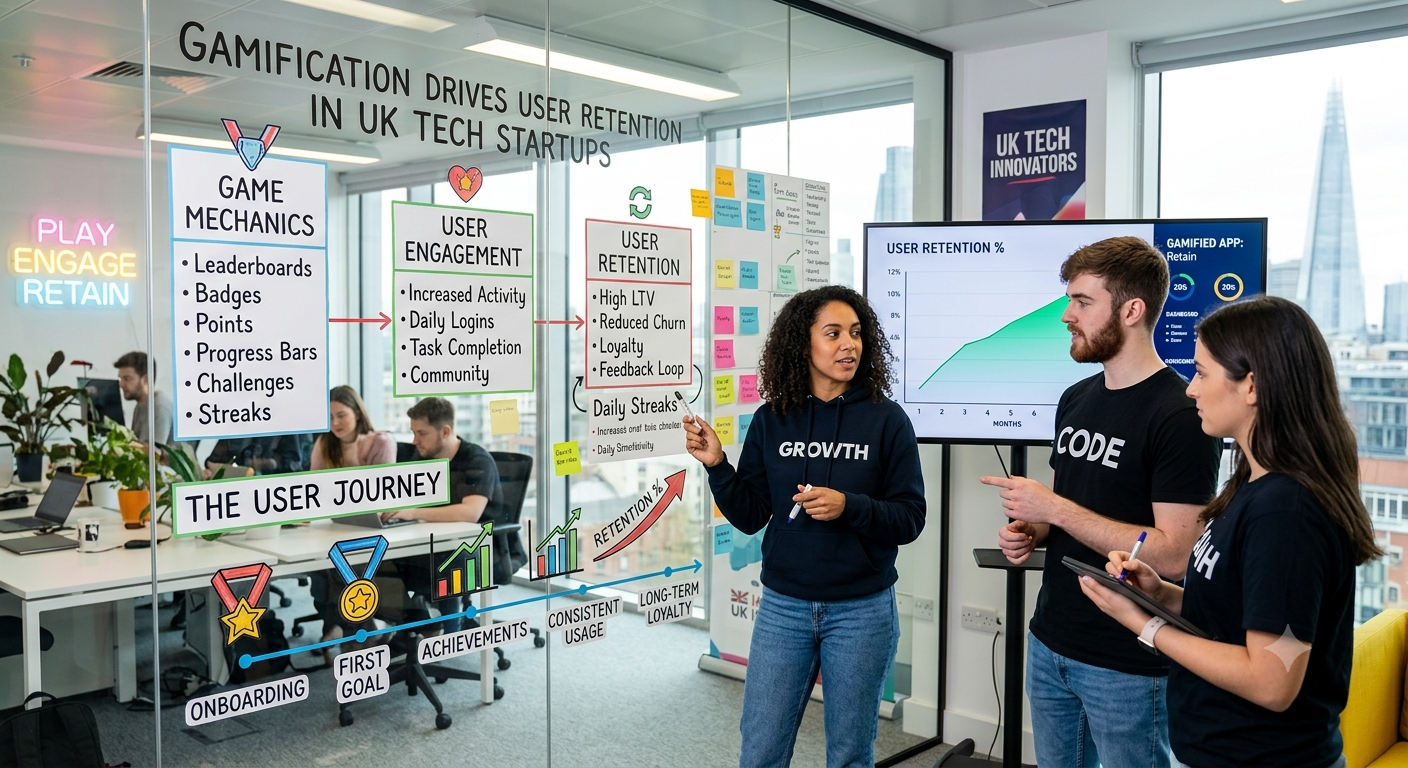

Most people don’t think twice about why they open the same app every morning. A streak counter ticks over, a progress bar inches forward, or a notification reminds them they’re three days away from a reward.
These nudges aren’t accidental. They’re borrowed from industries that have spent decades perfecting repeat engagement, and UK tech startups are now putting them to serious use. Here’s how three very different sectors are applying the same playbook.
Where These Tactics Actually Come From
The mechanics that power most retention strategies in consumer tech didn’t start in Silicon Valley. They started in gambling. Welcome bonuses, free bet clubs, loyalty tiers and reward multipliers were all designed with one goal: get people to come back. The psychology is simple. Give someone a small, unexpected reward after their first action, and they’re far more likely to take a second.
Platforms that catalogue betting offers show just how refined these structures have become. Sign-up bonuses, matched deposits and tiered loyalty schemes are all carefully calibrated to create a habit loop. A new user signs up, places a qualifying bet, receives a reward, and now has a reason to return. That loop is the template that fintech, edtech and wellness apps have adapted for their own purposes.
The difference is context. Betting platforms are upfront about the transaction. Consumer tech wraps the same mechanics in different packaging, but the behavioural triggers are identical.
Revolut and the Fintech Reward Loop
Revolut is probably the clearest UK example of gamification done well in financial services. The app uses leaderboards, referral challenges and cashback rewards to keep users active. One well-known tactic was a student-focused leaderboard that ranked users by how many friends they referred, with top performers earning cash prizes.
But the gamification goes deeper than referral campaigns. The app tracks spending habits and presents them as visual breakdowns and monthly summaries. This gives users a reason to check in even when they’re not making a transaction. They’re reviewing their own data, and that creates a feedback loop.
Gamified fintech apps have been reported to see 30-40% higher daily active user rates compared to traditional banking interfaces. That gap explains why so many UK challenger banks have followed Revolut’s lead.
Duolingo’s Streak Machine
Duolingo isn’t a UK startup, but its influence on UK edtech retention strategy is hard to overstate. The app’s streak system is the benchmark that most learning platforms now measure themselves against.
The mechanic is simple. Complete a lesson every day, and your streak counter goes up. Miss a day, and it resets. But once a user hits a 30 or 100-day streak, the cost of losing it becomes a motivator in itself. Duolingo’s own data shows that users who maintain a seven-day streak are significantly more likely to stay long-term.
UK edtech companies like Seneca Learning have adopted similar streak and badge systems. The principle is the same: make consistency visible, and people will work to maintain it.
Fitness Apps and the Achievement Unlock
Wellness is the third sector where gamification has taken hold. Apps like Strava and Fitbit use badges, milestone rewards and group challenges to keep users moving. Strava’s segment leaderboards turn an ordinary jog into a competitive event, where users compare their route times against hundreds of others.
Fitbit takes a different angle. It awards badges for cumulative milestones like lifetime steps or floors climbed. These are tied to long-term commitment instead of daily performance, which makes them effective at reducing churn after the initial novelty wears off.
The common thread is variable reward scheduling. Users don’t know exactly when they’ll hit the next badge or unlock a new tier. That unpredictability keeps them checking in.
What UK Startups Can Take From All of This
Betting platforms proved that structured reward loops drive repeat engagement. Fintech, edtech and wellness startups have taken those same principles and applied them to products that serve a completely different purpose.
For early-stage UK startups looking to improve retention, the lesson is practical. Build a feedback loop that rewards consistency, make progress visible, and give users a reason to come back tomorrow. The mechanics are well understood. The real challenge is applying them in a way that adds genuine value to the user’s experience.