
Your oven is most likely the hardest-working appliance in the kitchen. However, because it is essentially an enclosed, high-heat environment, there is a common, comforting assumption that it is essentially a self-sterilising box.
Unfortunately, that couldn’t be further from the truth–your oven is not a sterile environment. There are all kinds of nooks, crannies, and surfaces that play host to a surprising variety of contaminants.
Understanding this is the first step toward reclaiming your kitchen hygiene and ensuring your culinary creations remain as healthy as they are delicious.
-
Carbonised Food Deposits
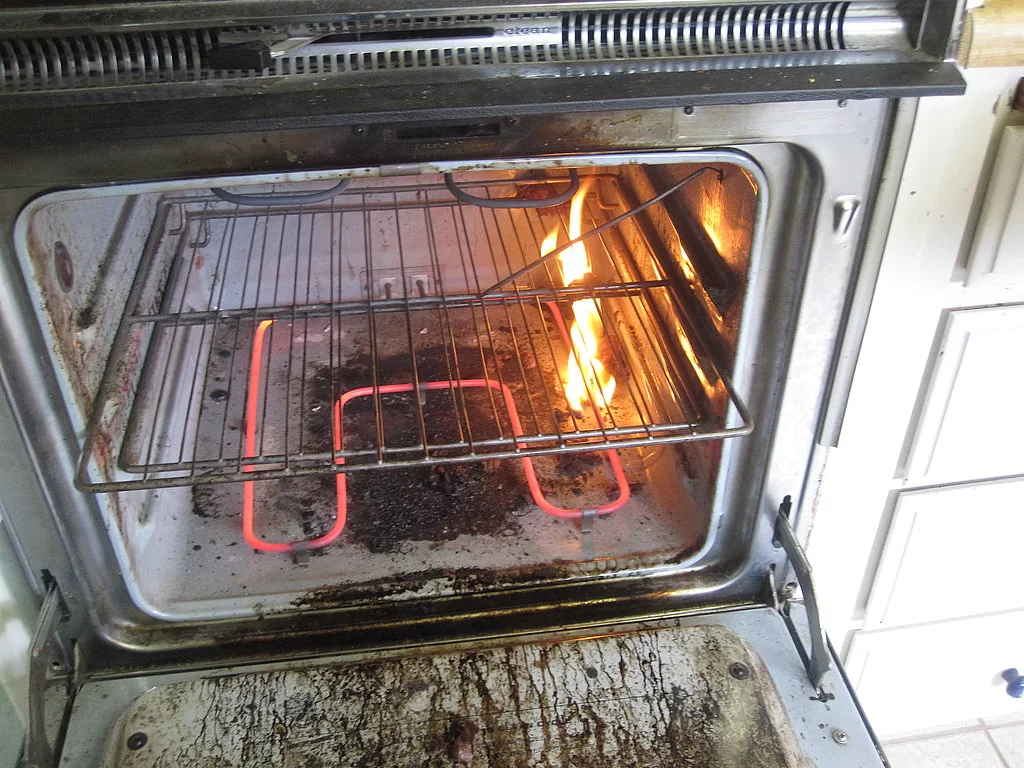
The most visible contaminant in any oven is, of course, the burnt-on food residue. When food spills or splashes during cooking, the high heat causes it to undergo carbonisation.
Sugars and proteins break down and fuse with the oven’s metal surfaces, creating a hard, black, carbonised layer that is incredibly difficult to remove with standard household wipes.
While this might look like harmless burnt sugar, it is actually a haven for future contamination. These crusty layers are porous, meaning they can trap moisture, grease, and other debris that you introduce during subsequent cooking sessions.
Furthermore, these carbon deposits can alter the flavour profile of your food, imparting a bitter, smoky, or burnt taste to even the freshest ingredients.
Over time, these layers thicken, and once carbonisation is established, they require abrasive action to be removed, which often risks scratching the delicate enamel coatings of your oven interior.
-
Accumulated Grease And Oil Splatters
Grease is the invisible, pervasive enemy of the modern oven.
When we roast meats or cook with oils, a fine mist of grease is released into the oven’s atmosphere. This mist settles on the walls, racks, fan, and door glass.
Over time, these microscopic splatters accumulate into a thick, tacky film notorious for trapping dust and debris. This layer of oil acts like a permanent adhesive for everything else, attracting stray food particles and floating dust.
Beyond hygiene, grease buildup is a significant fire hazard. In a high-heat environment, a thick, old coating of oil on the heating elements or the fan housing can ignite.
It is the main cause of kitchen fires and, in the short term, creates heavy, acrid smoke that can fill your home whenever you preheat the oven. Regularly tackling this grease is not just a cleaning chore but a critical safety measure for your property.
-
Hidden Bacteria And Mould
It is easy to imagine that an oven reaches temperatures high enough to scorch away any biological threat.
While that is true for the direct cooking zones during a high-heat bake, it does not account for the seals, the hinges, and the areas behind the control knobs. These peripheral parts of the oven never reach sterilising temperatures.
In the warm, humid, and often dark environment of a kitchen, these crevices become perfect breeding grounds for bacteria and mould. Spores can settle into the rubber door seals, where they thrive on trapped moisture and microscopic food particles.
When you open and close the door, you risk cross-contamination, as these spores can be disturbed and settle onto your plates or serving platters, potentially affecting the safety of your food.
Many people neglect these seals entirely, but they are crucial for both heat retention and the sanitation of your oven’s environment.
-
Harsh Cleaning Agent Residues
In our desperation to remove the stubborn carbon and grease, many of us turn to heavy-duty, store-bought oven cleaners.
These products are often packed with aggressive chemicals, including lye (sodium hydroxide) and ammonia, designed to dissolve grime on contact.
The problem arises when these chemicals are not thoroughly rinsed away after use. It is remarkably difficult to wipe down every surface of a large, awkward appliance, and residue often remains hidden in the corners, under the heating elements, or on the fan housing.
During the next cooking cycle, this residue can off-gas, releasing chemical fumes that can irritate the eyes, throat, and lungs. Ingesting traces of these caustic cleaners through food cooked in the oven is a genuine, yet frequently overlooked, health concern.
It is important, then, to use cleaning products safely and ensure every trace is removed before the appliance is fired up again.
-
Combustion By-Products And Carbon Monoxide Risks
For those with gas ovens, the list of contaminants is even more complex and potentially dangerous.
Efficient combustion requires a clean path for air to flow through the burner. When the burner ports or the surrounding areas are choked with grease, carbon, and soot, the combustion process becomes incomplete.
This doesn’t just mean your oven takes longer to heat up or cooks unevenly; it means the appliance may start producing carbon monoxide, a colourless, odourless, and deadly gas.
Even at lower levels, incomplete combustion can release unburnt hydrocarbons and other toxic by-products into your kitchen.
Regular maintenance ensures that the flame remains blue and steady, which is the hallmark of efficient, safe operation.
If you notice yellow or flickering flames rather than crisp blue ones, it is a clear sign that the combustion system requires immediate professional attention to prevent dangerous gas buildup.
-
Household Dust And Micro-Particulates
We often forget that our homes are filled with suspended dust, pet dander, and micro-particulates.
When you use your oven, especially if the fan is active, it acts as an air filter, circulating the air inside the kitchen cavity. Any airborne dust is pulled toward the oven and can settle on internal surfaces or even be sucked into the cooling fans and electronics housing.
Over time, this dust bakes into the surfaces, creating a dull, grey film that is notoriously hard to remove.
While this might seem like a mere cosmetic issue, the accumulation of dust in the oven’s inner workings can cause mechanical strain on the fan motor and overheating of electrical components, shortening your appliance’s lifespan.
Keeping the exterior vents clear and the kitchen environment as dust-free as possible can help mitigate these internal contaminants.
The Benefits Of Professional Oven Cleaning
When the buildup of carbon, grease, and baked-on grime becomes overwhelming, the most effective solution is to enlist professional help.
While DIY attempts can often leave residue or fail to reach the complex parts of the oven, a kitchen oven cleaning service in Manchester uses specialised equipment and eco-friendly solutions to safely remove deep-seated carbon, grease, and those hidden contaminants.
This service ensures that even the most hard-to-reach areas, like fan housings and seals, are thoroughly sanitised, effectively resetting your oven to a near-showroom state.
Professional cleaners have the expertise to disassemble removable parts, soak them in high-performance dip tanks, and meticulously hand-clean the interior, ensuring that no caustic residue is left behind.
This not only improves the hygiene of your cooking environment but also enhances the appliance’s efficiency, ensuring it heats faster and more evenly for years to come.
Conclusion
We know that cleaning the oven isn’t on anyone’s list of weekend fun things to do, yet for the 6 reasons above, we strongly recommend you don’t put it off, especially if it’s been quite a while since you last tackled it, and even if you have to hire the pros for a proper deep clean.
After all, a clean oven is an efficient oven, and a little proactive attention goes a long way toward keeping your home’s most important appliance working exactly as it should.