
Quick Summary
Have you ever set up an ad campaign, received some clicks and impressions, and wondered why no one is turning into real customers? Then this PPC campaign guide is just what you need. We’ll walk you through the steps to create high-converting PPC campaigns so you not only get clicks but also gain genuine conversions.
Introduction
Without a clear plan, PPC ads usually end up costing more than they should. This PPC campaign guide explains what PPC (Pay-Per-Click) advertising is and offers insights into creating high-converting PPC campaigns, along with best practices that can lead to substantial improvements. Whether you’re new to paid advertising or aiming to improve your PPC strategy for 2026, this guide provides a straightforward PPC campaign plan you can implement immediately to start achieving your desired results.
What is PPC?
PPC (Pay Per Click) is an advertising model where advertisers pay only for the clicks their ads receive. They set the maximum CPC they are willing to pay, whether through advertising platforms or auction-based systems that use real-time bidding.
Performance and conversion-focused marketing campaigns are mainly built using the PPC advertising model, as it allows you to pay only when users show genuine interest in your PPC campaigns.
How to Create High-Converting PPC Ad Campaigns in 2026?
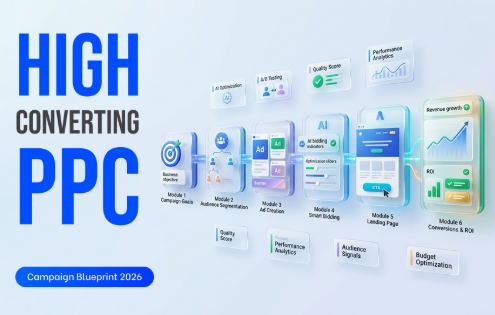
Follow these steps to create high-converting PPC campaigns that not only attract traffic but also deliver real conversions.
-
Define Your PPC Ad Goals
Advertisers in a rush to launch ad campaigns forget to ask the most important question: what result do I actually want to achieve?
It may seem obvious, but this is where most advertisers stumble. They jump directly into keywords and budgets without a clear goal, then wonder why the results feel random. So ask yourself, do you want to:
- Create Brand Awareness
- Increase Lead Generation
- Retarget Existing Users
- Improve Business ROI
Each goal requires a specific PPC advertising strategy tailored with different bidding, ad copy, metrics, or even a different platform. The more accurately you define your goals, the better you’ll be at creating a high-converting PPC campaign strategy that produces real results, since everything else revolves around your goal.
-
Perform Audience Segmentation
Not everyone who sees your ad is your target audience. Treating all viewers the same is a wrong advertising strategy that only wastes your ad budget.
Audience segmentation involves dividing your audience into smaller, more targeted groups based on behavior, demographics, intent, and their stage in the buyer’s journey. The more precise your segments, the more relevant your ads are and the higher your conversion rate.
-
Choose a Mix of Advertising Platforms
If you rely on just one advertising platform, it ll will limit your reach and can quickly drain your budget. Instead, diversify your efforts across reliable, trustworthy platforms that offer robust targeting and tracking to effectively measure and optimize PPC campaigns.
One option to consider in 2026 is 7SearchPPC, which combines various ad formats, cost-effective pricing, high-quality traffic, precise targeting, and postback tracking—all within a single platform.
-
Create PPC Ads That Match User Intent
Every user has different goals, interests, and needs. Creating one generic ad and expecting the desired results is a big mistake.
Take your time to understand your audience’s preferences, needs, and demographics, then create multiple ad variations to determine what resonates most. Scale the top-performing ads and continue testing and refining as you gather data.
This approach also helps you capture a wider range of relevant keywords and create high-converting PPC campaigns.
-
Allocate Budget & Bidding Smartly
Don’t just set a budget and forget about it. Keep managing it. Start with a daily budget that aligns with your campaign goals, then check how it’s performing across your selected keywords and platforms.
You have to pick a bidding strategy that matches your goals: manual CPC gives you more control when you’re starting out, while automated bidding helps you scale once you have enough conversion data.
Use postback tracking and analytics tools to get a clear, accurate picture of which conversions are genuinely linked to your ad spend, then reallocate budget from underperforming campaigns to the ones delivering real results.
-
Create a Dedicated Landing Page
Sending PPC traffic straight to the homepage or a generic page is a missed opportunity.
Create a landing page that matches the intent of your ad. Use the same message, offer, and tone. Keep the CTA clear and direct, and remove distractions like extra navigation that pull visitors away before they convert.
Consider using pre-landers, too. They warm up the audience with helpful context or a soft pitch before leading into the main offer. It builds trust and improves conversion rates, especially for cold traffic or less familiar offers.
A landing page tailored specifically for your PPC campaign not only seems to receive more relevant clicks but also consistently achieves better conversion rates than a generic page.
Proven PPC Best Practices for Better Campaign Performance
The best PPC advertising practices that maintain campaign efficiency include smart targeting, ongoing testing, and data-driven optimization instead of guesswork. Let’s explore them.
- Ensure Ad Relevance: Aligning your ad copy with searcher intent enhances engagement and reduces costs, making this one of the easiest ways to improve PPC campaign performance.
- Perform AI PPC Optimization: Using AI for bidding and targeting allows campaigns to adapt instantly, outperforming manual campaign management and saving hours of guesswork.
- Improve Quality Score: Focusing on relevance, CTR, and landing page experience increases your Quality Score, which leads to lower costs per click and better ad placements.
- Perform A/B Testing: Consistently testing ad variations and landing pages helps you find what truly resonates, leading to steady, cumulative performance improvements.
- Monitor Cost Per Click (CPC): Actively manage and optimize your CPC to keep your budget efficient. This helps you get more high-quality traffic and conversions without overspending.
All Set to Create High-Converting PPC Campaigns!
Creating a high-converting PPC campaign isn’t complicated, but it does require time and effort. Take time to understand your audience, test your ads consistently, and invest in strategies that truly deliver results. This guide covers the essentials of PPC: what it is, how to set up a high-converting PPC campaign step by step, and best practices for 2026.
Remember, no one gets a high-converting PPC campaign right on the first attempt. Real success comes from scaling up the ads that perform well, eliminating those that don’t, and refining your strategy with each iteration.
Frequently Asked Questions (FAQs)
-
How can I create PPC ad campaigns that align with my audience’s interests and generate the desired revenue?
Start with detailed audience segmentation based on demographics, behavior, intent, and funnel stage. Tailor ad copies, creatives, and landing pages to meet each segment’s needs, and execute precise targeting. Regularly monitor PPC campaign performance to kill campaigns that fail to engage your audience or generate the desired revenue.
-
What are the best PPC advertising platforms in 2026?
7SearchPPC, Google Ads, and Meta are the leading PPC advertising platforms in 2026.
-
What are the best PPC conversion optimization techniques?
Use the following best practices to improve your PPC conversion rates.
- Align landing page relevance with ad copy.
- Keep CTAs clear and concise.
- Fix broken links on your landing page.
- Optimize page speed for faster load times.
-
How can I perform keyword research for my PPC ad campaigns?
Use high-performing keyword tools to identify high-intent keywords for your PPC ads. Prepare a detailed sheet that lists search volume, difficulty, and cost-per-click for a range of keywords.
-
What are the most common PPC advertising mistakes to avoid?
Some of the most common PPC advertising mistakes to avoid are:
- Relying solely on a single advertising platform.
- Not having a dedicated budget for A/B testing.
- Ignoring compliance requirements.
- Not setting Postback Integration and other analytical tools.
- Not utilizing peak engagement moments and trends.
- Not adjusting bids based on collected data.