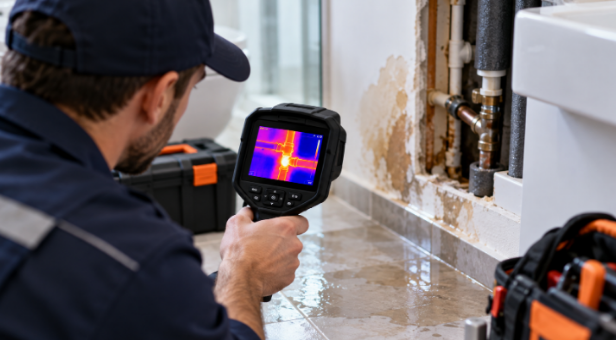

Water leaks are among the most common yet underestimated problems affecting residential and commercial properties. While a burst pipe or visible water leak is usually discovered quickly, hidden leaks can remain unnoticed for weeks or even months. During that time, escaping water may damage walls, floors, insulation, electrical installations, and structural components.
Finding the exact source of a hidden leak is therefore an important part of protecting a property and avoiding unnecessary repair work. Modern leak detection techniques allow professionals to locate many plumbing problems without immediately opening walls or removing large sections of flooring.
Why Hidden Water Leaks Can Be Difficult to Locate
Not every leak appears directly beneath the damaged pipe. Water can travel along pipes, structural elements, insulation, or other building materials before becoming visible. As a result, a damp patch on a wall or ceiling does not necessarily reveal the actual location of the plumbing failure.
Common warning signs include unexplained increases in water consumption, damp or discoloured areas, peeling paint, musty odours, reduced water pressure, and the sound of running water when taps and appliances are switched off.
When these symptoms appear without an obvious cause, professional water leak detection can help determine where further investigation should be focused. Identifying the source accurately can reduce unnecessary demolition and allow repairs to be planned more efficiently.
Modern Methods for Detecting Plumbing Leaks
Professional leak detection may involve several diagnostic techniques depending on the type of property, pipe system, and suspected problem.
Acoustic equipment can be used to detect sounds and vibrations created by pressurised water escaping from a damaged pipe. Thermal imaging may help identify temperature differences associated with moisture or leaking hot-water pipes. Pressure testing can also provide useful information when determining whether a closed plumbing system is losing pressure.
In some situations, tracer gas or other specialised diagnostic methods may be appropriate. Using several techniques together can help narrow down the location of a leak before invasive work begins.
Why Accurate Detection Matters
Traditional trial-and-error methods can involve opening several sections of a wall or floor before the damaged pipe is found. This creates additional repair costs and disruption that may have little to do with fixing the original plumbing problem.
Accurate water leak and pipe fault detection can help minimise this unnecessary work. Once the suspected location has been identified, plumbers or repair specialists can concentrate on a much smaller area.
This is particularly valuable when pipes are concealed beneath concrete floors, behind finished walls, inside service shafts, or in other locations that are difficult to access.
Acting Early Can Limit Secondary Damage
Even a relatively small leak can release a significant amount of water over time. Persistent moisture can damage flooring, plaster, furniture, and decorative finishes. It may also create conditions that encourage mould growth and deterioration of building materials.
Property owners should therefore investigate unexplained moisture rather than waiting for the problem to become more obvious. Early diagnosis can make the difference between a targeted plumbing repair and extensive restoration work.
A More Efficient Approach to Plumbing Problems
Modern diagnostic equipment has changed the way hidden plumbing failures can be investigated. Instead of relying exclusively on visible symptoms and exploratory demolition, technicians can gather information about what is happening inside concealed areas of a building.
No detection method can eliminate the need for repair once a pipe has failed, but accurately locating the problem can make the repair process considerably more efficient. For homeowners and property managers, this means less disruption, fewer unnecessary openings, and a clearer understanding of the work required.
When there are signs of unexplained water loss or moisture, identifying the source as early and accurately as possible is one of the most effective ways to limit property damage and plan the appropriate repair.