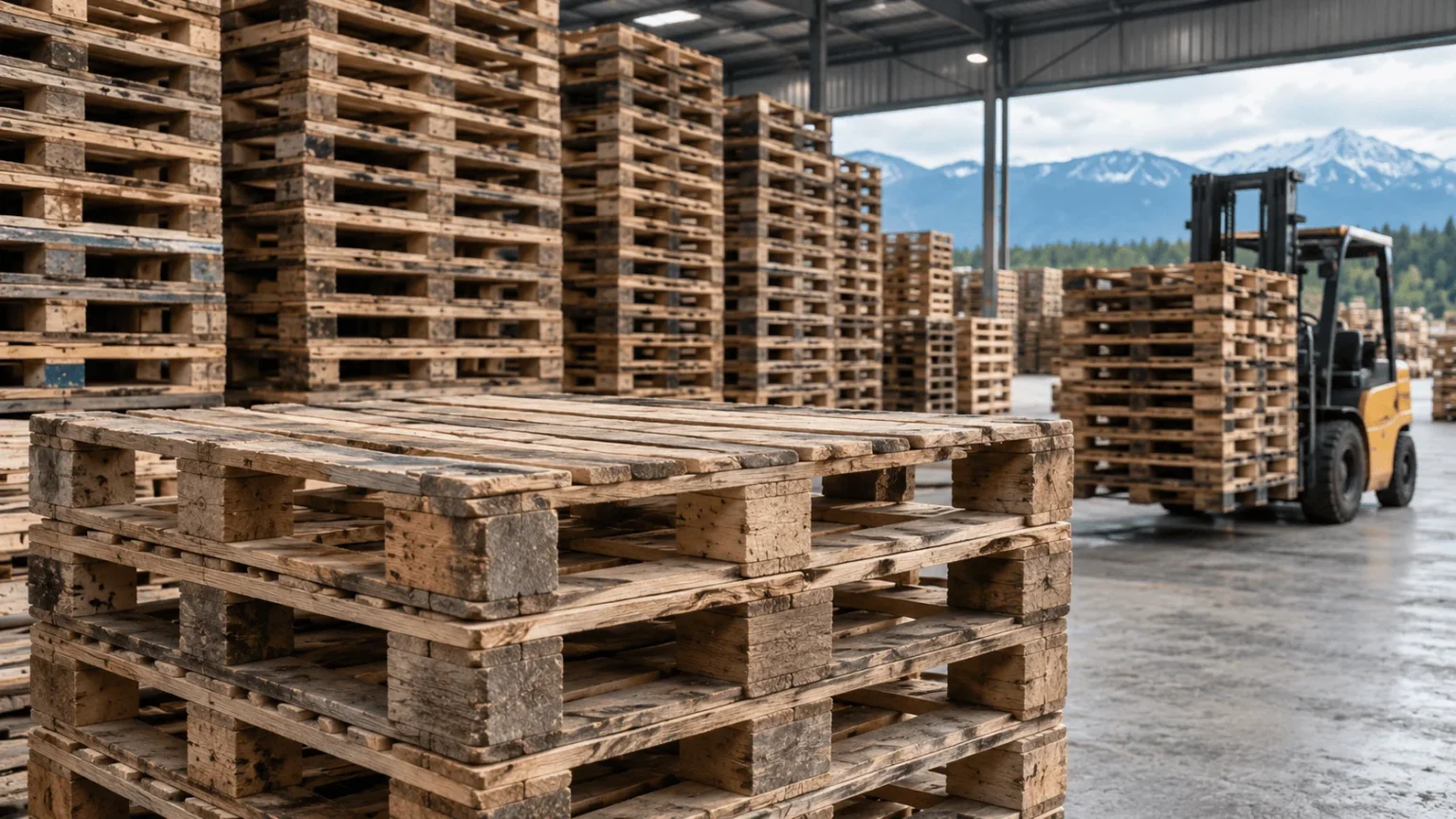

Pallet decisions rarely get the same attention as equipment purchases or staffing plans, but they shape daily operations in ways that are easy to underestimate. A warehouse running mismatched or compromised pallets deals with slower throughput, equipment strain, and compliance questions that add up quietly over time. When procurement teams sit down to evaluate pallet sourcing, they often find that the terminology itself creates confusion. New, recycled, and cleaned pallets are not interchangeable categories, and treating them as such tends to produce inconsistent results.
This guide is written for warehouse managers and operations leads who need a clear, grounded comparison of these three pallet types — what each one actually means in practice, where each category performs well, and what trade-offs matter most depending on your industry, volume, and operational standards.
Understanding What These Three Categories Actually Mean
The terms “new,” “recycled,” and “clean” are used loosely across the pallet industry, and that looseness creates real sourcing problems. New pallets are manufactured without any prior use — they arrive from the mill or manufacturer and enter your facility for the first time. Recycled pallets, sometimes called used or repaired pallets, have passed through prior supply chains and may have been repaired, sorted, or resold after a prior service life. The category that tends to generate the most questions is the third one. Understanding what clean pallets actually involves — inspection, sanitization, structural grading, and contaminant removal — matters because the term implies a quality standard, not just a cosmetic treatment. Cleaned pallets are not simply used pallets that have been rinsed off. They go through a defined process to reach a condition suitable for regulated or sensitive environments.
Why Definitions Matter More Than Price Tags
When procurement teams evaluate pallets primarily on cost per unit, they often end up sourcing across categories without realizing it. A supplier offering “good used” pallets may be delivering recycled product that ranges widely in condition, while another supplier’s “reconditioned” inventory may actually meet cleaning and inspection standards comparable to the cleaned category. Without clear definitions in purchasing agreements, facilities absorb the variance in the form of load failures, rejected shipments, and audit findings. The category matters because it sets the expectation for what arrives — and what you are accountable for once it does.
New Pallets: When a Clean Slate Is Worth the Cost
New pallets offer a known starting point. They carry no history of prior loads, no unknown contaminants from previous supply chains, and no structural fatigue from prior use cycles. For operations where origin documentation matters — food manufacturing, pharmaceutical distribution, and certain export shipments — new pallets eliminate a class of questions that recycled or cleaned pallets cannot fully answer. There is no uncertainty about what the wood was exposed to before it arrived in your facility.
The Practical Trade-Off in High-Volume Operations
The primary limitation of new pallets in most warehouse settings is straightforward: cost and return logistics. A facility moving high volumes of outbound product does not always recover its pallets, and sourcing new product on every cycle is expensive at scale. New pallets also require break-in handling in certain automated systems — wood that has never been loaded can behave differently under initial stress than seasoned material. For facilities where pallets stay internal, circulate within a closed loop, or support highly regulated product categories, the cost of new pallets is typically justified. For open-loop distribution where pallets leave and do not return, sourcing new product for every cycle becomes difficult to sustain economically.
Export and Compliance Considerations
New pallets carry specific advantages in international shipping. Heat-treated wood used in new pallet manufacturing is subject to phytosanitary standards — the International Plant Protection Convention’s ISPM 15 guidelines govern how wood packaging must be treated before crossing borders. New pallets that carry proper treatment marks remove a compliance variable from outbound export shipments. For operations that ship internationally with any frequency, this regulatory consideration carries real weight in the sourcing decision.
Recycled Pallets: Practical, Variable, and Often Misunderstood
Recycled pallets represent the largest share of the pallet market in the United States by volume. They are a practical sourcing option for many warehouse operations, particularly those handling general freight, manufacturing inputs, or bulk distribution where pallet condition is a secondary concern to load capacity and availability. The value proposition is real — recycled pallets cost significantly less than new product, and for applications where appearance and surface condition are not critical, they perform the same mechanical function.
Grading and Condition Inconsistency
The central operational risk with recycled pallets is consistency. The industry uses grading language — A-grade, B-grade, combo — but these grades are not standardized across suppliers. One supplier’s A-grade may represent a different condition threshold than another’s. This means a facility relying on recycled pallets for forklift operations, racking systems, or automated material handling needs to establish clear specifications and inspect incoming product regularly. Load failures from structurally compromised pallets are not common, but when they occur, the costs in damaged product, equipment downtime, and worker safety incidents are disproportionate to the savings from cheaper sourcing.
When Recycled Pallets Work Well
For operations with defined internal loops, staging areas, or raw material storage where pallets do not contact finished product and are not subject to regulatory inspection, recycled pallets are a sound choice. They also work well in applications where a dedicated vendor relationship allows for better quality control over incoming condition. The key is not avoiding recycled pallets — it is understanding where the variability is acceptable and where it is not.
Clean Pallets: A Category Built Around Specific Operational Needs
Cleaned pallets occupy a specific position in the market — they address the gap between new pallets and standard recycled product for facilities that need documented cleanliness and structural reliability without the cost of sourcing new material on every cycle. The cleaning process typically involves debris removal, pressure washing or sanitization, structural inspection, and rejection of pallets that do not meet a defined condition threshold. What remains is a recycled pallet that has been processed to a consistent standard.
Industries Where This Category Has Specific Value
Facilities handling food-grade products, consumer packaged goods, pharmaceuticals, and personal care items are the primary users of cleaned pallets. These environments deal with audits, third-party certifications, and retailer compliance programs that require documented attention to pallet condition. A pallet that has been through a cleaning and inspection process provides a clearer chain of custody argument than standard recycled product. It also reduces the risk of foreign material contamination from wood debris, residual product, or pest activity — risks that are taken seriously in any food safety management system.
Connecting Condition to Cost of Risk
Cleaned pallets cost more than standard recycled product but less than new. The business case depends on what the alternative risk actually costs. A single contamination event in a food distribution facility — traced back to pallet condition — can result in product withdrawal, customer claims, and audit findings that dwarf the cost difference between recycled and cleaned sourcing over months of operations. For facilities where the consequence of a pallet-related incident is low, the premium may not be justified. For those where consequences are high, the cost calculation typically supports the upgrade.
Choosing the Right Category for Your Operation
There is no universal answer to which pallet type serves a warehouse operation best. The decision depends on a combination of factors that are specific to how your facility operates, what you handle, and where your compliance obligations sit.
- Facilities running closed internal loops with non-regulated product typically find recycled pallets are sufficient when paired with a reliable supplier and consistent incoming inspections.
- Operations handling food, pharmaceutical, or consumer goods in environments subject to third-party audit generally benefit from cleaned or new pallets, depending on volume and cost tolerance.
- Export-oriented operations should evaluate new heat-treated pallets for international shipments where phytosanitary compliance is required, regardless of what they use internally.
- Facilities using automated material handling systems — conveyors, robotic picking, high-density racking — should prioritize dimensional consistency and structural uniformity, which cleaned and new pallets offer more reliably than open-market recycled product.
- Operations with high pallet turnover and open-loop distribution need to weigh recovery rates honestly before committing to new pallets at scale.
Closing Considerations for Warehouse Procurement
The pallet category decision is not a one-time procurement choice — it is an operational policy that affects safety, product integrity, equipment reliability, and compliance standing over time. Warehouse managers who approach this decision with clear operational criteria tend to get more consistent results than those who treat it purely as a cost-per-unit calculation.
New pallets offer certainty of origin and condition. Recycled pallets offer cost efficiency with variable quality. Cleaned pallets offer a middle path grounded in process rather than assumption. Each category has a legitimate place in US warehouse operations, and many facilities use more than one category depending on the application area within the same building.
The most useful step a procurement team can take is to write down the actual requirements for each pallet use case in their facility — what the pallet contacts, what audits it is subject to, how it moves through the system, and what happens if a pallet fails — before sourcing. That operational clarity tends to make the category decision straightforward, and it gives suppliers enough information to deliver product that actually fits the environment it is entering.