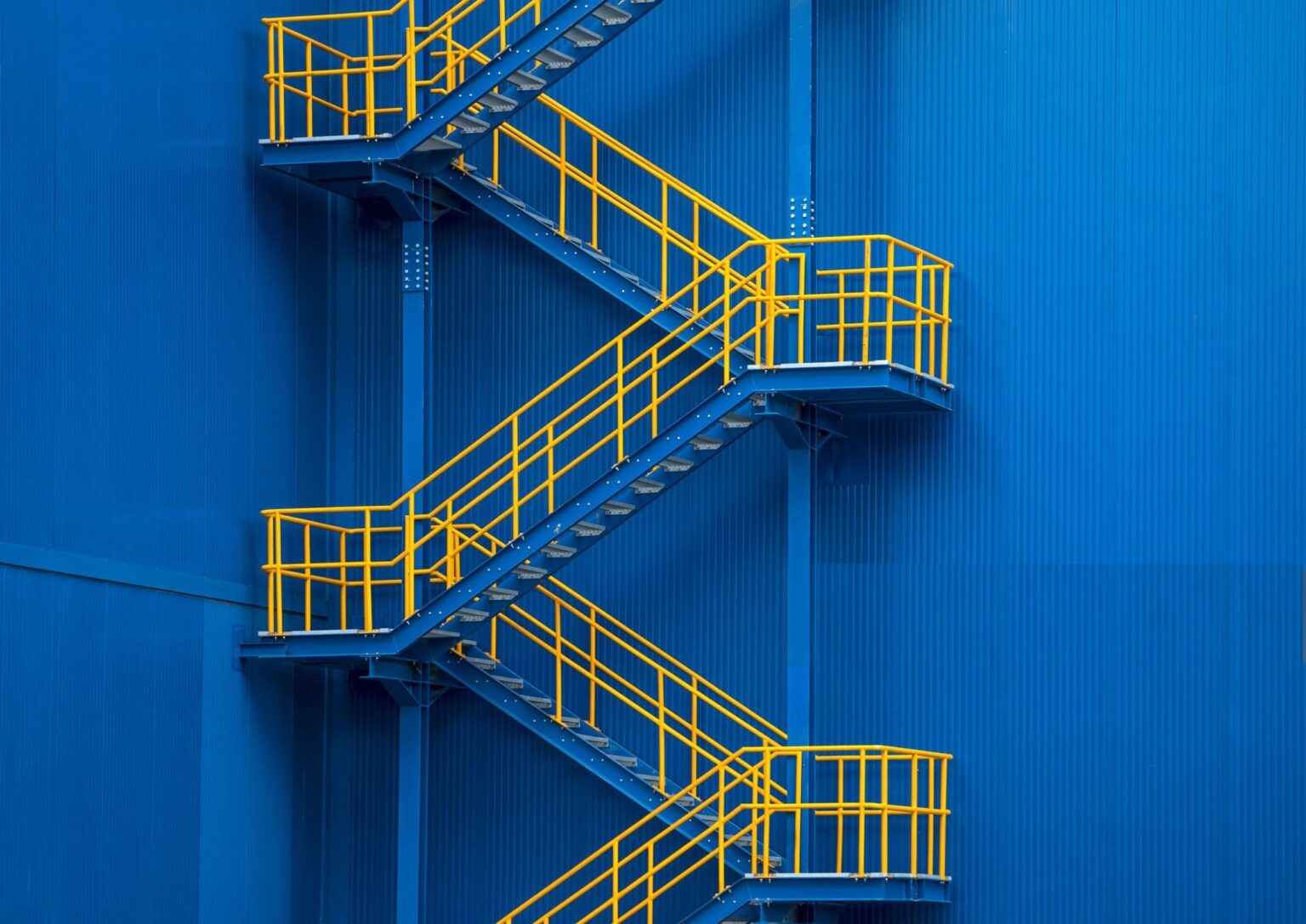

Steel staircase selection in New York City construction projects requires understanding two fundamentally different approaches: industrial and architectural applications. Each serves distinct building functions, carries different load requirements, and operates under separate performance expectations. The wrong choice affects long-term maintenance costs, occupant safety, and regulatory compliance across the building’s operational life.
Building owners, facility managers, and construction professionals face mounting pressure to balance initial investment with decades of reliable service. Steel stairs represent critical infrastructure components that must perform consistently under varying environmental conditions, usage patterns, and safety requirements. Poor specification decisions create costly retrofits, extended downtime, and potential liability exposure.
This specification guide examines the operational differences between industrial and architectural steel stairs, helping decision-makers align stair selection with actual building requirements and performance expectations.
Understanding Industrial Steel Stair Applications
Industrial steel stairs prioritize function over form, designed specifically for heavy-duty environments where durability and safety take precedence over visual appeal. These installations typically serve manufacturing facilities, warehouses, utility buildings, and service areas where workers access elevated equipment, mezzanines, or rooftop mechanical systems.
The design philosophy centers on withstanding harsh conditions including temperature fluctuations, chemical exposure, frequent use, and potential impact from equipment or materials. For projects requiring robust stair solutions, custom steel stairs new york installations often incorporate industrial-grade specifications to meet these demanding operational requirements.
Industrial stairs feature simplified construction methods that reduce maintenance complexity while maximizing structural integrity. Open-riser designs allow debris to fall through rather than accumulate, reducing cleaning requirements and preventing slip hazards. Galvanized or painted finishes provide corrosion resistance without requiring frequent refinishing.
Material Selection and Construction Methods
Industrial applications rely on carbon steel construction with hot-dip galvanizing or industrial-grade paint systems for corrosion protection. The material selection emphasizes strength-to-weight ratios and cost-effectiveness over aesthetic considerations. Stringers typically use channel or angle iron construction, providing robust support while maintaining relatively simple fabrication requirements.
Treads incorporate anti-slip surfaces through diamond plate patterns, serrated edges, or applied grip strips. These surface treatments maintain traction even when exposed to oils, water, or debris common in industrial environments. The standardized tread dimensions and consistent rise-run relationships reduce fabrication costs while ensuring code compliance.
Load Requirements and Safety Factors
Industrial stairs must accommodate concentrated loads from workers carrying tools, equipment, or materials up and down the structure. Design loads typically exceed standard commercial requirements, accounting for potential overloading during maintenance activities or emergency situations.
Safety features include extended handrail returns, intermediate rails to prevent falls, and toe plates where required. The robust construction approach builds in additional safety margins beyond minimum code requirements, recognizing that industrial environments present higher risk exposure than typical commercial applications.
Architectural Steel Stair Considerations
Architectural steel stairs serve as both functional elements and design features within commercial, institutional, and high-end residential buildings. These installations must balance structural performance with visual appeal, often becoming focal points that contribute to the overall building aesthetic while maintaining full functionality.
The design process involves collaboration between structural engineers, architects, and fabricators to achieve specific visual goals without compromising safety or performance. Material selection, finish quality, and construction details require higher precision and quality control compared to purely functional installations.
Architectural applications often incorporate complex geometries, custom connections, and specialized finishes that demand advanced fabrication techniques. The resulting structures serve building occupants for decades while maintaining their visual appeal and structural integrity under normal commercial use patterns.
Design Integration and Visual Requirements
Architectural stairs must harmonize with surrounding interior or exterior design elements, requiring careful consideration of proportions, materials, and finishes. The structural elements often remain exposed, making fabrication quality and finish consistency critical to the overall appearance.
Custom details such as curved stringers, floating treads, or integrated lighting require precise fabrication and installation. These design features increase complexity but create distinctive architectural elements that enhance building value and occupant experience. The additional investment in design and fabrication typically reflects the building’s overall quality expectations and target market.
Finish Quality and Maintenance Requirements
Architectural installations require higher-quality finishes that maintain their appearance over extended periods. Paint systems may involve multiple coats with specific color matching, while exposed steel might receive clear protective coatings to preserve the natural material appearance.
The finish selection affects long-term maintenance requirements and costs. High-traffic architectural stairs need finishes that resist wear while allowing for periodic refinishing without complete reconstruction. Maintenance accessibility becomes crucial since architectural stairs often occupy prominent locations where extended downtime affects building operations.
Structural Performance Differences
The structural approach differs significantly between industrial and architectural applications, driven by varying load requirements, span limitations, and connection methods. Industrial stairs typically follow standardized designs with proven load paths and simplified connections, while architectural installations may require custom engineering for unique geometries or loading conditions.
Load distribution methods reflect these different approaches. Industrial stairs often use direct bearing connections and standard member sizes, creating predictable load paths that simplify analysis and fabrication. Architectural designs may incorporate moment connections, cantilevered elements, or complex load transfer mechanisms that require specialized engineering and fabrication expertise.
Connection details reveal the fundamental differences between these applications. Industrial connections prioritize reliability and inspectability, using standard bolt patterns and accessible fasteners. Architectural connections often conceal fasteners or use specialized hardware that maintains clean visual lines while providing adequate structural capacity.
Code Compliance and Safety Standards
Both industrial and architectural stairs must meet applicable building codes, but the interpretation and application of requirements varies based on occupancy type and intended use. New York City building codes establish minimum requirements for dimensions, load capacity, and safety features, but specific applications may require additional standards.
Industrial environments often reference additional safety standards beyond basic building codes, particularly for process industries or hazardous locations. These supplementary requirements may affect materials, finishes, or construction details beyond standard commercial applications.
Architectural installations must balance code compliance with design goals, sometimes requiring alternative compliance methods or additional engineering to achieve specific visual objectives while maintaining required safety performance.
Cost Implications and Project Planning
Budget considerations extend far beyond initial construction costs, encompassing long-term maintenance, replacement schedules, and operational impact. Industrial stairs typically offer lower initial costs but may require more frequent maintenance or eventual replacement due to harsh operating conditions.
Architectural stairs involve higher upfront investment in design, materials, and fabrication quality, but often provide longer service life with appropriate maintenance. The cost analysis must consider the building’s expected lifespan, maintenance capabilities, and replacement accessibility when comparing options.
Project scheduling differs substantially between industrial and architectural installations. Industrial stairs can often proceed on standard fabrication timelines with minimal design development, while architectural projects require extended design phases, material lead times, and specialized installation procedures.
Maintenance and Lifecycle Considerations
Long-term maintenance requirements vary dramatically between industrial and architectural applications. Industrial stairs need regular inspection for structural integrity, corrosion protection, and safety feature functionality. The standardized construction typically allows for component replacement using readily available materials and standard fabrication techniques.
Architectural installations require maintenance that preserves both structural integrity and visual appearance. Finish maintenance, cleaning procedures, and component replacement must consider the aesthetic impact and may require specialized materials or techniques to maintain design consistency.
The maintenance accessibility affects operational costs throughout the building’s life. Industrial stairs often incorporate features that facilitate inspection and maintenance, while architectural designs may sacrifice some maintenance convenience for visual goals, potentially increasing long-term service costs.
Selection Criteria for NYC Applications
New York City’s unique building environment creates specific challenges for steel stair installations, including limited access for construction and maintenance, extreme weather exposure, and stringent regulatory requirements. These factors influence the selection between industrial and architectural approaches based on building type, occupancy, and operational requirements.
Urban density affects installation logistics, with architectural projects often requiring more complex coordination and extended timelines due to material handling limitations and restricted work hours. Industrial installations may offer advantages in retrofit situations where access constraints limit fabrication complexity.
Environmental exposure in NYC includes temperature cycling, humidity, salt air exposure near water, and air quality considerations that affect material selection and finish requirements. Both industrial and architectural stairs must account for these conditions, but the approach differs based on expected service life and maintenance capabilities.
Building Type and Usage Patterns
Commercial office buildings, retail spaces, and institutional facilities typically benefit from architectural stair installations that enhance the building’s professional image while providing reliable service under moderate use conditions. The investment in higher-quality finishes and design elements supports property values and tenant satisfaction.
Manufacturing facilities, warehouses, service buildings, and utility installations generally require industrial stair solutions that prioritize durability and safety over appearance. These environments benefit from simplified maintenance requirements and robust construction that withstands harsh operating conditions.
Mixed-use buildings may incorporate both approaches, using architectural stairs in public areas and industrial stairs for service access or mechanical areas. This hybrid approach optimizes costs while providing appropriate performance for each specific application within the building.
Installation and Quality Control
Installation procedures differ significantly between industrial and architectural steel stairs, affecting project schedules, quality control requirements, and final performance. Industrial installations typically follow standardized procedures with established tolerances and inspection criteria, while architectural projects demand higher precision and specialized expertise.
Quality control measures must align with project expectations and performance requirements. Industrial stairs require verification of structural adequacy, safety compliance, and corrosion protection, focusing on functional performance over aesthetic concerns. Architectural installations add requirements for dimensional accuracy, finish quality, and visual consistency that require additional inspection and potential correction procedures.
The installation sequence affects both project coordination and final quality. Industrial stairs often install as complete assemblies with minimal field adjustment, while architectural installations may require staged installation with extensive field fitting and finishing work to achieve design objectives.
Inspection and Acceptance Criteria
Inspection protocols reflect the different performance expectations for industrial versus architectural applications. Industrial stairs require verification of load capacity, safety features, and corrosion protection, typically through visual inspection and standard testing procedures.
Architectural installations require additional inspection of finish quality, dimensional accuracy, and visual consistency. These requirements often involve more subjective evaluation criteria and may require correction work to meet acceptance standards, particularly for high-visibility installations.
Documentation requirements vary based on building type and intended use, with industrial applications typically requiring structural verification and safety compliance records, while architectural projects may need additional documentation of materials, finishes, and warranty coverage.
Conclusion
The choice between industrial and architectural steel stairs depends on balancing functional requirements, aesthetic goals, budget constraints, and long-term operational considerations. Industrial applications prioritize durability, safety, and cost-effectiveness for demanding environments, while architectural installations emphasize design integration and visual appeal alongside structural performance.
Success in either application requires understanding the specific building requirements, usage patterns, and maintenance capabilities that will affect stair performance throughout its service life. The initial specification decision influences decades of operational costs, safety performance, and building functionality.
NYC building projects benefit from early collaboration between architects, engineers, and fabricators to ensure stair selection aligns with overall project goals and regulatory requirements. This coordinated approach reduces costly changes during construction while ensuring the final installation meets both immediate needs and long-term performance expectations.