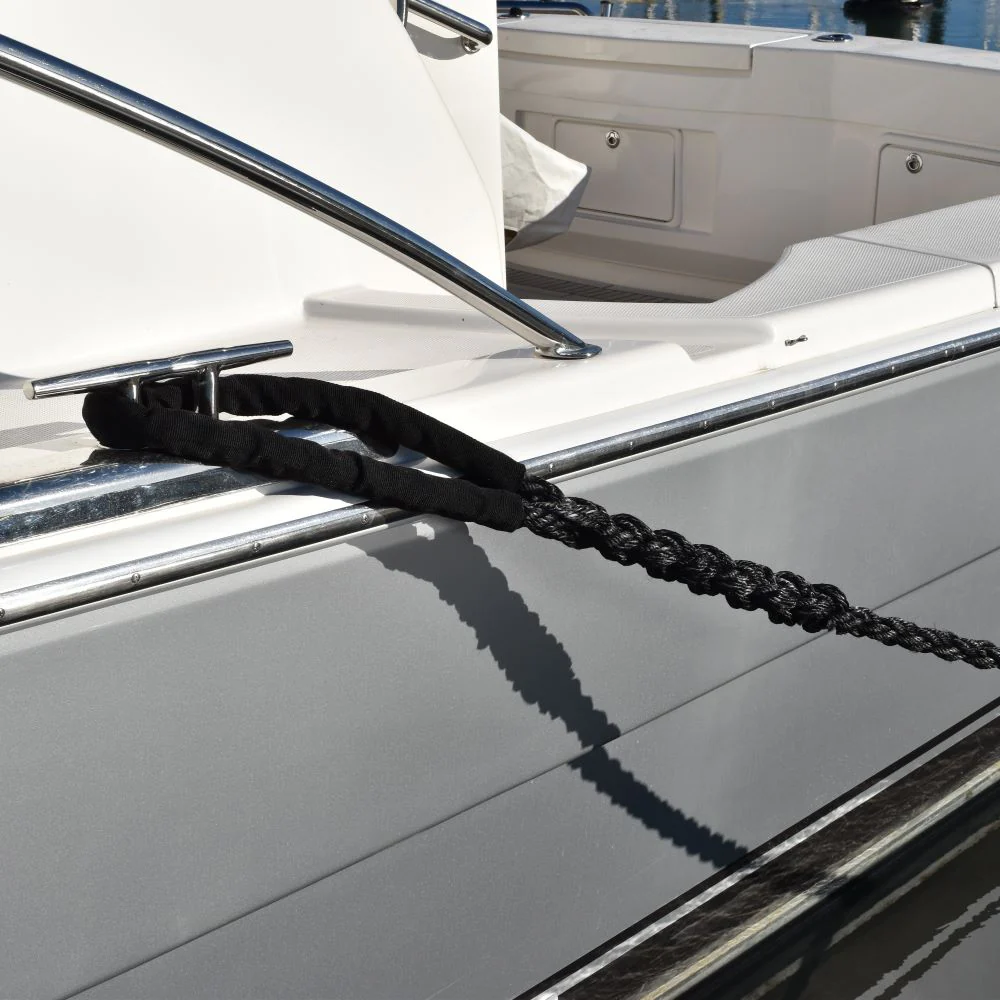

Marine engineers face mounting pressure to optimize mooring systems that can withstand increasingly unpredictable weather patterns and operational demands. Traditional splice configurations, while reliable in controlled conditions, often fall short when vessels encounter dynamic loading scenarios that exceed standard design parameters. The challenge extends beyond simple tensile strength calculations—engineers must account for cyclic loading, material fatigue, and the complex interaction between line geometry and load distribution under real-world conditions.
Load calculation methodologies have evolved significantly as offshore operations push equipment further from shore and into more challenging environments. Engineers who once relied on conservative safety factors applied to static load calculations now recognize that dynamic loading patterns can create stress concentrations that standard splicing methods cannot adequately address. This shift in understanding has prompted a fundamental reevaluation of mooring line configurations and their performance characteristics under varying operational conditions.
The cost of mooring system failure extends well beyond equipment replacement. Unplanned downtime, potential environmental incidents, and safety risks associated with emergency repositioning create operational disruptions that can cascade through entire project schedules. These realities have driven marine engineers to seek mooring solutions that provide greater predictability in load distribution and enhanced resistance to fatigue failure modes.
Understanding Load Distribution Patterns in Advanced Mooring Configurations
Load distribution in mooring systems follows complex patterns that vary significantly based on line configuration and termination methods. Top knot mooring lines create distinctly different stress patterns compared to conventional splice terminations, fundamentally altering how forces transfer through the line structure during dynamic loading events. The knot configuration introduces controlled deformation zones that can absorb and redistribute peak loads more effectively than rigid splice connections.
Traditional splice calculations typically assume uniform load distribution across the splice length, but this assumption breaks down under dynamic conditions where load cycling creates preferential stress paths. The geometric properties of knot-based terminations introduce multiple contact points that share loading in ways that standard engineering models struggle to predict accurately. This complexity requires engineers to move beyond simplified load calculations and consider the behavioral characteristics of the entire mooring system under realistic operating conditions.
The interaction between line diameter, material properties, and knot geometry creates load distribution patterns that can significantly improve system reliability when properly understood and applied. Engineers who recognize these interactions can design mooring systems that respond more predictably to environmental loading while maintaining adequate safety margins across a broader range of operating conditions.
Dynamic Loading Response Characteristics
Dynamic loading in marine environments creates cyclic stress patterns that challenge conventional mooring line designs through mechanisms that static load calculations cannot fully capture. The amplitude and frequency of load cycles vary dramatically based on sea state, vessel response characteristics, and mooring system geometry, creating fatigue accumulation patterns that depend heavily on how individual components respond to repeated loading events.
Knot-based terminations exhibit different fatigue resistance characteristics compared to spliced connections because the load transfer mechanism allows for controlled movement and stress redistribution during each loading cycle. This behavior can extend service life significantly in applications where cyclic loading dominates the failure mode, particularly in floating platform installations where constant motion creates persistent low-amplitude loading patterns that accumulate fatigue damage over time.
The damping characteristics of different termination methods also influence system response to transient loading events. Configurations that can absorb energy through controlled deformation tend to reduce peak loads transmitted through the mooring system, potentially allowing for lighter line specifications while maintaining equivalent safety margins under extreme loading conditions.
Material Stress Concentration Factors
Stress concentration around termination points represents a critical consideration in mooring line design, as localized stress elevations often initiate failure modes that propagate through the entire line structure. The geometry of splice connections creates distinct stress concentration patterns that differ fundamentally from those generated by knot configurations, influencing both ultimate strength and fatigue performance characteristics.
Conventional splice designs often create sharp transitions in stiffness that generate stress concentrations during loading events. These concentrations can exceed the local material strength even when overall line loads remain well within design limits, creating failure initiation points that compromise system reliability despite conservative overall safety factors.
The distributed load transfer mechanism in knot configurations tends to reduce peak stress concentrations by spreading loads across multiple contact surfaces and allowing for gradual stiffness transitions. This behavior can significantly improve fatigue resistance and ultimate strength characteristics, particularly in applications where line handling and repositioning create additional stress concentration risks through bending and compression loading.
Comparative Performance Analysis: Knot Versus Splice Configurations
Performance differences between knot and splice configurations become most apparent under conditions that deviate from ideal static loading scenarios. Real-world mooring applications subject lines to complex loading patterns that include bending, compression, and multi-directional forces that interact with termination geometry in ways that significantly influence overall system performance.
Splice configurations typically excel in applications where loading remains predominantly axial and environmental conditions stay within design parameters. The controlled geometry and predictable load transfer characteristics of properly executed splices provide reliable performance in stable operating environments where load patterns remain relatively consistent over time.
However, operational reality often includes loading scenarios that challenge the assumptions underlying splice design methodologies. Angular loading, cyclic tension variations, and environmental factors such as abrasion and UV exposure can create performance degradation patterns that affect spliced connections differently than knot-based terminations.
Ultimate Strength Considerations
Ultimate strength testing reveals significant differences in failure modes between knot and splice terminations that directly impact engineering safety calculations and operational risk assessments. The distributed load transfer mechanism in knot configurations often results in progressive failure modes that provide warning signs before complete system failure, while splice connections may exhibit more sudden failure characteristics that offer limited opportunity for preventive intervention.
The relationship between line construction and termination method also influences ultimate strength performance in ways that standard rating systems may not fully capture. High-modulus synthetic lines, in particular, can exhibit strength retention characteristics with knot terminations that exceed predictions based on traditional rope strength reduction factors, potentially allowing for more efficient design optimization.
Manufacturing variability in splice quality can create significant uncertainty in ultimate strength performance, particularly in field-installed splices where environmental conditions and installer skill levels may compromise splice integrity. Knot configurations, while still requiring proper installation techniques, tend to be less sensitive to minor installation variations and provide more consistent performance across different installation scenarios.
Fatigue Life Performance
Fatigue life represents a critical performance parameter for mooring systems operating in dynamic environments where cyclic loading dominates the service life calculation. The mechanisms by which different termination methods accumulate fatigue damage vary significantly, influencing both service life predictions and maintenance scheduling decisions.
Knot configurations often demonstrate superior fatigue resistance in applications involving frequent load cycling because the distributed load transfer mechanism reduces stress ranges at critical failure initiation points. This advantage becomes particularly pronounced in shallow water applications where wave action creates high-frequency, low-amplitude loading patterns that can rapidly accumulate fatigue damage in conventional splice connections.
The self-adjusting characteristics of knot terminations can also help maintain consistent performance as line properties change due to service exposure and material aging. Spliced connections may experience degraded performance as adhesives age or mechanical components loosen, while knot configurations often maintain their load distribution characteristics throughout their service life with minimal maintenance intervention.
Engineering Calculation Methodologies for Advanced Mooring Systems
Load calculation approaches for advanced mooring configurations require modifications to standard engineering methodologies to account for the complex load distribution patterns and dynamic response characteristics that differentiate knot-based systems from conventional splice designs. Traditional calculations based on simple tensile strength and safety factor applications may not adequately capture the performance characteristics that determine real-world system reliability.
The challenge facing marine engineers involves developing calculation methods that accurately predict system performance while remaining practical for routine design applications. This balance requires understanding which aspects of system behavior can be simplified for calculation purposes and which require more sophisticated analysis approaches to ensure adequate safety margins and reliable performance predictions.
Modern mooring system analysis increasingly incorporates dynamic simulation capabilities that can model complex interactions between environmental loading, vessel response, and mooring line behavior. These tools provide insights into system performance that static calculations cannot capture, but they require careful interpretation and validation to ensure that simulation results translate to reliable operational performance.
Load Path Analysis Techniques
Load path analysis for knot-based terminations requires consideration of multiple force transfer mechanisms that operate simultaneously during loading events. Unlike splice connections where load transfer follows relatively predictable paths through mechanical or bonded interfaces, knot configurations create complex three-dimensional stress patterns that distribute loads through friction, compression, and geometric constraint mechanisms.
The analysis approach must account for the interaction between line construction characteristics and knot geometry, as different fiber arrangements and construction methods respond differently to the constraint forces generated within the knot structure. This interaction can significantly influence both strength and stiffness characteristics, affecting overall system response to environmental loading.
Finite element analysis techniques can provide valuable insights into load distribution patterns within knot configurations, but the complexity of contact interactions and material nonlinearity often requires simplified analysis approaches for routine engineering applications. The key lies in identifying which aspects of knot behavior most significantly influence system performance and developing practical methods to account for these effects in design calculations.
Safety Factor Application Strategies
Safety factor selection for advanced mooring configurations requires careful consideration of the uncertainty sources that most significantly influence system reliability. Traditional approaches that apply uniform safety factors to all system components may not appropriately account for the different reliability characteristics of knot versus splice terminations.
The distributed failure modes typical of knot configurations may justify different safety factor approaches compared to the more sudden failure characteristics often associated with splice connections. Systems that provide progressive failure warning may allow for reduced safety factors while maintaining equivalent operational risk levels, potentially enabling more efficient design optimization.
Environmental loading uncertainty often dominates the safety factor calculation for offshore mooring systems, but the improved dynamic response characteristics of knot-based configurations may reduce the impact of loading uncertainty on system reliability. This effect should be considered when establishing appropriate safety margins for different termination methods and operating environments.
Operational Implementation and Performance Monitoring
Successful implementation of advanced mooring line configurations requires careful attention to installation procedures, operational protocols, and performance monitoring strategies that account for the unique characteristics of knot-based terminations. The transition from splice-based systems often requires modifications to existing procedures and training programs to ensure that operational teams understand the different handling and maintenance requirements associated with knot configurations.
Installation procedures for knot-based mooring systems typically require different equipment and techniques compared to splice installations, potentially affecting project scheduling and resource allocation. The ability to install knot terminations in field conditions without specialized splicing equipment can provide operational advantages in remote locations or time-critical installation scenarios.
Performance monitoring strategies must account for the different failure modes and degradation patterns associated with knot configurations. Visual inspection techniques, load monitoring protocols, and preventive maintenance schedules may require modification to ensure that monitoring programs effectively detect potential issues before they compromise system reliability.
Installation Best Practices
Installation quality significantly influences the performance of knot-based mooring systems, requiring careful attention to procedures that ensure consistent knot geometry and proper line conditioning. The techniques used to form and tighten knots can affect load distribution patterns and ultimate strength characteristics, making standardized installation procedures essential for predictable system performance.
Pre-loading procedures for knot-based systems often differ from those used with splice configurations, as the settling behavior of knots under initial loading can affect final system geometry and load distribution. Installation teams must understand these differences and adjust their procedures accordingly to ensure that final system configuration meets design requirements.
Environmental conditions during installation can have different effects on knot versus splice installations, particularly regarding temperature effects on synthetic line materials and the influence of moisture on knot tightening characteristics. Installation procedures should account for these factors to ensure consistent results across varying installation conditions.
Long-term Performance Validation
Long-term performance validation for advanced mooring configurations requires monitoring programs that can detect gradual changes in system behavior and identify developing issues before they affect operational reliability. The different aging characteristics of knot versus splice terminations may require modified monitoring approaches to ensure effective performance tracking.
Load monitoring data from knot-based systems often exhibits different patterns compared to splice configurations, reflecting the dynamic load redistribution characteristics that distinguish knot performance. Analysis personnel must understand these differences to interpret monitoring data correctly and identify trends that indicate developing performance issues.
The self-adjusting characteristics of knot configurations can complicate performance trend analysis, as gradual changes in knot geometry may mask developing material degradation or other performance issues. Monitoring programs should incorporate multiple assessment techniques to ensure comprehensive evaluation of system condition and remaining service life.
Economic and Operational Impact Assessment
The economic implications of choosing knot-based mooring configurations extend beyond initial equipment costs to encompass installation efficiency, maintenance requirements, and operational risk reduction benefits that can significantly influence total system cost over the service life. Understanding these broader economic factors is essential for making informed decisions about mooring system design and configuration selection.
Installation cost differences between knot and splice configurations often favor knot-based systems in situations where field installation capabilities are limited or where rapid deployment schedules create constraints on splice installation time requirements. The ability to complete knot installations without specialized equipment or extensive preparation time can provide significant cost advantages in certain operational scenarios.
Maintenance cost considerations must account for the different service life characteristics and inspection requirements associated with knot versus splice terminations. While splice connections may require periodic replacement or refurbishment, knot configurations often maintain performance characteristics with minimal intervention, potentially reducing long-term maintenance costs and operational disruptions.
According to the National Oceanic and Atmospheric Administration, marine infrastructure investments require careful consideration of long-term environmental exposure effects on system reliability and maintenance requirements.
Risk Mitigation Value Analysis
Risk mitigation benefits associated with improved mooring system reliability can provide substantial economic value that justifies premium system costs in critical applications. The progressive failure characteristics and enhanced fatigue resistance of knot-based configurations may reduce the probability of catastrophic system failures that could result in significant operational disruptions, environmental incidents, or safety hazards.
Insurance and regulatory considerations often influence the economic analysis of mooring system alternatives, as improved reliability characteristics may qualify for reduced insurance premiums or simplified regulatory compliance requirements. These indirect economic benefits should be considered alongside direct cost comparisons when evaluating system alternatives.
The operational flexibility provided by knot-based systems that can be rapidly reconfigured or relocated may provide economic advantages in applications where changing operational requirements or environmental conditions require system modifications. This flexibility value becomes particularly important in dynamic operational environments where system adaptability contributes to overall project viability.
Total Cost of Ownership Considerations
Total cost of ownership analysis for advanced mooring systems requires consideration of all cost factors that vary between different configuration options over the entire system service life. Initial equipment costs often represent only a fraction of total ownership costs, making comprehensive analysis essential for informed decision-making.
Service life differences between knot and splice configurations can significantly influence total ownership costs, particularly in applications where system replacement requires complex installation procedures or extended operational shutdowns. Systems that provide extended service life with minimal maintenance intervention often deliver superior economic performance despite higher initial costs.
Operational efficiency impacts associated with improved system reliability and reduced maintenance requirements contribute to total ownership cost advantages that may not be apparent in initial cost comparisons. These benefits become particularly valuable in applications where mooring system availability directly affects revenue generation or operational productivity.
Conclusion
The evolution of mooring line technology toward more sophisticated load distribution mechanisms represents a fundamental shift in how marine engineers approach system design and reliability optimization. Knot-based configurations offer distinct advantages in dynamic loading environments where traditional splice methods may not provide adequate performance margins for critical applications.
The technical advantages of advanced mooring configurations become most apparent when engineering analysis moves beyond simplified static load calculations to consider the complex interactions between environmental loading, system dynamics, and component behavior under realistic operating conditions. Engineers who understand these interactions can design systems that provide superior reliability while potentially reducing overall system complexity and cost.
Successful implementation of advanced mooring technologies requires careful attention to installation procedures, performance monitoring strategies, and operational protocols that account for the unique characteristics of different termination methods. The transition from traditional approaches often requires investment in training and procedure development, but the operational benefits typically justify these initial implementation costs.
The economic case for advanced mooring configurations often depends on factors beyond initial equipment costs, including installation efficiency, maintenance requirements, and risk mitigation benefits that contribute to total system value. Marine engineers who consider these broader economic factors can make more informed decisions about system design and configuration selection that optimize long-term operational performance and cost-effectiveness.