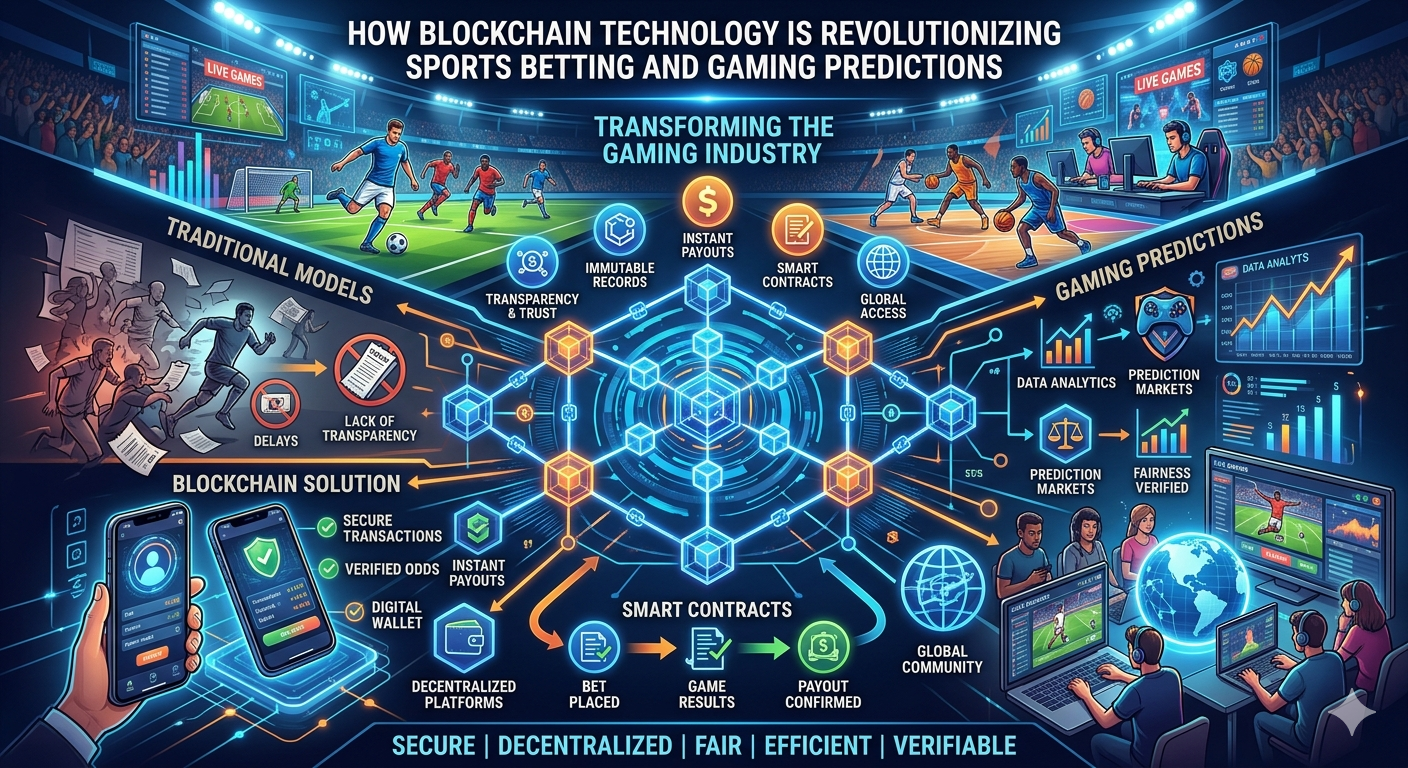

Remember when placing a bet on your favorite team meant driving to Vegas or finding some sketchy bookie? Those days are fading fast, and blockchain technology is leading the charge. I’ve been watching this space evolve since I first dipped my toes into crypto back in 2019, and honestly? The intersection of blockchain and sports betting is one of the most exciting developments I’ve seen.
The traditional sports betting industry has always been plagued by opacity, delayed payouts, and trust issues. But blockchain? It’s flipping the script entirely. Smart contracts are automating payouts, decentralized protocols are eliminating middlemen, and transparent ledgers are making everything verifiable. Pretty cool stuff.
What really caught my attention recently was how gaming and esports predictions are becoming a massive part of this ecosystem. We’re not just talking about traditional sports anymore. Virtual competitions, professional gaming tournaments, and even prediction markets around gaming outcomes are exploding in popularity. The numbers are wild — the global esports betting market is projected to hit several billion dollars by 2028, and a huge chunk of that growth is happening on blockchain platforms.
The Smart Contract Revolution in Prediction Markets
Smart contracts are basically the MVP of blockchain-based prediction platforms. These self-executing contracts automatically trigger payouts when predetermined conditions are met, which means no more waiting weeks for your winnings or worrying about whether the platform will actually pay you.
I actually tried one of these platforms last year during the World Cup, and the experience blew my mind. Within minutes of the final whistle, my winnings were already in my wallet. No forms to fill out, no customer service calls, just instant settlement based on verifiable data feeds. The platform I used pulled results from multiple oracle networks to ensure accuracy, and everything was transparent on the blockchain.
But here’s where it gets really interesting — these smart contracts aren’t limited to simple win/lose scenarios. They can handle complex multi-layered predictions, prop bets, and even continuous markets that adjust odds in real-time based on in-game events. Some platforms are experimenting with AI-powered prediction models that update odds every few seconds during live matches.
The gaming sector is particularly fascinating because data is so readily available. Every move, every score change, every player action in esports can be tracked and fed into these systems. I’ve seen platforms offering efootball esports predictions with incredible granularity — you can bet on specific player performances, team strategies, or even meta-game developments.
What makes this different from traditional bookmakers is the decentralized nature. Instead of one company setting odds and taking a massive cut, these platforms often use liquidity pools where users provide the liquidity and share in the profits. It’s more like peer-to-peer betting with algorithmic market making.
Tokenization and Community-Driven Platforms
Here’s something that’s gotten me really excited lately — the rise of token-powered prediction platforms. These aren’t just betting sites; they’re entire ecosystems where users can earn governance tokens, participate in platform decisions, and even create their own prediction markets.
Take Augur, for example. Users can create markets for literally anything — sports outcomes, political events, weather patterns, you name it. The community validates results through a decentralized oracle system, and everyone who participates correctly earns rewards. It’s like Wikipedia meets prediction markets, and the accuracy rates are surprisingly high because there’s financial incentive for people to report truthfully.
I’ve been holding tokens from a few different platforms, and the passive income opportunities are solid. Some platforms distribute a percentage of all betting fees to token holders, while others offer staking rewards for providing liquidity to prediction markets. A buddy of mine has been earning about 12% APY just by staking his tokens on one of these platforms — not bad for relatively passive income.
The gaming-focused platforms are particularly innovative with tokenization. They’re creating entire economies around esports predictions where users can earn tokens for accurate predictions, stake those tokens for better odds or lower fees, and even use them to influence which games or tournaments the platform covers next. It’s community governance in action.
Some platforms are experimenting with NFT integration too. Imagine owning a unique NFT that gives you special betting privileges on certain games, or collectible prediction badges that commemorate major tournament wins. The possibilities are endless, and developers are just getting started.
Real-Time Data and Advanced Analytics
What’s really pushing these blockchain prediction platforms ahead of traditional bookmakers is their ability to integrate real-time data feeds and advanced analytics. Traditional sportsbooks often rely on relatively simple models and human expertise to set lines. Blockchain platforms? They’re tapping into machine learning, multiple data sources, and crowd wisdom to create incredibly sophisticated prediction markets.
I’ve been following several platforms that use on-chain data analysis combined with external feeds to offer predictions that go way beyond simple match outcomes. They’re analyzing player performance trends, team chemistry metrics, even social media sentiment to adjust odds in real-time. One platform I use regularly updates its esports predictions based on patch notes, player roster changes, and even streaming viewership data.
The transparency aspect is huge too. Unlike traditional bookmakers who keep their algorithms secret, many blockchain platforms make their prediction models partially transparent. You can see what factors are influencing the odds, which data sources they’re using, and how accurate their historical predictions have been. This level of transparency builds trust and helps users make more informed decisions.
Real-time settlement is another game-changer. Instead of waiting for manual verification of results, these platforms can process outcomes as soon as reliable data feeds confirm them. During live esports matches, some platforms settle micro-bets on individual rounds or plays within seconds of completion. It’s like high-frequency trading but for sports predictions.
The data quality keeps improving too. Oracle networks are becoming more sophisticated, providing not just final scores but detailed match statistics, player performance metrics, and even contextual information like weather conditions or venue changes. This rich data environment enables much more nuanced prediction markets than what was possible before.
What’s exciting is seeing how this technology is democratizing access to advanced analytics. Tools and insights that were previously only available to professional bettors or institutions are now accessible to anyone with a crypto wallet. Some platforms even offer educational content and strategy guides to help users understand how to interpret all this data effectively.
The Bottom Line
Blockchain technology is fundamentally changing how we approach sports and gaming predictions. From automated smart contract payouts to community-driven prediction markets, the innovation happening in this space is remarkable. We’re seeing unprecedented transparency, faster settlements, and opportunities for users to participate in platform governance and revenue sharing.
The gaming and esports segment is particularly exciting because of the rich data environment and tech-savvy user base. As these platforms continue to evolve and integrate more sophisticated analytics, I expect we’ll see even more innovative features and opportunities emerge. For anyone interested in the intersection of blockchain, gaming, and prediction markets, now is an incredibly exciting time to start exploring what’s out there. The future of sports betting is decentralized, transparent, and community-driven — and that future is already here.