
When a home improvement project moves beyond straightforward decorating or minor repairs into structural territory, the decision of who designs and oversees that work becomes one of the most consequential choices a homeowner will make. Extensions that add real space, loft conversions that unlock an entire floor, and whole-property renovations that fundamentally change how a home functions all require architectural thinking that goes well beyond measuring a room and sketching a layout. For homeowners searching for architects near me who combine genuine design expertise with a practical understanding of planning, building regulations, and construction delivery, Extension Architecture has built a strong reputation across London and the wider UK for doing exactly that.
What an Architect Actually Brings to a Residential Project
There is a tendency among homeowners to view architectural fees as an overhead to be minimised rather than an investment that directly shapes the outcome of their project. That perspective tends to shift once people understand what a qualified architect is actually responsible for across the lifespan of a project.
An architect translates your requirements into a design that is not only visually considered but structurally sound, planning-compliant, and buildable within a realistic budget. They navigate the specific constraints of your property, whether that is a party wall situation in a terraced London home, a permitted development boundary condition, or a conservation area designation that limits what can be achieved externally. These are not administrative details. They are the factors that determine whether your project gets built at all, how long it takes, and whether the finished result holds its value.
Beyond design, a good architect provides oversight during construction that catches problems early, keeps contractors accountable to the agreed specification, and ensures the project that reaches completion matches what was approved and what was promised.
How to Evaluate Architects When You Are Searching Locally
The volume of practices describing themselves as residential architecture specialists in the UK makes meaningful comparison harder than it should be. A few focused questions cut through that noise effectively.
Ask to see completed projects that are genuinely similar to what you are planning. A practice with a strong loft conversion portfolio but limited experience in rear extensions may not be the right fit if your project is a wraparound ground floor addition. Portfolio depth within your specific project type matters more than overall firm size or how polished the website looks.
Ask how the practice handles planning applications and what their approval rate looks like. Planning is not a lottery, and a practice with thorough knowledge of local authority requirements and a disciplined approach to application preparation produces measurably better outcomes than one that treats each submission as a first attempt.
Ask who will actually be working on your project. In larger practices, senior architects win the work and junior staff deliver it. Understanding who is responsible for your drawings, your planning submission, and your on-site oversight at each stage of the project is a reasonable expectation, not an unreasonable demand.
Why London Homeowners in Particular Need Specialist Expertise
Residential architecture in London operates within a set of constraints that make local specialist knowledge genuinely valuable rather than simply preferable. The density of the built environment means party wall agreements are a routine part of almost any extension project. Conservation area designations and Article 4 directions in many London boroughs remove the permitted development freedoms that homeowners elsewhere in the UK can rely on. Planning committees in certain boroughs apply design guidance that goes significantly beyond national policy and requires direct familiarity to navigate efficiently.
Extension Architecture has worked across London boroughs extensively, developing a working knowledge of the specific requirements, preferences, and sensitivities of different local planning authorities. That accumulated experience reduces delays, avoids predictable refusal reasons, and gives each application the clearest possible path to approval.
The Project Types Where Architectural Input Makes the Greatest Difference
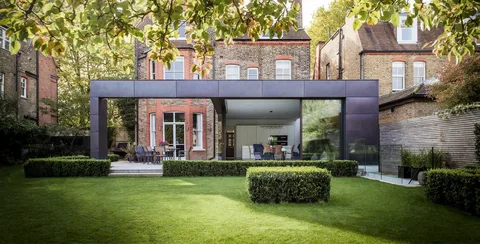
Rear extensions remain the most commonly undertaken structural home improvement in London. The difference between an extension that genuinely transforms how a ground floor functions and one that simply adds floor area is almost entirely an architectural one. Ceiling height decisions, roof light placement, how the new space connects to the existing house, and how the rear facade responds to the garden all require considered design rather than default solutions.
Loft conversions involve a level of structural intervention that makes the quality of the design specification critical to the build outcome. The positioning of structural steel, the steepness and placement of the new staircase, and the way dormer additions are designed to sit within the roofline all affect both the planning outcome and the liveability of the finished space.
Full renovations benefit from architectural oversight at every stage because the decisions made early in a project, around layout, structural changes, and material choices, have consequences that run through everything that follows. Having an architect who remains engaged from inception through to completion provides a continuity of design intent that produces consistently better results than a hands-off approach once construction begins.
Working With Extension Architecture
Extension Architecture guides homeowners through every stage of the project from initial feasibility assessment through planning permission, building regulations approval, and construction completion. The practice brings architectural rigour and construction understanding together within a single accountable relationship, removing the coordination burden from the homeowner and ensuring that what is designed is also what gets built.