
Running a small business in Lafayette means managing real operational demands — clients who expect fast responses, staff who move between locations, and communication workflows that need to function reliably without IT overhead. For many small business owners in this region, the phone system is not a secondary concern. It is the front line of customer contact, internal coordination, and service delivery.
Traditional phone infrastructure has served businesses for decades, but it carries limitations that become more visible as a business grows or shifts its operations. Hardware breaks down. Expansion requires physical installation. Remote work is difficult to support. And when something fails, recovery depends on a technician with the right equipment and availability.
Cloud-based phone systems address these operational realities in a straightforward way. They move communication infrastructure off-site, reduce dependency on physical hardware, and give small businesses more control over how their phone system behaves — without requiring a dedicated IT team to manage it. Understanding how these systems work, what to evaluate, and what to expect in a local context is what this guide is designed to address.
What a Cloud Phone System Actually Is and Why It Matters in Lafayette
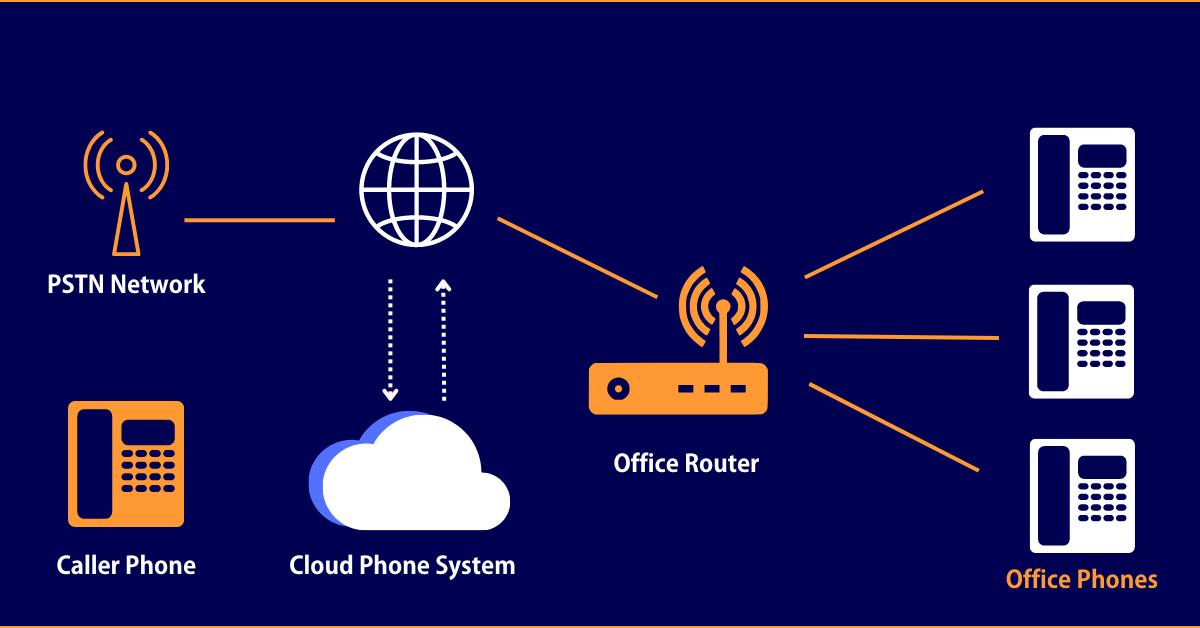
A cloud phone system routes voice calls over an internet connection rather than through traditional copper phone lines or on-premises hardware. The core infrastructure — servers, software, routing logic — is hosted and maintained by a provider, not by the business itself. Calls can be made and received from desk phones, computers, or mobile devices, all connected through the same account and business number.
For a small business in Louisiana’s Acadiana region, this matters for practical reasons. Lafayette’s commercial sector is a mix of service businesses, professional firms, contractors, medical offices, and retail operations. These are environments where call reliability, professional presentation, and the ability to manage communication across multiple staff members or locations are everyday requirements — not optional features.
If you are in the process of evaluating your options, reviewing a structured Cloud Phone System For Small Business In Lafayette La guide can help you understand what specific capabilities matter most for businesses operating in this area, including how local number availability and regional providers compare.
The shift to cloud infrastructure is not simply about cost reduction. It is about replacing a rigid, maintenance-heavy system with one that adjusts to how a business actually operates — whether that means forwarding calls to a field technician, setting up after-hours routing, or adding a new employee line without scheduling an installation visit.
The Difference Between VoIP and a Full Cloud Phone System
Voice over Internet Protocol, or VoIP, is the underlying technology that allows voice calls to travel over an internet connection. A cloud phone system is a broader category that includes VoIP as its transmission method but adds a layer of management, features, and hosted infrastructure on top of it.
Basic VoIP might simply convert analog calls to digital format. A cloud phone system, by contrast, includes call routing logic, voicemail to email, auto-attendant menus, call recording, conferencing, and user management — all controlled through a web-based dashboard. For a small business owner who does not have technical staff, this distinction is important. The management interface is what makes the system practical on a daily basis, not the underlying protocol.
Why Local Context Shapes the Right Decision
Lafayette is not a large metro market, and that affects how some cloud phone providers operate in the region. Not all providers offer local number porting or new local area code assignment with equal ease. Some national platforms handle number assignment in Louisiana inconsistently, which can create problems for businesses that rely on local caller ID recognition or established phone numbers in their marketing.
Internet infrastructure quality also varies across the Lafayette area, particularly for businesses located outside the core commercial districts. A cloud phone system depends entirely on internet connectivity, so the stability and speed of the connection at a given business address should be evaluated alongside the phone system itself.
Evaluating Core Features Against Real Business Needs
Many cloud phone platforms compete on feature lists, but for a small business, the relevant question is not how many features a system offers — it is whether the features that matter most to daily operations work reliably and are easy to configure without professional assistance.
The features that tend to have the greatest operational impact for small businesses fall into a short list: call forwarding and routing, auto-attendant setup, voicemail management, multi-device support, and the ability to add or remove users without service interruption. These are not advanced capabilities. They are the baseline functions that determine whether a phone system supports or disrupts normal business activity.
Call Routing and How It Affects Customer Experience
Call routing refers to the logic that determines where an incoming call goes after it reaches the system. In a small business, this might mean sending calls to the front desk first, then to a mobile number if there is no answer, then to voicemail with a specific message. It might also mean routing calls differently during business hours versus after hours, or directing calls based on which number the customer dialed.
When routing is configured well, customers experience a consistent, professional interaction regardless of how a business is staffed at any given moment. When it is poorly configured or difficult to adjust, small changes — a staff member out sick, a temporary schedule change — can result in missed calls or disconnected customer experiences. The ability to modify routing quickly without technical help is a practical requirement, not a luxury.
Multi-Device Support for Mobile and Hybrid Operations
A growing number of small businesses in Lafayette operate with staff who are not always at a fixed desk location. Contractors, field service teams, sales staff, and even solo practitioners who move between a home office and a client site need a phone system that travels with them without requiring them to use a personal cell number.
Cloud phone systems solve this by linking business numbers to apps on mobile devices, so staff can make and receive business calls from anywhere while maintaining a consistent caller ID. This is particularly relevant for businesses where professional presentation matters — clients calling a business number should not receive an unfamiliar personal number when a staff member calls back.
Understanding Infrastructure Dependencies Before You Commit
Every cloud phone system relies on the same fundamental dependency: a stable internet connection. This is not a flaw in the technology, but it is a risk that small businesses need to account for before migrating away from traditional phone service entirely.
Internet reliability in a commercial context depends on the type of connection, the provider’s service quality in a given area, and whether the business has any redundancy in place. A business that experiences frequent internet outages or slow speeds during peak hours will carry those same interruptions into their cloud phone service. No software feature compensates for a degraded or dropped connection during an active call.
Assessing Your Current Internet Setup
Before selecting a cloud phone provider, it is worth evaluating the current internet service at the business location with phone traffic specifically in mind. Voice calls are not as bandwidth-intensive as video, but they are sensitive to latency and packet loss — the types of connection issues that might not affect general browsing but will produce choppy or dropped calls.
As the Federal Communications Commission notes in its guidance on VoIP services, internet-based phone services require a reliable broadband connection to function properly, and users should be aware that service outages affecting their internet will also affect their phone service. Businesses that rely heavily on voice communication should consider this dependency when planning their communication infrastructure.
Backup and Continuity Planning
A common approach for small businesses that cannot tolerate communication downtime is to maintain a secondary internet connection — either a separate broadband line from a different provider or a mobile data backup — that activates if the primary connection fails. Some cloud phone systems support automatic failover routing to a mobile number, which provides a simpler form of continuity without requiring additional hardware.
The right approach depends on the business type. A solo practitioner may be comfortable forwarding to a personal mobile in an outage. A multi-line business with incoming customer inquiries throughout the day has a higher tolerance threshold and needs a more structured continuity plan.
Comparing Providers for a Small Business in Lafayette
The cloud phone market includes national platforms, regional providers, and niche services focused on specific industries. For a small business evaluating a cloud phone system for small business in Lafayette, LA, the selection process should account for more than pricing. Provider reliability, support quality, contract terms, and the ease of local number management are factors that affect daily operations long after the initial setup.
National providers often offer lower entry-level pricing but may provide limited local support and slower response times when issues arise. Smaller or regional providers may offer more direct access to support staff and a better understanding of local number availability, but may have fewer advanced features on lower-tier plans.
What to Look for in Support and Onboarding
For small business owners who are not technically experienced, the quality of onboarding and ongoing support carries significant weight. A cloud phone system that is difficult to configure initially, or that requires long support wait times to resolve simple issues, creates friction that offsets the operational benefits of the platform.
When evaluating providers, it is worth asking directly about average support response times, whether support is available by phone or only by ticket, and what the process is for porting an existing business number. Number porting — moving an existing business phone number to a new provider — is a standard process but requires coordination and can take several days. A provider that handles this process smoothly reduces risk during the transition period.
Pricing Structures and What They Include
Cloud phone pricing varies widely depending on the number of users, the features included, and whether the service is billed per user or per account. For a cloud phone system for small business in Lafayette, LA, it is important to identify exactly what is included in the base price versus what requires a higher tier or add-on fee.
Features like call recording, advanced routing, and integrations with business software are sometimes available only on higher-tier plans. If these are necessary for how the business operates, the effective cost is the plan that includes them — not the advertised entry-level price.
Transitioning From a Traditional Phone System Without Disruption
Migrating from a traditional landline or on-premises PBX system to a cloud phone platform requires planning, but it does not have to interrupt daily operations if the process is managed carefully. The two most important elements of a clean transition are number porting and parallel operation during the switchover period.
Number porting allows a business to retain its existing phone number when switching providers. This process involves submitting a request to the new provider, who coordinates with the existing carrier. During the porting process — which can take several business days to complete — the existing service should remain active to avoid any gap in service.
Planning for Staff Adjustment
A new phone system changes how staff answer calls, transfer calls, access voicemail, and manage their availability settings. Even when the interface is straightforward, there is an adjustment period. Small businesses should plan for a short period of internal coordination to ensure that staff understand how to use the new system before it becomes the sole method of communication.
Most cloud phone providers offer basic training resources, walkthrough documentation, and account setup assistance. Using these resources before the transition is complete reduces the chance of staff-related errors during the first days of operation on the new platform.
Conclusion
Choosing a cloud phone system for small business in Lafayette, LA is ultimately a decision about operational reliability and fit. The technology itself is well-established, the infrastructure is broadly available in the Lafayette area, and the range of providers gives small businesses genuine options at different price points.
What makes the decision meaningful is how well a specific platform aligns with the way a particular business operates — how it handles calls, how staff are distributed, how dependent the business is on phone communication for customer relationships, and how much internal capacity exists to manage and maintain the system over time.
The goal is not to find the most feature-rich platform. It is to find the platform that handles the most important communication functions reliably, is manageable without dedicated technical staff, and supports business continuity when something unexpected happens. For most small businesses in Lafayette, that is a realistic and achievable standard with the cloud phone options currently available in the market.
Start by auditing your current phone usage — how many lines, how calls are typically routed, which features are actually used — before evaluating providers. That process will clarify what you need and make the comparison between platforms much more straightforward.