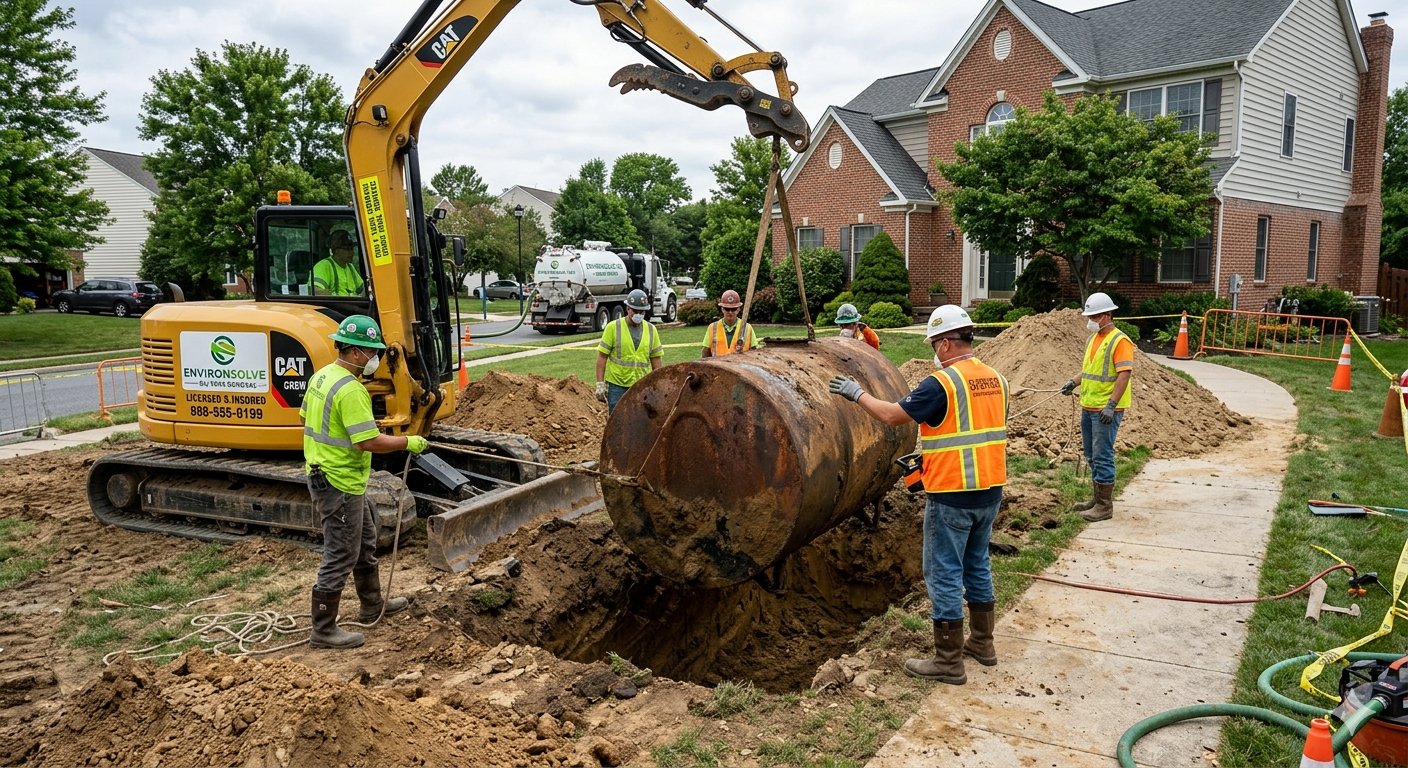

Having an oil tank removed from a residential or commercial property is not a routine maintenance task. It involves environmental risk, regulatory compliance, potential soil assessment, and significant liability exposure if something goes wrong. Yet many property owners approach this process the same way they might hire a general contractor — based on price and availability alone.
That approach often leads to problems that surface weeks or months after the work is complete. Improper decommissioning, missed permits, undisclosed contamination, or inadequate documentation can result in costs that far exceed what was saved by choosing the cheapest bid. Before any contract is signed, the questions you ask will determine the quality of the outcome as much as the work itself.
This article outlines the ten most important questions to raise during any pre-contract conversation with an oil tank removal contractor — and explains why each one matters in practical terms.
Why the Right Questions Change the Outcome
Most property owners do not have a background in environmental services or underground storage tank regulations. That knowledge gap is where problems begin. When evaluating companies that remove oil tanks, the goal is not simply to find someone who can physically extract the tank — it is to find a contractor who operates within the full scope of what the job legally and environmentally requires.
A contractor who performs the physical removal but skips soil sampling, fails to file the appropriate permits, or does not provide a closure report leaves the property owner exposed. Real estate transactions, insurance claims, and future liability depend on having a documented, compliant paper trail. The questions below are designed to surface that information before any agreement is made.
What a Pre-Contract Conversation Actually Accomplishes
Asking informed questions before signing a contract serves a specific purpose. It separates contractors who understand the full regulatory and environmental scope of tank removal from those who approach it as a simple excavation job. It also gives property owners the documentation trail they need if complications arise later, including disputes with buyers, insurers, or local authorities.
Question 1: Are You Licensed and Certified for Tank Removal in This State?
Licensing requirements for oil tank removal vary by state and municipality. In many jurisdictions, contractors must hold specific certifications from an environmental or underground storage tank regulatory body. A general contractor’s license does not automatically qualify someone to perform this work.
Ask the contractor to confirm which specific licenses they hold and which regulatory authority issued them. Then verify that information independently through the relevant state agency or environmental database before the contract is signed.
Question 2: Will You Pull All Required Permits Before Work Begins?
Permit requirements for oil tank removal exist in most jurisdictions, particularly for buried tanks. These permits connect the removal to an official record, which matters significantly if the property is ever sold or refinanced. A removal that was never permitted may not be recognized as compliant, even if the physical work was done correctly.
Contractors who suggest skipping permits to reduce cost or speed up the timeline are introducing risk that the property owner will carry long after the work is complete. Confirm in writing that the contractor is responsible for obtaining all necessary permits before any excavation begins.
Question 3: What Does Your Soil Testing Protocol Look Like?
Oil tanks, particularly those that have been in service for decades, frequently develop small leaks that contaminate surrounding soil. This contamination may not be visible at the surface and is often discovered only through testing. The U.S. Environmental Protection Agency maintains specific guidance for underground storage tank closures that includes soil and groundwater assessment requirements.
A contractor who does not conduct soil sampling as a standard part of their process is not providing a complete service. Ask how many soil samples are taken, where they are collected, and which certified laboratory analyzes them. Also confirm what happens if contamination is found — that pathway should be defined before work begins, not after.
Understanding What Soil Results Actually Mean for You
If contamination is present, the property owner becomes responsible for remediation. This is a separate process from tank removal and carries its own costs, regulatory requirements, and timelines. Knowing upfront whether the contractor’s scope includes remediation support, or whether they simply identify contamination and stop, helps owners plan appropriately and avoid being left without direction if results come back positive.
Question 4: Do You Provide a Closure Report Upon Completion?
A closure report is the formal documentation that the tank was removed in compliance with applicable regulations. It typically includes permit confirmation, tank condition at removal, soil sample results, laboratory analysis, photos, and a sign-off from the relevant authority. This document is often required when selling a property or filing an insurance claim.
Companies that remove oil tanks professionally will issue this report as a standard deliverable. Ask specifically what the report includes and in what format it will be provided. Verbal assurances that “everything will be taken care of” are not a substitute for written documentation.
Question 5: How Do You Handle Tank Content Disposal?
Even a tank that appears empty typically contains residual heating oil, sludge, or water contamination at the bottom. Proper disposal of these contents is regulated under hazardous waste guidelines in most states. Improper disposal — including dumping residue on-site — creates liability for both the contractor and the property owner.
Ask the contractor how they manage residual contents, which licensed disposal facility they use, and whether you will receive documentation confirming that disposal was handled compliantly. This is a detail that gets overlooked easily, but it can resurface during a property transaction or environmental audit.
Question 6: What Is Your Experience With Properties Similar to Mine?
Oil tank removal on a residential property with a basement tank presents different challenges than removal of a buried commercial tank under a paved surface, or a tank located near a water table or utility lines. Experience with a specific type of property or installation significantly affects how well a contractor anticipates complications before they arise.
Ask directly about the contractor’s experience with comparable projects. A contractor who has worked on dozens of properties like yours will have a more realistic scope of work, a more accurate timeline, and a clearer sense of what to do if something unexpected is found during excavation.
Why Past Experience Reduces Scope Creep
Contractors unfamiliar with specific installation types tend to underprice initial estimates and then increase costs when complications emerge. An experienced contractor will have encountered those complications before and can either price them in upfront or clearly explain under what circumstances additional costs would apply. This transparency is worth more than a low initial quote.
Question 7: Is Your Crew Certified, or Do You Use Subcontractors?
Some oil tank removal companies operate with their own trained and certified crews. Others function as coordinators who hire subcontractors for the actual work. Both models can produce good results, but you have a right to know which one applies to your project.
If subcontractors are used, confirm that they carry the same licensing and insurance as the primary contractor, and that the primary contractor accepts full accountability for all work performed on-site. A gap in accountability between the contractor and their subcontractors can complicate claims if something goes wrong.
Question 8: What Insurance Coverage Do You Carry?
Oil tank removal carries environmental liability that general liability insurance alone may not cover. Contractors working in this space should carry pollution liability insurance in addition to standard general liability and workers’ compensation coverage. Without pollution coverage, a contamination incident that occurs during or after removal may leave the property owner exposed.
Ask to see proof of insurance before signing and confirm that pollution liability is included. If a contractor is unfamiliar with this requirement or hesitates to provide documentation, that is a meaningful indicator of how they operate overall.
Question 9: How Are Unexpected Findings Handled During Excavation?
Underground conditions are rarely exactly what they appear to be on the surface. Tanks may be in worse condition than expected, contamination may extend beyond the immediate area, or additional tanks may be discovered — a situation that occurs more often than most property owners expect, particularly with older properties.
Ask the contractor to walk through their process when unexpected findings arise. Who is notified? What decisions require owner approval before proceeding? How is the change in scope communicated and priced? Companies that remove oil tanks with a professional approach will have clear answers to these questions. Contractors who have not thought through these scenarios will often provide vague or dismissive responses.
Question 10: What Does the Contract Actually Cover?
This may seem obvious, but many contracts in this space are written narrowly — covering only the physical removal of the tank while excluding soil testing, permit fees, disposal documentation, or post-removal site restoration. Understanding exactly what is and is not included prevents misunderstandings that become disputes.
Review the contract language carefully. Ask for clarification on anything that uses vague terms like “standard procedures” or “as needed.” Confirm what happens if the project scope changes, who is responsible for additional regulatory requirements discovered mid-project, and what the contractor’s obligations are if the closure report is rejected by the relevant authority.
What a Well-Written Contract Signals About a Contractor
Contractors who operate professionally tend to have contracts that are specific, detailed, and clear about scope, responsibilities, and contingencies. A contract that is vague, heavily one-sided, or difficult to interpret is often a reflection of how the contractor conducts their work overall. It is reasonable to ask for revisions before signing, and a contractor’s response to that request tells you something useful about how they handle the working relationship.
Making an Informed Decision Before the Work Begins
Oil tank removal is a process that carries real environmental, legal, and financial consequences if it is handled poorly. Property owners who take time to ask the right questions before committing to a contractor are not being difficult — they are protecting themselves from outcomes that can take years and significant expense to resolve.
The ten questions outlined in this article are not exhaustive, but they address the most common points of failure in the contractor selection process. Licensing, permits, soil testing, closure documentation, insurance, and contract clarity are not negotiable items. They are baseline requirements that any qualified contractor should be able to address directly and confidently.
Companies that remove oil tanks as a core part of their business — rather than an occasional add-on to general excavation work — will generally meet these standards without hesitation. When a contractor struggles to answer these questions or deflects rather than engages, that is the clearest signal available that a different contractor is the right choice. The time spent asking these questions before the contract is signed is far less costly than the time spent addressing problems after the work is done.