
Most homeowners spend more time thinking about what their yard looks like after a single visit than about what happens to it over weeks and months of irregular care. That gap in thinking is where a lot of avoidable problems begin. Overgrown grass, neglected edging, compacted soil from skipped aeration cycles, and plant stress from inconsistent trimming all accumulate quietly until the cost of correction becomes significant. The issue is rarely neglect in the obvious sense. It’s that most people simply haven’t been introduced to a different way of approaching yard care — one that fits how residential properties actually age and require attention throughout the year.
This isn’t a niche problem confined to large estates or commercial properties. It applies just as readily to a quarter-acre suburban lot as it does to a sprawling residential compound. The lack of awareness around structured, consistent yard maintenance programs has left a significant portion of American homeowners managing their outdoor spaces reactively rather than proactively. And the consequences of that approach — higher costs, inconsistent results, and preventable deterioration — are well documented in how yards and landscaping investments perform over time.
What Maintenance by the Yard Actually Means
The term maintenance by the yard refers to a structured service model in which a property receives scheduled, recurring care across its full outdoor area — treating the yard as a managed asset rather than a space that gets attention when problems become visible. Rather than calling a crew after the grass has grown past a manageable height or after weeds have established themselves in a bed, this approach involves pre-set intervals of service that keep the property within a consistent, functional range year-round. For homeowners researching this model, a practical starting point is understanding what maintenance by the yard looks like when applied to a real residential property with seasonal variation and routine upkeep needs.
The distinction between this model and standard on-call lawn care isn’t just operational — it reflects a fundamentally different philosophy about how outdoor spaces should be managed. Properties maintained on a reactive basis tend to experience boom-and-bust cycles: overgrowth followed by aggressive cutting, weed proliferation followed by removal, dry patches followed by overwatering. Each of these cycles stresses the grass, soil, and plant material in ways that compound over time and gradually reduce the quality and resilience of the entire outdoor area.
Why Scheduling Matters More Than Most Homeowners Realize
There’s a common assumption that grass and plants are forgiving enough to tolerate irregular care. To some extent, that’s true in the short term. But the biological reality of turf and ornamental plants is that they respond to patterns, not individual events. A lawn that’s cut on a predictable schedule at the right height for its variety will develop a deeper root system, resist drought more effectively, and recover from foot traffic faster than one that’s cut sporadically at whatever height it happens to be. The same principle applies to shrub trimming, edging, and debris removal — each of these tasks has a window of effectiveness, and missing that window consistently creates compounding issues that are harder to reverse than they are to prevent.
Scheduling also matters because it removes decision fatigue from the homeowner. When maintenance is pre-arranged and structured, there are no judgment calls about whether the yard “needs it yet” or whether it can wait another week. Those judgment calls, made by people who aren’t trained in turf management, are often wrong in ways that don’t show up immediately but become apparent over a full growing season.
The Real Cost of Reactive Yard Care
Reactive yard care feels economical in the moment. You pay for a service when the yard looks like it needs one, and you avoid paying during stretches when it seems manageable. Over the course of a year, however, this approach tends to generate higher cumulative costs than a structured maintenance program would. The reason is straightforward: reactive care addresses symptoms rather than conditions. Pulling weeds after they’ve seeded adds no value compared to preventing their establishment in the first place. Cutting grass that has grown significantly taller than its optimal height requires more passes, more labor, and more stress on the turf itself.
Hidden Deterioration in Unmanaged Outdoor Spaces
One of the least-discussed aspects of inconsistent yard care is what happens below the surface and along the edges of the property where problems are harder to see from a distance. Soil compaction, for example, develops gradually as foot traffic and equipment use compress the ground without regular aeration to restore permeability. Compacted soil reduces water infiltration and limits the oxygen availability that root systems depend on, leading to thinning turf that becomes increasingly vulnerable to weed pressure and heat stress. According to the United States Department of Agriculture, healthy soil structure is one of the foundational elements of sustainable land management, and its degradation often goes unnoticed until visible deterioration in plant health becomes apparent.
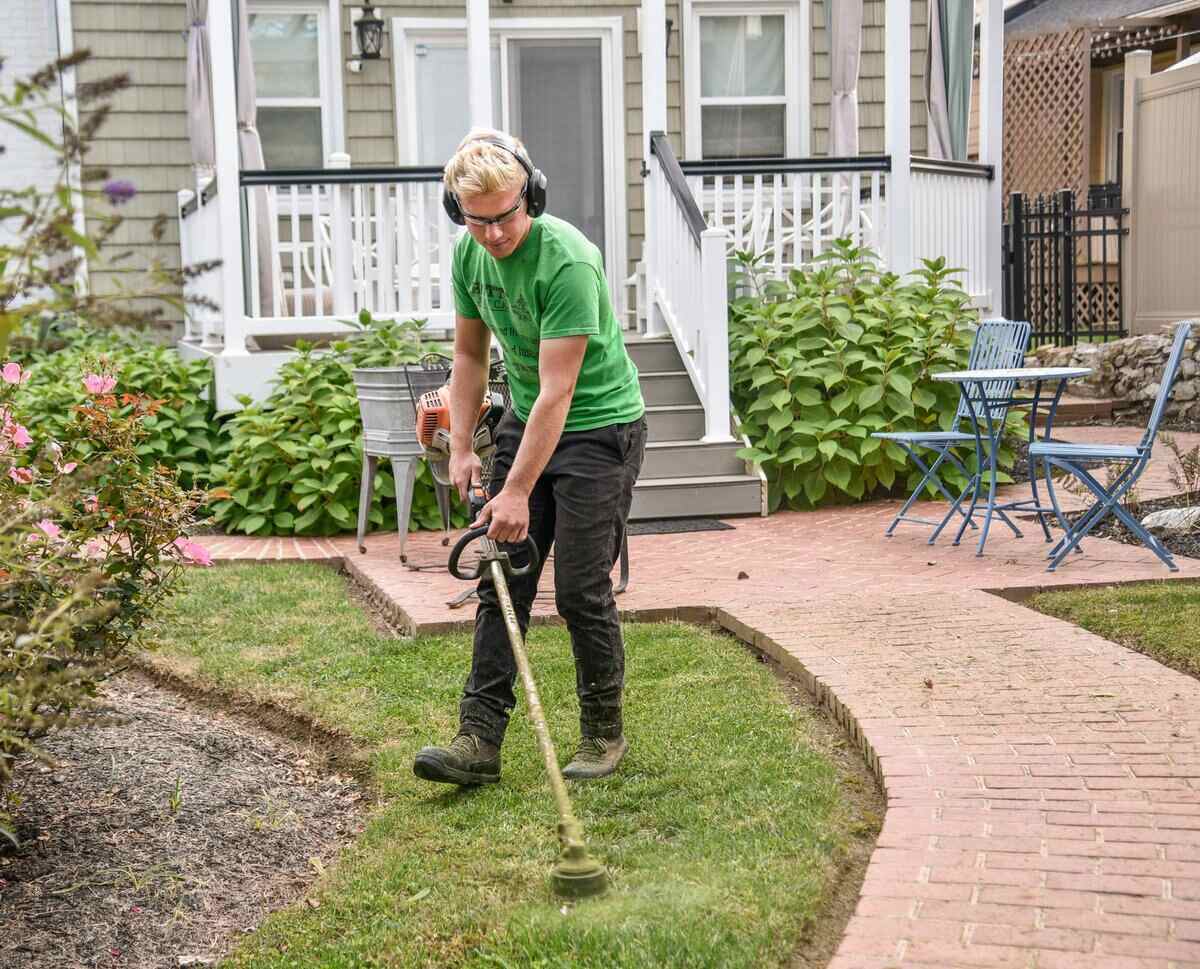
Edge zones — the borders between lawn areas and hardscaping, fencing, or planting beds — are similarly vulnerable under reactive care models. These are areas where growth tends to be faster and more irregular, and where weeds exploit the transition between managed and unmanaged surfaces. Without consistent attention, edge zones can undermine the overall appearance of a well-maintained central lawn, and restoring them after significant encroachment is substantially more labor-intensive than keeping them trimmed on a regular schedule.
The Compounding Effect on Property Value
Curb appeal is one of the more tangible expressions of property value, and its connection to consistent yard maintenance is well established in real estate practice. A home whose outdoor spaces are managed continuously presents differently from one whose yard has been brought back from a neglected state before a listing. The difference isn’t always dramatic in photographs, but it shows in the quality of the turf, the density of ground cover, the definition of beds and borders, and the general impression of ongoing care. These signals matter to buyers and appraisers, and they’re the direct result of maintenance patterns — not individual cleanup events.
Who Benefits Most From a Structured Yard Maintenance Program
The homeowner who benefits most from maintenance by the yard isn’t necessarily the one with the most elaborate or high-maintenance property. In many cases, it’s the homeowner with a modest but consistent outdoor space who doesn’t have the time, equipment, or background to manage the full cycle of seasonal care on their own. Working households with limited weekend availability, homeowners approaching or in retirement who want the yard maintained without physical strain, and families with young children who use outdoor spaces heavily are all categories where structured yard care delivers clear, practical value.
Properties With Specific Turf or Plant Requirements
Some residential properties have grass varieties, ornamental plantings, or irrigation systems that require a more informed approach to maintenance than general-purpose lawn care provides. Warm-season grasses have different mowing height tolerances and dormancy periods than cool-season varieties. Certain shrubs require timing-specific trimming to avoid disrupting their bloom cycles. Properties with established tree canopies need regular debris management to prevent thatch accumulation and shading problems. These properties benefit particularly from maintenance by the yard because the service is structured around what the property actually contains, rather than a generic schedule applied uniformly regardless of what’s growing there.
What a Year of Consistent Yard Maintenance Actually Produces
Over a full year of structured maintenance, most properties show measurable improvement in turf density, weed pressure, and the definition of their planted areas. This improvement is cumulative — the result of dozens of small, timely interventions that collectively keep the property within a functional range rather than allowing it to cycle between overdue care and temporary improvement. Homeowners who transition from reactive to scheduled yard care often report that the property becomes noticeably easier to maintain over time, because problems are addressed before they escalate and the general condition of the turf and plantings improves season over season.
The outcomes that tend to stand out most include:
- Turf that remains consistently dense and uniform across the growing season, reducing the bare patches and irregular growth that reactive mowing schedules often produce.
- A significant reduction in weed pressure, because consistent mowing height and regular bed maintenance limit the conditions that allow weed establishment.
- Better moisture retention and root health as a result of aeration and appropriate cutting schedules, leading to lower supplemental watering needs in dry periods.
- Maintained edge definition along borders, driveways, and walkways, which contributes substantially to the overall appearance of the property even when viewed from a distance.
- Reduced cost per service visit over time, because each visit requires less remediation and more routine upkeep, which is less labor-intensive than restorative work.
Closing Thoughts
The awareness gap around structured yard maintenance programs isn’t a reflection of homeowner indifference — it’s mostly the result of an industry that has historically offered on-demand services without making the case for why consistency matters more than individual interventions. Most homeowners have never had it explained to them that the way their yard is maintained over time is more consequential than any single service visit. Once that context is clear, the decision to move from reactive to scheduled care tends to be straightforward.
Maintenance by the yard, when applied consistently and with attention to what a specific property actually requires, is less about aesthetics and more about protecting an outdoor asset that contributes to property value, usability, and long-term upkeep costs. The homeowners who haven’t encountered this model yet aren’t missing a luxury service — they’re missing a more rational approach to something they’re already spending time and money on, just less efficiently than they need to be.