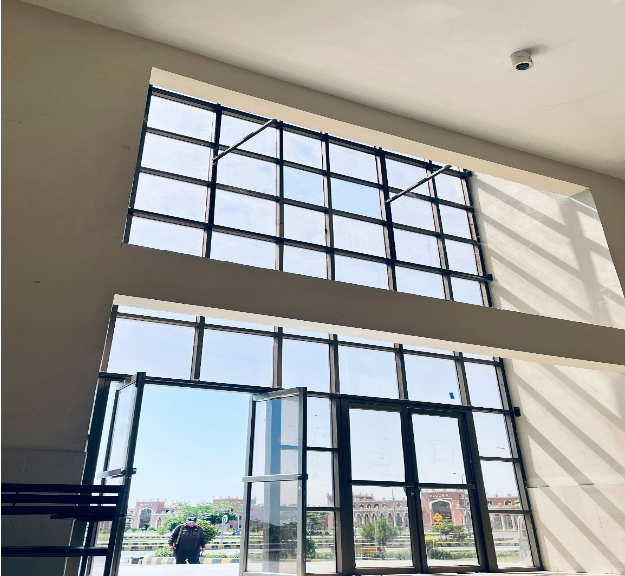

Raw materials, open space and clear lines have appeared in houses and apartments in blocks of flats for many years. Industrial style has long ceased to be the domain of post-factory lofts and has become a permanent part of new investment projects and modernized tenement houses, while steel glazing has become one of its most recognizable elements. Can steel windows and doors [steel windows and doors] really change the character of an interior without a complete renovation? See how to introduce them into your project and which solutions will work in your space!
More light and an optically larger space
Slim steel profiles allow the use of large panes of glass. This material is distinguished by high strength, so the frames can have a narrow cross-section while maintaining structural stability. As a result, the glazed surface increases and more natural light reaches the interior.
Large windows divided by muntins give the interior rhythm and create a distinctive accent against the wall, without the need for heavy built-in structures. Glazed door leaves do not close off the view, so a living room connected with a dining room or kitchen gains a sense of depth. This solution works well in apartments of 40-60 m², where every meter matters.
A loft atmosphere based on steel and glass
Black, powder-coated frames are a recognizable element of arrangements inspired by production halls. Combined with brick, architectural concrete or natural wood, they create a distinctive character of the interior. The contrast between cool steel and the warmth of floorboards creates an expressive combination that draws attention.
In such projects, exposed installations, metal lamps and simple furniture with geometric forms often appear. Glazing in steel frames ties these elements into a coherent whole. In single-family houses, a similar effect is also achieved near mezzanines and high stairwells.
Glass divisions without losing daylight
Open functional layouts sometimes require zones to be separated. Glass partition walls make it possible to separate the kitchen from the living room, the study from the relaxation area or the bedroom from the wardrobe. The partition stops odors and noise, while the view remains almost undisturbed.
In small apartments, sliding systems are used because they do not take up additional space when opening. In larger houses, hinged doors with thin muntins, mounted in steel door frames, are popular. Solutions of this type work well in spaces 260-300 cm high, where the proportions of the glazing are particularly visible.
Modern elegance in a raw form
Industrial interiors do not mean giving up refinement. Precise welds, carefully finished profiles and even divisions of glass introduce a sense of order. Matte or semi-matte frame finishes reduce reflections and emphasize the line of the structure.
Steel windows and doors also look good in minimalist arrangements. Combined with light-colored walls and restrained built-in furniture, they create a strong accent without excessive decoration. This solution is sometimes used in apartments with an area of more than 80 m², where the space requires a clear division.
The most common uses of steel glazing in the home
The range of uses for steel in interior design is broad, but the following solutions dominate in residential construction:
- loft-style internal doors – sliding or hinged leaves with muntins, installed between the living room and the hallway or kitchen;
- glass partition walls – used when separating a home office in the living room or a wardrobe in the bedroom;
- industrial windows – large full-wall glazing, often divided into smaller fields;
- terrace doors – sliding systems in a steel frame or in aluminum styled to resemble steel, leading to the garden.
Each of these solutions affects the perception of the interior in a different way. Doors and walls define functional zones, while windows and terrace exits open the interior to its surroundings.
Why does steel work well in industrial arrangements?
Steel is distinguished by resistance to deformation and mechanical damage. Profiles do not warp under the influence of temperature changes, and appropriate anti-corrosion protection safeguards the surface for years. Tempered or laminated glass is used in glazed structures, increasing user safety.
Acoustic insulation also remains an important feature. Steel glass partitions limit the transmission of sounds between rooms, so separating the kitchen from the living room reduces noise generated by household appliances. This property improves acoustic conditions in individual zones of the home.
Steel windows and doors increase the amount of light in rooms and make it possible to separate the kitchen, study or bedroom without building additional walls. Installing such systems changes the functional layout of an apartment without interfering with load-bearing elements, and the difference in daylight and organization of space is visible immediately after installation.