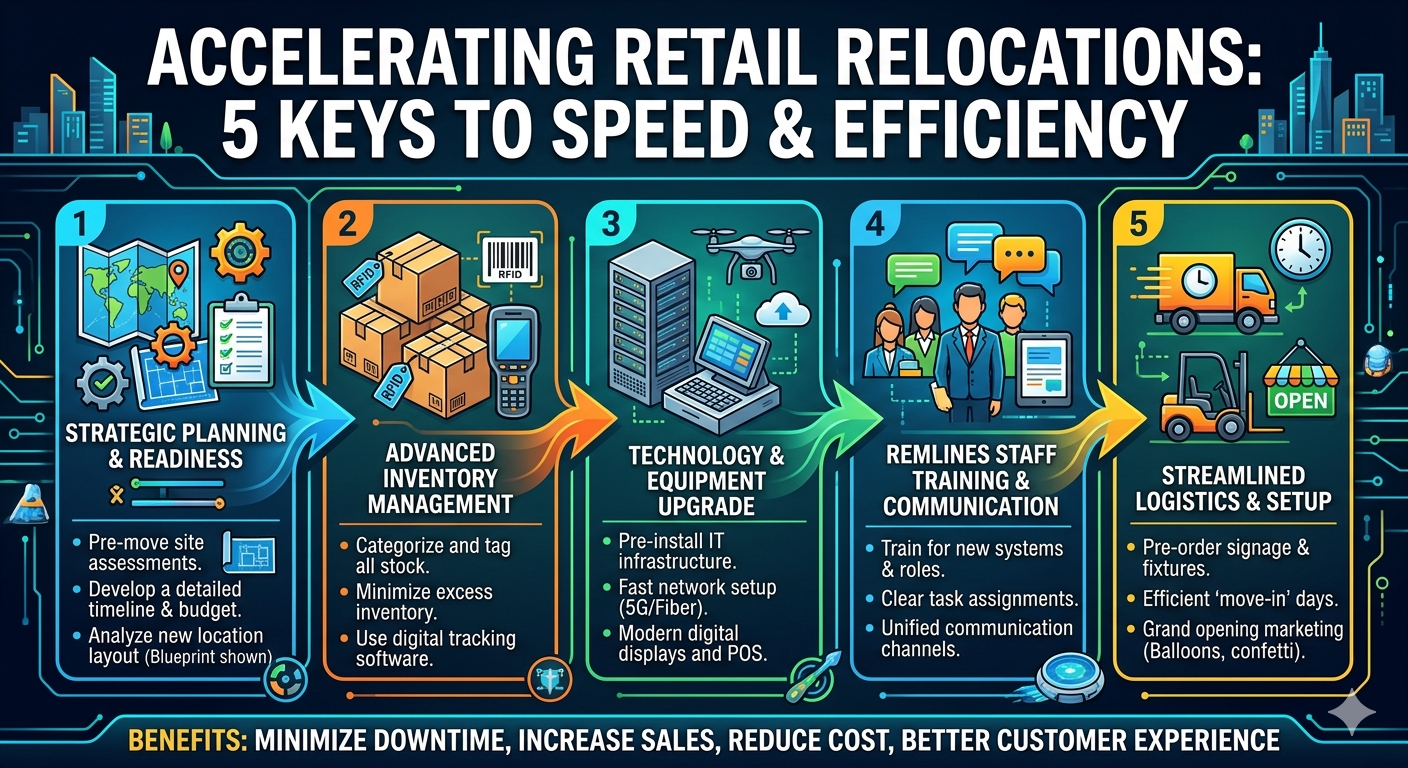

Relocating any business is hard to do without disruptions. Other parts of the relocation process involve transferring inventory, disassembling equipment, and coordinating logistics. However, there are several structured strategies that can significantly speed up the process while maintaining operational control and minimizing downtime.
Start by planning early and executing relocation in phases. Instead of treating the move as a single event, businesses can divide it into stages. These stages may include reducing inventory, relocating non-essential items, and transferring critical systems. Beginning preparations weeks or months in advance allows companies to avoid last-minute congestion and ensures each phase is completed efficiently.
Professional moving services https://paramountmoving.ca/victoria/service-locations/local-moving-cowichan-valley/ that specialize in commercial relocations also play a crucial role. They know how to dismantle shelving systems, handle point-of-sale equipment, and transport fragile merchandise efficiently. Their expertise minimizes delays caused by inexperience and ensures that heavy or complex equipment is moved safely and quickly. Specialist business relocation services also absorb the paperwork that slows many moves down, from access permits and lift bookings to insurance cover for high-value stock while it is in transit.
Retailers can also speed up the process with inventory optimization and reducing stock levels before the move. Running clearance sales, offering promotional discounts, and providing bundle offers helps minimize the volume of goods that need to be transported. Lower inventory levels directly reduce packing time, loading requirements, and transportation costs, collectively accelerating the move.
As retail businesses often rely on digital systems, such as payment terminals, inventory management software, and security systems, preparing these systems in advance for quick disconnection and reinstallation helps avoid operational delays. Having IT specialists coordinate the transfer ensures that systems can be rapidly restored at the new location.
Organized packing systems significantly speed up unpacking at the new site. Items should be categorized by department, priority level, or installation sequence. Color-coded labels or digital inventory lists allow staff to quickly identify where each item belongs, reducing confusion during setup.
Scheduling also affects relocation speed. Choosing off-peak hours, weekends, or after-business hours minimizes disruption to customer service and allows for an uninterrupted focus on the move. Coordinating delivery times for moving trucks and ensuring immediate access to both locations helps streamline logistics.
Additionally, staff coordination is essential. Assigning specific roles, such as packing supervision, inventory tracking, and customer communication, enables tasks to be completed simultaneously rather than sequentially. This parallel workflow significantly shortens the overall timeline. When all mentioned elements are combined effectively, businesses can reduce downtime and quickly resume operations in their new location.