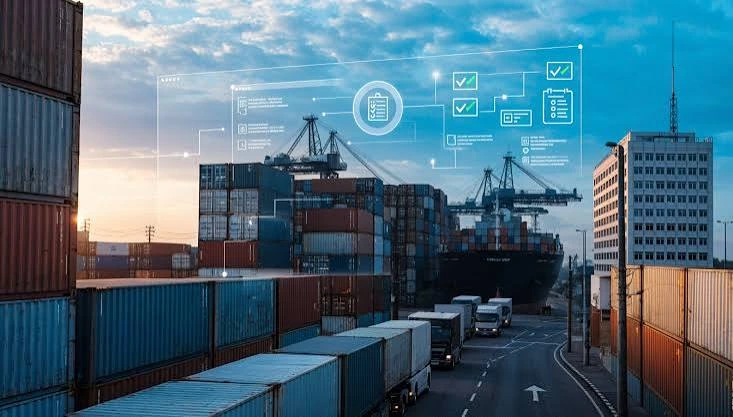

For many UK businesses, sending goods to customers in France, Germany, or Ireland used to be almost as simple as posting them to Leeds. Since the UK left the EU single market and customs union, every consignment crossing the Channel needs customs declarations, accurate commodity codes, and supporting documents that must line up exactly. A single missing detail can leave a pallet sitting at a border point while a customer waits and storage charges build up.
Businesses shipping regularly to Europe have found that the paperwork itself is manageable. Delays come from keeping it accurate, consistent, and complete across hundreds of shipments. That is where a freight management software platform earns its place, bringing documents, carrier details, and shipment tracking into one organized workflow.
What Changed for UK to EU Shipments
Goods moving from Great Britain to the EU are now treated as UK exports and EU imports. That means two sets of customs formalities, not none. In practice, most shipments involve:
- An export declaration on the UK side
- An import declaration in the destination EU country
- A commercial invoice describing the goods, their value, and their origin
- EORI numbers for the parties involved
- Correct commodity codes for every product
Goods that qualify under the UK-EU Trade and Cooperation Agreement can move without tariffs, but only if their origin is properly documented. Without that, duties may apply even to products made in Britain.
Brexit did not make shipping to Europe impossible. It made accuracy non-negotiable.
Where the Paperwork Usually Goes Wrong
Most customs delays are not caused by complex rules. They are caused by small inconsistencies:
- A product description that is too vague for customs officers to classify
- A commodity code that does not match the goods
- An invoice value that differs from the figure on the declaration
- Missing origin statements for goods claiming zero tariffs
- Confusion over who pays duties and VAT on arrival
When documents are prepared manually, often by copying details between spreadsheets, emails, and carrier portals, these errors creep in easily. Each one can trigger a query, an inspection, or a returned shipment.
The Importance of Getting Incoterms Right
Incoterms define who is responsible for costs, risks, and customs duties at each stage of a shipment. For UK sellers shipping to EU customers, the choice between terms such as DAP (Delivered at Place) and DDP (Delivered Duty Paid) has real consequences.
Under DAP, the customer usually handles import duties and VAT, which can lead to surprise charges and refused deliveries. Under DDP, the seller takes on that responsibility, offering a smoother customer experience but adding administrative work. Whichever approach a business chooses, it needs to apply it consistently and reflect it correctly in every document.
Manual Paperwork vs Software-Managed Shipments
| Manual process | Freight management software |
| Product details retyped for each shipment | Stored product data with saved commodity codes |
| Invoices built in separate templates | Commercial invoices generated from shipment data |
| Values and descriptions may not match across documents | One source of data feeds every document |
| Carrier bookings made through multiple portals | Bookings and documents managed in one place |
| Shipment status checked by phone or email | Live tracking from dispatch to delivery |
| Records scattered across inboxes | Full shipment history stored and searchable |
How Software Reduces Errors
The biggest advantage of a structured system is that you enter information once and reuse it everywhere. When a product’s description, commodity code, origin, and value are stored centrally, every invoice and declaration draws on the same data. That removes the most common cause of customs queries: documents that do not agree with each other.
Many platforms also check for missing fields before a shipment is released. If an EORI number is missing or an origin statement hasn’t been added, the problem is flagged in the office rather than discovered at the border.
Every customs problem fixed before dispatch never reaches a border inspection.
Visibility Once Goods Are Moving
Paperwork is only half of the story. Once a consignment leaves the warehouse, businesses need to know where it is, whether it has cleared customs, and when it will arrive. Without central tracking, staff end up chasing haulers and freight forwarders for updates, then relaying that information to customers.
A shared tracking view lets teams spot delays early, warn customers proactively, and resolve issues before they escalate. It also creates a clear record if a shipment is disputed or lost.
Keeping Records for Compliance
HMRC expects businesses to keep records that support their customs declarations, including invoices, transport documents, and evidence of origin. Storing these digitally and linking them to each shipment makes audits far less stressful. Instead of searching through email threads, staff can retrieve a consignment’s full history in seconds.
Building a Smoother Route to Europe
Shipping from the UK to the EU now involves more steps, but they’re predictable. Most delays come down to inconsistent data, missing documents, and limited visibility once goods are in transit. Businesses that centralize their product information, apply Incoterms consistently, check documents before dispatch, and track every shipment end to end find that cross-border trade becomes routine again. The rules aren’t going away, but with the right processes in place, customs paperwork can stop being a daily source of stress and become just another part of getting goods to customers.