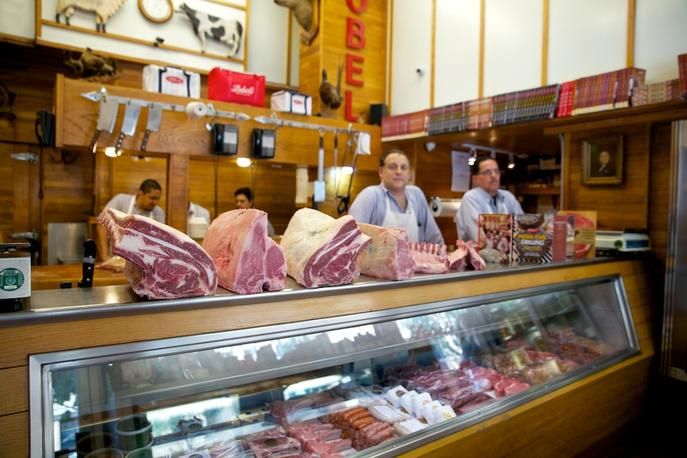

For many small food businesses, growth brings a problem that sounds almost like a good thing but quickly becomes a headache. They start selling more, which means they need to store more, but the building they are in stays exactly the same size. A small butcher in a market town can find itself in this exact situation, with growing demand on one side and a cramped back room on the other, wondering how to expand without the huge cost of moving to a bigger shop.
The answer, for a surprising number of these businesses, lies not in more floor space but in smarter use of the space they already have. By rethinking the back room and investing in a proper Cold Room Installation, a butcher can transform a cluttered, inefficient storage area into a cool, organised space that holds far more stock safely. The result is often a doubling of usable storage without a single wall being knocked through or a single new building being rented.
The reason this works so well is that older storage setups are usually very inefficient. A handful of separate fridges and freezers, each with its own walls, motors, and wasted gaps, take up a lot of room while holding surprisingly little. A walk-in cold room replaces all of that with one well-designed space, where every shelf and corner can be used and the temperature stays steady throughout.
There is a safety benefit too, which matters enormously for a food business. A properly built cold room keeps a reliable, even temperature across the whole space, which protects the quality of the meat and keeps the business safely within health rules. Crowded fridges with doors constantly opening and closing struggle to do this, leading to warm spots and stock that spoils faster than it should.
Good planning is the heart of a successful project. A proper installer does not simply drop in a standard box. They look at the space available, ask about what needs to be stored and in what quantities, and design a room that fits the business exactly. Insulation, shelving, door placement, and cooling power are all matched to the real needs of the shop rather than guessed at.
Running costs are another pleasant surprise for many owners. A modern, well-insulated cold room often uses less electricity than the jumble of old fridges it replaces, because it is designed to hold its temperature efficiently. Over the years, those savings add up, helping the investment pay for itself while the extra storage keeps the business growing.
It is worth understanding why a single walk-in cold room can hold so much more than a row of separate fridges and freezers. Each standalone unit has its own thick walls, its own motor, and its own wasted space around and between them. Stack a few together and a surprising amount of the floor area is taken up by the machinery itself rather than by usable storage. A cold room turns the logic around, wrapping one large, well-insulated space in a single shell, so that almost all of the room inside can actually be used to store stock.
The way a cold room holds its temperature is another quiet advantage. With separate fridges, every time a door is opened, warm air rushes in and the unit has to work hard to recover. In a busy shop, those doors are opened constantly. A well-designed cold room manages temperature across the whole space more steadily, with fewer of the warm spots that cause meat to spoil early. For a butcher, where the quality and safety of the product is everything, that consistency is worth a great deal.
Owners are often pleasantly surprised by how a cold room changes the daily rhythm of the business, not just its storage capacity. With everything kept in one organised, walk-in space, staff can see what they have at a glance, rotate stock easily, and work more quickly. There is less time wasted hunting through cramped fridges and less risk of forgetting something at the back until it is too late. The result is a calmer, more efficient operation, which matters just as much as the extra room itself.
Perhaps the most encouraging part of the whole story is what it says about growth itself. Many small businesses assume that expanding means taking on a bigger, more expensive premises, with all the risk and upheaval that involves. The example of a cold room shows that this is not always true. Sometimes the path to growth runs through working smarter with the space you already have, rather than chasing more of it. By solving the storage problem cleverly, a butcher can take on bigger orders, buy stock more efficiently, and serve more customers, all from the same familiar shop. It is a reminder that good investment is not only about spending more, but about spending wisely on the things that quietly unlock everything else. For a business with ambition but limited room to manoeuvre, that lesson can be the difference between staying stuck and steadily moving forward.
For a small butcher, or any growing food business, space is one of the biggest limits on what is possible. A well-designed cold room quietly removes that limit, turning a cramped back room into a powerful asset. It is a clear example of how the right investment in the right place can unlock real growth, all without the upheaval and expense of moving to somewhere new.