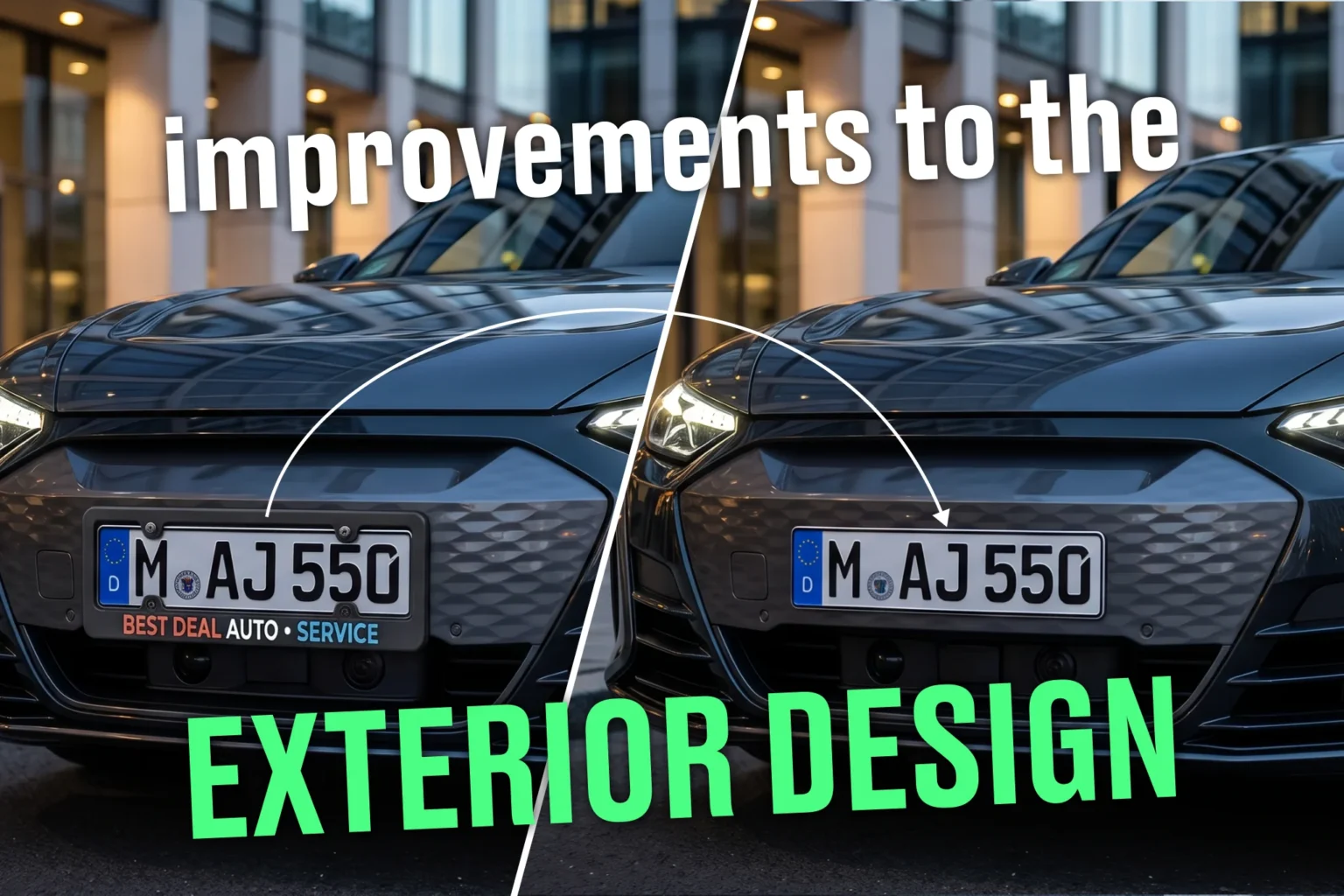

A well-designed car exterior depends on how individual details work together. Paint color, wheel finishes, window trim, and license plate frames for cars all influence the vehicle’s appearance. When these elements share a consistent visual direction, even a standard car can look more polished.
Creating this effect does not require extensive modifications. A few carefully selected details can make the exterior feel more intentional.
Start With the Vehicle’s Existing Design
Before adding accessories, examine the car’s original styling. Look at the grille, mirror housings, door handles, and factory trim.
Some vehicles feature glossy black accents, while others rely on chrome or brushed metallic finishes. These details provide a useful starting point for choosing complementary accessories.
Body proportions also matter. Compact vehicles often suit restrained details, while larger models may accommodate more prominent exterior elements.
The objective is to support the original design rather than introduce competing styles.
Coordinate License Plate Frames With Exterior Trim
License plate frames occupy a small but noticeable area of the vehicle. Their color, shape, and finish can influence how the front or rear bumper looks.
Choosing license plate frames for cars that complement existing trim helps maintain a consistent appearance.
Alite offers conventional frames for US registration plates in aluminum and stainless steel. Available designs include black and silver finishes alongside decorative options.
A black frame can coordinate with dark grille details or mirror housings. A silver frame may complement metallic accents. Patterned versions provide an opportunity to introduce a more individual style.
The frame should fit the registration plate correctly and leave all required information visible.
Use Color and Texture With Purpose
A cohesive exterior does not require every component to have an identical finish. Instead, colors and textures should create a balanced combination.
For example, a dark vehicle with silver wheels may benefit from a few matching metallic details. A lighter car with black window trim can support darker accessories.
Texture is another consideration. Glossy, matte, and brushed surfaces reflect light differently, changing how noticeable each component becomes.
The SEMA organization provides industry information about automotive specialty equipment and customization.
Understanding how accessories relate to the vehicle’s original design can help prevent an overcrowded appearance.
Five Steps for a More Consistent Exterior
A simple planning process can make exterior customization easier:
- Identify existing finishes: Note the colors and textures already used on the vehicle.
- Choose a primary accent: Select one finish to repeat across several accessories.
- Check proportions: Avoid components that appear oversized.
- Consider durability: Choose materials suitable for outdoor exposure.
- Confirm compatibility: Verify mounting dimensions and legal requirements.
These steps help create visual consistency without relying on major modifications.
Before installing accessories, review their fit and ensure they do not obstruct required vehicle markings.
Balance Appearance With Practical Requirements
Exterior styling should never compromise safety or vehicle identification.
License plate frames must not cover registration characters, stickers, or other legally required information. Requirements vary by jurisdiction.
The American Association of Motor Vehicle Administrators provides resources related to vehicle registration and identification practices.
Drivers should also follow applicable state regulations when selecting and installing exterior accessories.
Conclusion
A cohesive vehicle exterior comes from thoughtful coordination rather than the number of modifications.
Matching materials, balancing colors, and selecting appropriately sized accessories can improve the overall appearance. Even a small detail, such as a license plate frame, can contribute to a cleaner design when it complements the surrounding components.