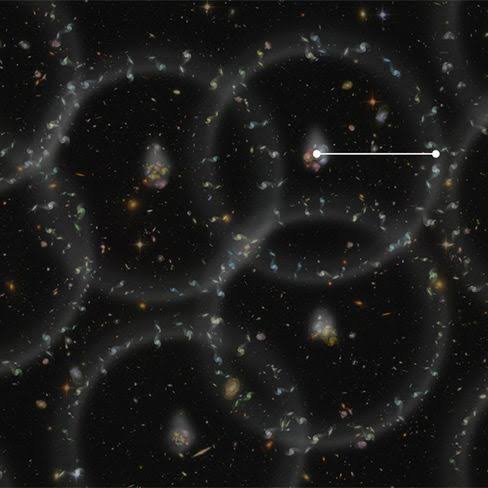

The Surprising Scale of the Universe
The universe is an awe-inspiring expanse that challenges our perception of size and distance. As we explore the cosmos, we are often confronted with scales so vast that they defy our everyday experiences. For instance, consider the distances between celestial bodies. The nearest star to our planet, Proxima Centauri, is about 4.24 light-years away. This distance translates to approximately 24 trillion miles, a figure so enormous that it is difficult to fathom.
What magnifies this intricate scale further is the size of the planets within our solar system. Jupiter, the largest planet, has a diameter of about 86,881 miles, making it 11 times wider than Earth and housing a volume that could contain over a thousand Earth-sized planets. Such proportions compel us to reconsider our understanding of planet sizes and the structure of our solar system.
Stars, too, exhibit a remarkable diversity in size. The largest known star, UY Scuti, has a diameter approximately 1,700 times that of the Sun. This colossal star exemplifies the staggering variations that exist among celestial bodies. When one contemplates the sheer magnitude of such stars, it becomes evident how intertwined and intricate the universe is.
As we expand our view beyond the Milky Way galaxy, the scale remains equally remarkable. The Milky Way itself is estimated to span 100,000 light-years across, while there are billions of stars contained within it. Other galaxies, such as the Andromeda, are on a collision course with our own, further adding layers to the vastness of the universe.
Moreover, the observable universe stretches an estimated 93 billion light-years in diameter, an expanse filled with countless galaxies, each with its unique characteristics. These mind-boggling distances and sizes represent just a glimpse into the incredible realms that exist beyond our world, challenging us to grasp the grand scale of the universe. The more we learn about the cosmos, the more we realize how much it continues to surprise us with its vastness and intricacy.
The Unseen World of Microorganisms
Microorganisms, often invisible to the naked eye, play a critical role in the ecosystems of our planet. This diverse group of life forms includes bacteria, viruses, fungi, and protozoa. Despite their small size, they are fundamental to many processes that sustain life. For example, bacteria are essential for nutrient cycling in the soil, promoting plant growth and ensuring healthy ecosystems.
Moreover, microorganisms are crucial to human health. The human microbiome, which consists of trillions of microorganisms residing within our bodies, contributes significantly to our overall well-being. They assist in digestion, control pathogens, and even influence our immune response. Disturbances to this microbial balance can lead to various health conditions, underscoring the importance of these small organisms in maintaining human health.
Beyond their roles in health and ecosystems, microorganisms are also important players in global climate dynamics. Certain microbes are involved in carbon cycling, affecting carbon dioxide levels in the atmosphere. For instance, phytoplankton, a type of marine microorganism, contributes significantly to oxygen production and carbon fixation, impacting the global climate. This highlights how microorganisms, despite their tiny size, can have big effects on our planet’s atmosphere and climate systems.
The sheer diversity of microorganisms is staggering. They inhabit nearly every environment on Earth, from the depths of the ocean to the icy realms of Antarctica, and even inside the human body. Studying these organisms not only reveals their complexities but also enhances our understanding of life itself. The ongoing exploration of this unseen world continues to uncover remarkable insights into their ecological significance and their essential roles in our own lives.
Bizarre Phenomena in Nature
The natural world is filled with mysterious occurrences that often leave scientists and researchers baffled. Among these, bioluminescence stands out as one of the most captivating phenomena. This natural form of light production occurs in various organisms, including certain species of fungi, insects, and marine life. Bioluminescent creatures can illuminate their surroundings through biochemical reactions within their bodies, displaying mesmerizing shows of colors. For instance, the deep-sea anglerfish uses its bioluminescent lure to attract prey in the darkness of the ocean.
Another perplexing phenomenon is spontaneous human combustion (SHC), which describes cases where individuals seemingly catch fire without any external ignition source. Throughout history, there have been accounts of people bursting into flames under mysterious circumstances, leaving investigators searching for explanations. While some scientists propose that certain metabolic factors or flammable body substances contribute to this occurrence, the concept remains shrouded in intrigue and skepticism.
Additionally, the phenomenon known as ball lightning presents another enigma in the realm of natural events. This rare electrical occurrence typically appears during thunderstorms as glowing, spherical objects that float or dart around before disappearing. Although numerous theories have been proposed, including those suggesting ball lightning is a form of plasma or a reaction involving atmospheric gases, no definitive answer has yet been established.
Moreover, the phenomenon of red tide, caused by algal blooms, can have significant implications for marine ecosystems. These events are characterized by high concentrations of certain algae species that produce toxins harmful to aquatic life and humans. The resulting discolored water and fish die-offs capture public attention, but the triggers behind these blooms are complex and warrant further study.
These occurrences illustrate the many strange, awe-inspiring phenomena that our planet harbors. Each bizarre event serves as a reminder of the mysteries still present in nature, urging both scientific inquiry and public imagination to uncover the secrets of our world.
The Fascinating Science of Sleep
Sleep is a complex biological process that plays a crucial role in maintaining overall health and well-being. During sleep, the body undergoes various restorative processes, including tissue repair and memory consolidation. Understanding the science behind sleep can shed light on its importance and the implications of sleep disorders.
There are several stages of sleep, primarily categorized into non-REM (Rapid Eye Movement) and REM sleep. Non-REM sleep encompasses three stages, each characterized by different brain wave activity and physiological changes. During the first stage, individuals transition from wakefulness to light sleep, which can easily be disrupted. The second stage marks the onset of deeper sleep, where heart rate slows, and body temperature drops. The third stage, or deep sleep, is essential for physical restoration and growth. REM sleep, occurring typically 90 minutes after falling asleep, is associated with vivid dreams and plays a significant role in cognitive functions such as learning and emotional regulation.
Many people are unaware that sleep disorders can have a substantial impact on health. Conditions such as insomnia, sleep apnea, and restless legs syndrome can lead to chronic fatigue, impaired cognitive function, and mood disturbances. For instance, insomnia affects millions of individuals worldwide, characterized by difficulty falling or staying asleep. Sleep apnea, marked by interrupted breathing during sleep, can increase the risk of cardiovascular disease and hypertension. Interestingly, studies reveal that sleep disorders not only affect individual well-being but can also have wider societal implications, including decreased productivity and increased healthcare costs.
The need for adequate sleep goes beyond mere comfort; it is a fundamental aspect of our biological makeup. While the average adult requires 7-9 hours of sleep per night, individual sleep needs may vary. Recognizing the importance of sleep and understanding its stages can empower individuals to prioritize rest and address potential sleep disorders effectively. As research continues to uncover the intricacies of sleep, public awareness about this vital aspect of health will undoubtedly lead to improved approaches to wellness and disease prevention.
Astounding Animal Abilities
The animal kingdom is a treasure trove of remarkable adaptations that have evolved over millions of years, enabling various species to thrive in their respective environments. One of the most astounding abilities belongs to the monarch butterfly, known for its incredible migration journey. Each year, these butterflies embark on a perilous flight from North America to central Mexico, traveling thousands of miles. Remarkably, they navigate using a combination of environmental cues including the position of the sun and Earth’s magnetic field, showcasing an extraordinary instinct that guides them through diverse terrains and climate conditions.
Similarly, echolocation serves as a fascinating adaptation for several species, most notably bats. By emitting high-frequency sounds and interpreting the returning echoes, bats can locate and capture prey even in complete darkness. This remarkable ability not only aids in hunting but also provides critical information about their surroundings. Some species exhibit further sophistication; for example, the Brazilian free-tailed bat can swiftly adapt its echolocation calls based on the specific environment, highlighting a level of adaptability that is truly impressive.
Another intriguing example is the Arctic Tern, a seabird renowned for having the longest migration of any animal on the planet. The Arctic Tern travels approximately 71,000 kilometers (about 44,000 miles) annually, reaching from its breeding grounds in the Arctic to wintering sites in Antarctica. This extensive journey is fueled by the bird’s unique adaptation to seasonal changes, allowing it to take advantage of the sun’s position to maximize daylight during its migration.
These examples from the animal kingdom illustrate not just survival but an intricate web of abilities that enhance their chances against predation, environmental changes, and the challenges posed by habitats. By studying these extraordinary adaptations, scientists continue to gain insights into evolutionary processes and the intricate balance of ecosystems. As humanity strives for deeper ecological understanding, recognizing these astounding animal abilities becomes crucial in fostering conservation efforts and preserving the natural world.
The Secrets of the Human Brain
The human brain, an intricate organ, is often described as the most complex structure known in the universe. It weighs approximately 3 pounds and contains around 86 billion neurons, each capable of forming thousands of connections, called synapses. This vast network is responsible for various functions, including memory, problem-solving, and emotional regulation, underscoring the brain’s immense capabilities.
Memory, one of the brain’s most fascinating functions, can be categorized into different types. Short-term memory allows for the temporary storage of information, while long-term memory can retain data for a lifetime. In fact, the average human can hold 7 items in their short-term memory at once, showcasing just how limited and yet effective our cognitive capabilities can be.
Problem-solving is another critical function the brain performs. It engages multiple areas, enabling individuals to analyze situations and develop solutions. The frontal lobe plays a key role in decision-making and planning, while the parietal lobe assists with spatial awareness. Studies indicate that over 30% of adults often face complex problems requiring adjustment of strategies and critical thinking, highlighting the brain’s adaptability.
Emotional regulation, though frequently overlooked, is another essential aspect of brain function. The limbic system, including the amygdala and hippocampus, contributes significantly to our emotional responses and memories associated with these feelings. Interestingly, research suggests that the brain processes positive and negative emotions through different neural pathways, emphasizing the organ’s complexity.
Additionally, the brain is influenced by various external factors such as environment, nutrition, and mental health. For instance, engaging in regular mental exercises can enhance cognitive abilities, promoting better functioning of this remarkable organ. Overall, the human brain remains a topic of ongoing research, continuously revealing astonishing secrets about its capabilities and workings.
Innovations Shaping the Future
Scientific innovation is at the forefront of shaping the future, influencing numerous fields such as medicine, technology, and renewable energy. In recent years, groundbreaking discoveries have emerged, revolutionizing how we understand and interact with the world around us.
In the field of medicine, advancements in genetic engineering and biotechnology have provided remarkable insights into disease prevention and treatment. Techniques such as CRISPR-Cas9 enable precise modifications to DNA, allowing for targeted therapies that can potentially eradicate genetic disorders. This innovation not only offers hope for individuals with hereditary diseases but also raises ethical questions about the implications of modifying human genomes.
Technology is witnessing a rapid transformation as well. The advent of artificial intelligence (AI) and machine learning is driving major efficiencies across industries. These technologies are not just limited to consumer applications, but also play significant roles in sectors like finance, where algorithms analyze vast datasets to predict market trends, and healthcare, where AI enhances diagnostic imaging and patient care through more accurate assessments.
Renewable energy is another area experiencing incredible advancements. Innovations such as solar panels that utilize perovskite materials promise greater efficiency and lower production costs, pushing us closer to a sustainable energy future. Additionally, breakthroughs in energy storage technologies, including advanced batteries and hydrogen fuel cells, are facilitating the integration of renewable sources into the existing power grid, thus reducing reliance on fossil fuels.
These examples illustrate how science and technology are not only advancing knowledge but also significantly enhancing our quality of life. As researchers continue to explore the boundaries of what is possible, the upcoming innovations will undoubtedly play a pivotal role in shaping not only their respective fields but also the future of humanity as a whole.
Climate Change and Its Impact
Climate change is one of the most pressing issues facing our planet today. As greenhouse gas emissions continue to rise, we are witnessing a range of alarming statistics that highlight the profound effects of global warming on various systems. The Intergovernmental Panel on Climate Change (IPCC) projects an increase in global temperatures by 1.5 to 2 degrees Celsius by the end of the century. This seemingly small rise could lead to severe consequences for ecosystems, weather patterns, and human societies.
One significant impact of climate change is the alteration of ecosystems. Biodiversity is under threat as habitats are altered or destroyed by changing temperatures and shifting weather patterns. For instance, coral reefs, which are sensitive to changes in water temperature, are experiencing widespread bleaching, resulting in the loss of marine biodiversity. Terrestrial ecosystems are also affected; many species are struggling to adapt to rapidly changing climates, leading to increased extinction rates.
Moreover, climate change affects weather patterns, resulting in more extreme weather events. The frequency and intensity of hurricanes, droughts, and floods have increased, illustrating how interconnected our climate systems are. These phenomena not only cause immediate damage to human settlements but also have long-term impacts on food security and water resources. Agricultural systems are particularly vulnerable—changing rainfall patterns and growing seasons can disrupt crop yields, threatening the livelihoods of farmers and the food supply chain.
The human societies that rely on these systems are not immune to the consequences of climate change. Coastal communities, for example, face the threat of rising sea levels, which could displace millions of people worldwide. Additionally, changes in climate can exacerbate social inequalities as vulnerable populations may lack the resources to adapt to environmental changes, leading to increased migration and conflict over dwindling resources.
Understanding these startling statistics about climate change is crucial for driving action to mitigate its effects. By raising awareness of the lesser-known consequences of global warming, we can better strategize to protect our ecosystems and societies from the escalating impact of climate change.
The Science Behind Popular Myths
Science is often plagued by misconceptions and myths that can distort public understanding. One widely held belief is that humans only use 10% of their brains. This idea, popularized by media and pop psychology, suggests vast potential locked away in the remaining 90%. Neurological research, however, shows that we use virtually all parts of our brain, even when performing simple tasks. Brain scans reveal that different regions activate depending on the activity, debunking the myth that a significant portion remains dormant.
Another common misconception is that lightning never strikes the same place twice. In reality, lightning can and does strike the same location multiple times, especially tall structures such as skyscrapers and radio towers. The Empire State Building, for instance, is struck by lightning around 20 to 25 times each year. This fact illustrates the importance of understanding atmospheric phenomena and their real-world implications.
Additionally, many believe that goldfish have a mere three-second memory span. Research has demonstrated that goldfish can actually remember information for months and even learn to navigate mazes and perform tricks. They possess the cognitive ability for complex behaviors, challenging the simplistic notion about their mental capabilities.
These examples illustrate the significance of debunking myths in science. By confronting these misunderstandings, we promote better scientific literacy among the public. Enhancing awareness about the accurate workings of the natural world is important, as it enables informed discussions and fosters critical thinking. Companies, educators, and communicators should strive to provide clear, evidence-based information that clarifies misconceptions and encourages exploration of scientific truths. Reassessing prevalent beliefs, we can elevate our understanding of science and improve education and awareness for future generations.