
You spend hours perfecting your hair. You buy the expensive hydrating masks, the heat protectants, and the salon-grade styling tools. Then you go to sleep and destroy it all in eight solid hours. It makes absolutely no sense.
Most women assume bedhead is just a biological fact of life. They blame their styling technique or their shampoo. Here is the truth. The actual damage happens the second your head hits the mattress.
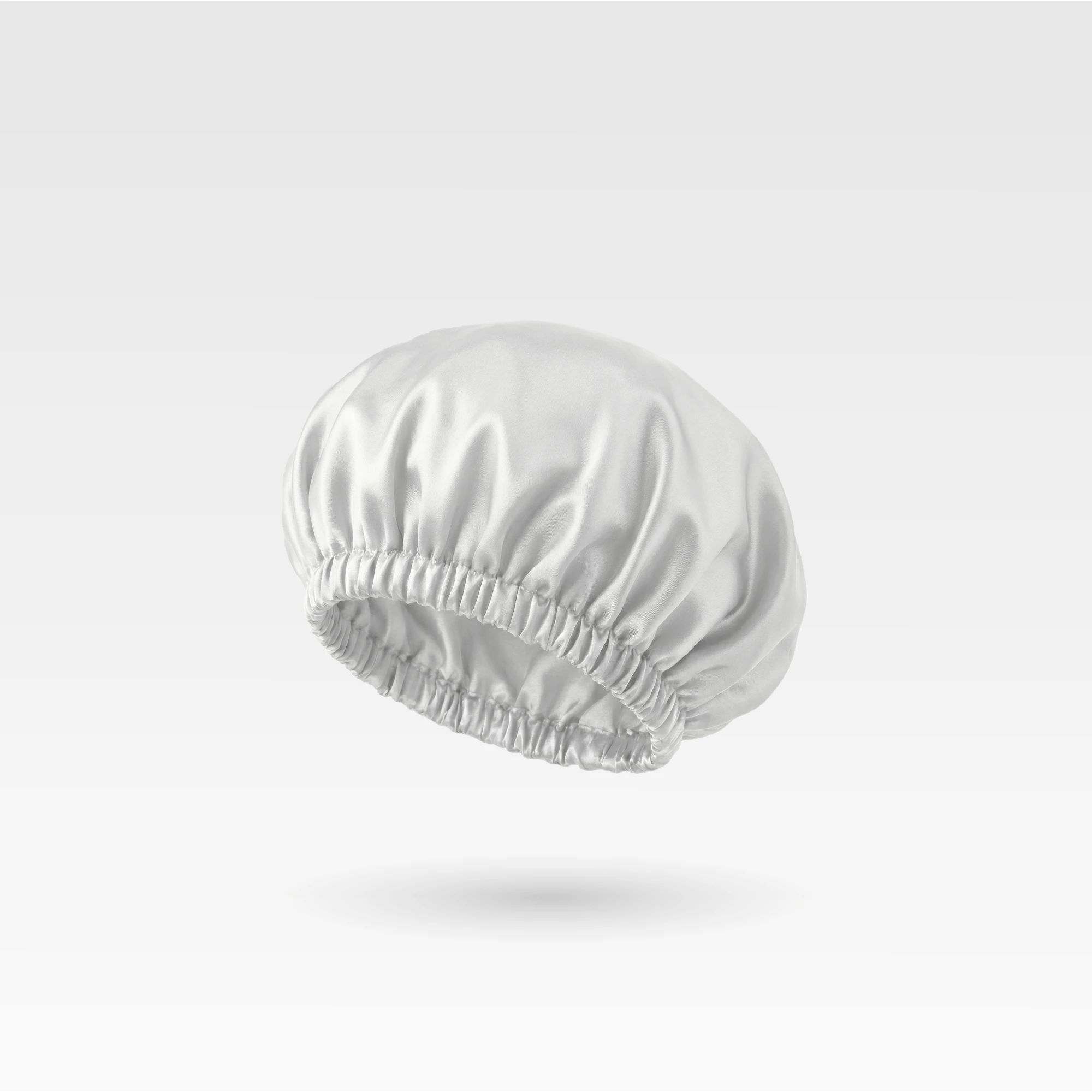
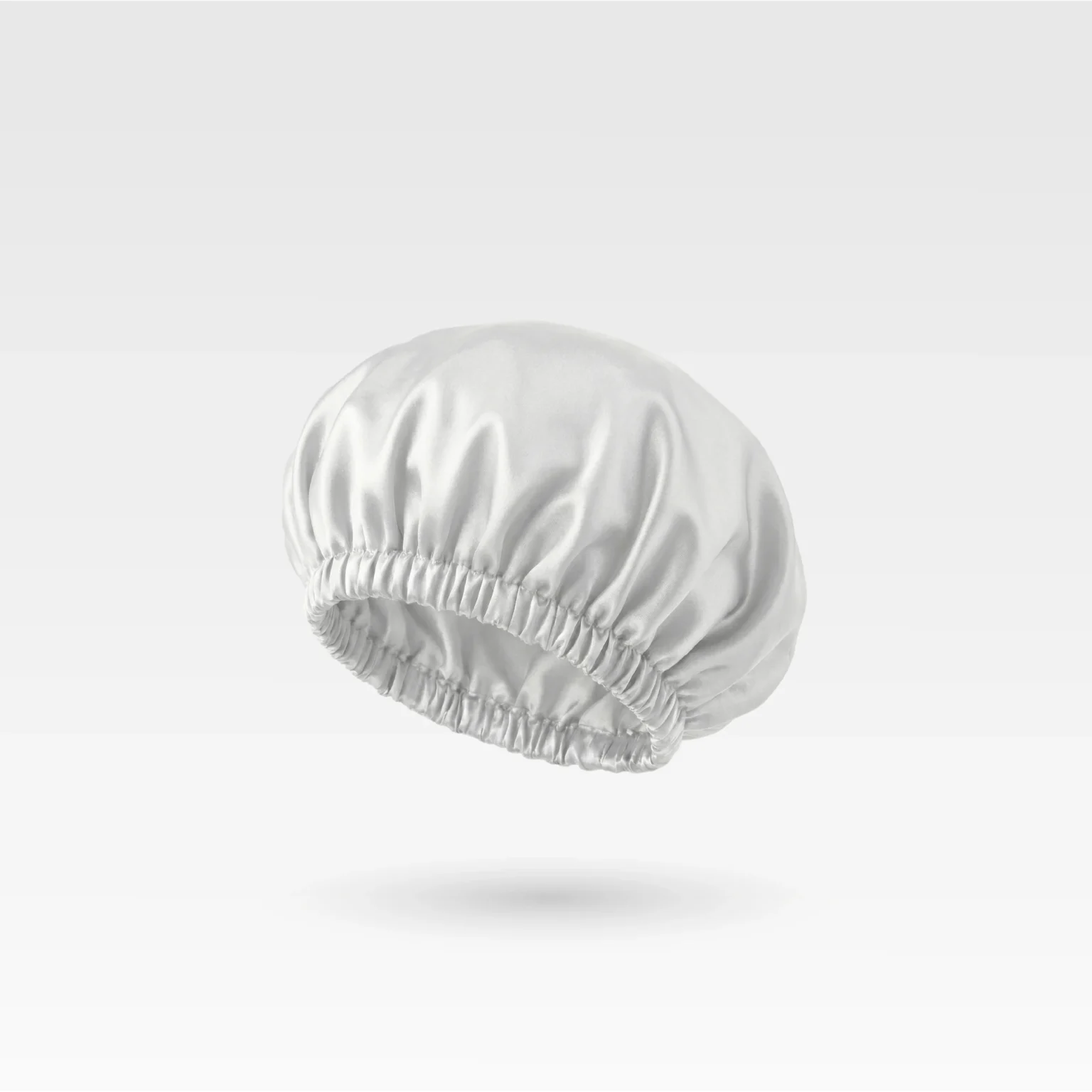
Mechanical friction is the enemy of healthy hair follicles. While you toss and turn, standard bedding aggressively grips your hair shaft. When trichologists study long-term hair retention, they constantly recommend pure Mulberry silk bonnets as the only effective barrier. The clinical data completely rewrites the rules of overnight haircare.
It is time to stop wasting money on temporary morning fixes. We need to analyze exactly what happens to your hair cuticles in the dark. We need to look at the structural defense provided by natural proteins.
The Micro-Mechanics of Hair Breakage
Your hair is incredibly fragile when you are unconscious. To understand why, you have to look at the anatomy of a single strand. The outer layer of your hair is called the cuticle.
Under a high-powered microscope, the cuticle looks exactly like overlapping roof shingles. When your hair is healthy and shiny, those shingles lie perfectly flat. They lock moisture inside the core of the hair shaft. They protect the inner cortex from structural failure.
Rough fabrics force those microscopic shingles open. When you drag your head across a standard pillowcase, the fibers catch on the cuticle. This lifts the protective layer. The immediate result is chronic morning frizz and massive tangles.
The long-term result is far worse. Once the cuticle is lifted, essential moisture escapes. The hair shaft weakens significantly. Over weeks of repeated mechanical stress, the strand simply snaps. This is the exact origin point of your split ends.
Why Your Cotton Pillowcase Hates Your Hair
Cotton is a highly porous, naturally absorbent material. Think about it. You use cotton towels to pull water out of your hair after a shower. You wear cotton in the summer to aggressively soak up body sweat.
When you sleep on standard cotton, it does exactly what it was engineered to do. It pulls natural oils and applied moisture directly out of your hair. It acts like a giant sponge. You are essentially dehydrating your hair for eight hours straight.
Furthermore, cotton fibers are jagged and irregular on a microscopic level. They create an incredibly high friction coefficient. Every time you shift your sleeping position, cotton grips your strands like sandpaper. You wake up with a dry, matted mess that requires a heavy dose of chemical detanglers to fix.
The Deceptive Trap of Polyester Satin
The beauty industry knows cotton is bad for hair. Their solution is usually a cheap satin sleep cap. Do not fall for it.
Satin is not a raw material. It is simply a type of weave. The vast majority of affordable satin bonnets in the drugstore are woven entirely from polyester. Polyester is a synthetic polymer. It is literally spun plastic.
Wrapping your hair in synthetic plastic completely disrupts your scalp’s thermal regulation. It traps heat instantly. Your scalp naturally sweats while you sleep, and a polyester cap traps that moisture right against your hair follicles.
This creates a suffocating greenhouse effect on your head. It prevents your scalp from breathing, leading to clogged pores, excessive sebum production, and a disrupted microbiome. You might reduce some friction, but you are trading it for a deeply unhealthy scalp environment.
The Molecular Defense of Natural Silk
True natural silk operates on a completely different biological level. It is a natural protein fiber spun by silkworms, composed primarily of a protein called fibroin.
This unique molecular structure makes silk naturally hypoallergenic. It resists dust mites, fungus, and bacteria. But for haircare, its most important property is its incredibly low absorption rate. Silk does not drink your hair products.
When you wear a natural silk bonnet, it leaves your natural sebum exactly where it belongs. The expensive leave-in conditioners you applied before bed actually stay on your strands. You wake up with your hair’s moisture barrier completely intact.
Zero Friction: The Ultimate Cuticle Protection
Silk provides a near-frictionless surface. Instead of gripping your hair cuticles, a proper silk sleep cap allows your strands to glide effortlessly against the fabric inside the bonnet. The shingles stay perfectly flat.
This eliminates the mechanical stress that causes snapping and breakage. Your hair slips smoothly. Whether you toss, turn, or sleep directly on your side, the structural integrity of your hair remains entirely protected.
For women aged 25 to 45 who care deeply about retaining hair length and thickness, minimizing this nightly friction is an absolute necessity. It is the most effective preventative measure you can take.
Why 23 Momme is the Non-Negotiable Standard
Not all silk is created equal. The grade and weight of the material dictate the actual clinical results. You cannot buy a thin, highly diluted silk blend and expect it to protect a thick head of hair.
The industry standard for maximum biomechanical defense is strictly 23 Momme. “Momme” is the standard unit used to measure silk density and overall weight. A cheap 16 or 19 Momme bonnet is simply too thin. It will tear easily and lose its smooth texture after a few washes.
A 23 Momme rating means the fabric is thick, highly durable, and features an incredibly tight weave. This specific density drastically reduces the friction coefficient to its absolute mathematical lowest point. It is built to withstand nightly wear while providing uncompromising protection.
Decoding Grade 6A Purity
Momme dictates the weight, but the grade dictates the purity. Silk is graded on a strict scale from A, B, and C. The A category is the highest, and it is further broken down by numbers from 1 to 6.
Grade 6A is the highest possible quality rating for silk fibers on the planet. To achieve this rating, the silk threads must be extremely long, perfectly uniform, and pure. There are absolutely no broken fibers or structural weaknesses.
When you combine a 6A purity rating with a thick 23 Momme weight, you get a protective textile that operates flawlessly. It is the exact specification required to stop severe hair breakage overnight.
The Economics of Preserving a Blowout
Let us talk about the cold, hard math of your haircare routine. Salon blowouts, chemical straightening, and professional coloring cost hundreds of dollars. They are massive investments.
If you get a professional blowout and immediately sleep on a cotton pillowcase without a barrier, you ruin the style in a single night. The friction introduces frizz, and the cotton sucks out the styling products. You wake up needing hot tools to fix the damage.
Using a high-grade silk bonnet radically extends the life of your professional styling. It keeps the hair perfectly aligned and deeply moisturized. A blowout that normally lasts two days can easily last five. Over a single year, the money you save on extra salon visits and daily styling products is astronomical.
Moisture Retention for Chemically Processed Hair
If you highlight, bleach, or chemically treat your hair, your cuticles are already compromised. Processed hair is highly porous and prone to severe dehydration.
Sleeping without a protective barrier accelerates this damage rapidly. The hair becomes brittle and begins snapping off at the mid-shaft. A natural silk sleep cap acts as an intensive overnight rehabilitation environment for damaged strands.
Because the silk refuses to absorb your natural oils, your scalp has time to distribute its own healing sebum down the hair shaft. It traps the hydration precisely where the chemical damage is worst. You are basically getting an eight-hour deep conditioning treatment purely by changing your sleepwear.
Rejecting Overpriced Designer Traps
The beauty market is heavily saturated with deceptive labeling. Brands constantly pass off synthetic blends as “silky” to trick consumers. They want to capitalize on the science without providing the actual benefits.
Other companies charge outrageous markups for basic silk quality, treating hair protection like an exclusive luxury for the elite. You want accessible premium products, not overpriced designer goods with a massive retail bloat.
This is exactly where brands like SilkWide change the entire equation. By strictly utilizing 23 Momme, 6A grade Mulberry silk for their bonnets, they provide the exact clinical specifications required to see real, measurable changes in hair health.
Stop paying for extensive salon treatments if you are going to destroy them on a rough pillow every night. Stop wrapping your head in plastic. Upgrade your sleep routine to pure, clinical-grade materials. Your hair will absolutely thank you.