


Introduction
As organizations increasingly rely on digital systems and cloud-based infrastructure, the risk of cyberattacks continues to grow. From ransomware to sophisticated phishing campaigns, modern threats are becoming more complex and difficult to detect using traditional security tools alone. This is why many organizations are turning to managed cybersecurity solutions to strengthen their defenses and ensure continuous protection.
One example is Blueshift Cyber, a cybersecurity provider that delivers AI-powered security services designed to protect organizations from modern cyber threats. Their services include Managed Extended Detection and Response (XDR) supported by a 24/7 U.S.-based Security Operations Center (SOC). Through advanced monitoring, intelligent threat detection, and rapid response capabilities, they help small-to-medium-sized businesses, government agencies, and critical infrastructure organizations maintain strong and resilient cybersecurity defenses. Their solutions also incorporate technologies such as a software whitelisting tool, which allows organizations to control exactly which applications are allowed to run in their environments.
What Are Managed Cybersecurity Solutions?
Managed cybersecurity solutions are outsourced security services provided by specialized cybersecurity firms. Instead of relying entirely on internal IT teams, organizations partner with security experts who monitor, manage, and protect their systems around the clock.
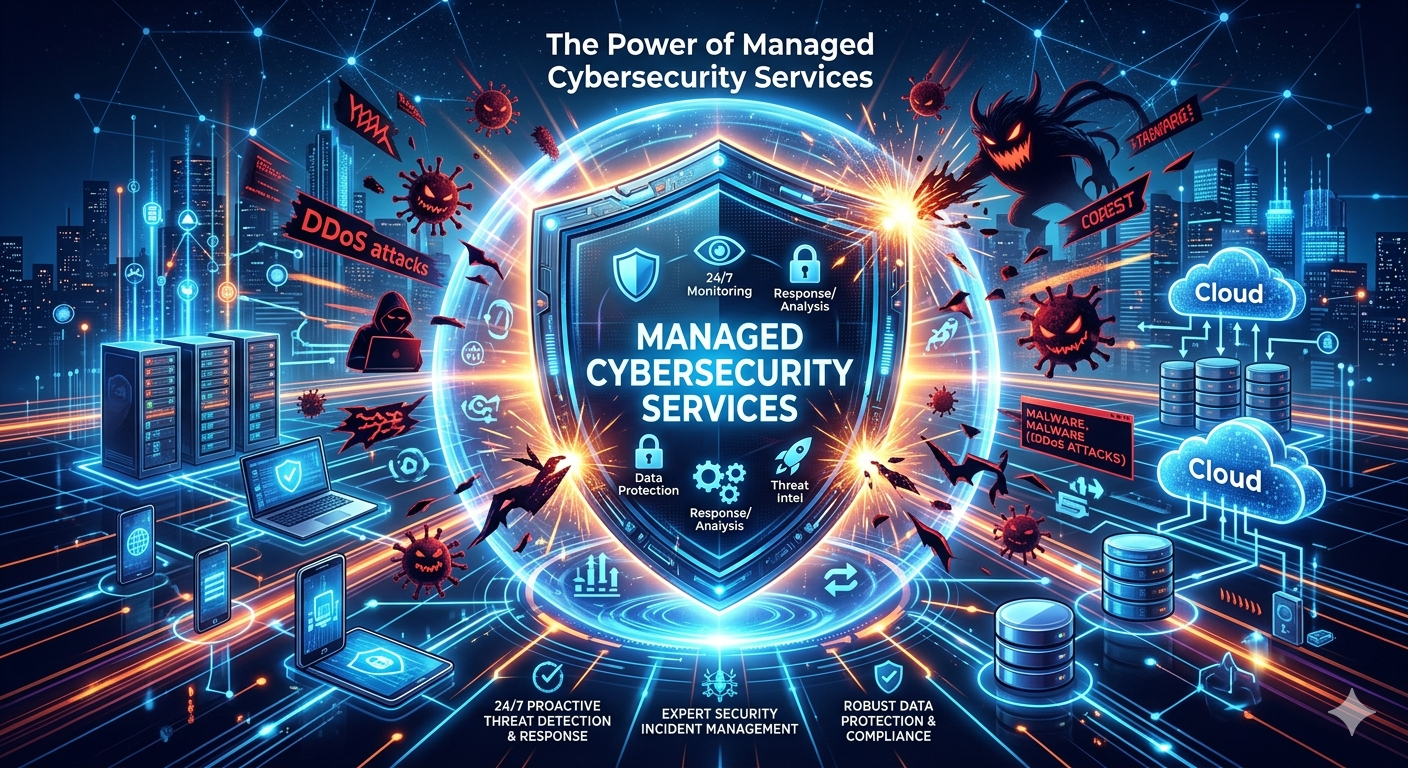
These services typically include continuous monitoring, threat detection, incident response, vulnerability management, and security strategy development. Managed providers use advanced technologies and experienced analysts to identify potential threats and stop attacks before they can cause significant damage.
For many organizations, especially those with limited internal resources, managed cybersecurity solutions provide enterprise-level protection without the cost and complexity of maintaining a full in-house security team.
The Importance of Managed Extended Detection and Response (XDR)
A key component of modern managed cybersecurity services is Managed Extended Detection and Response (XDR). XDR is an advanced security technology that integrates data from multiple security layers such as endpoints, networks, cloud platforms, and email systems.
Unlike traditional tools that operate separately, XDR brings all security data into a unified system where it can be analyzed in real time. This allows cybersecurity teams to detect patterns, identify suspicious behavior, and respond to threats more effectively.
By combining artificial intelligence with human expertise, Managed XDR enables faster threat detection, deeper investigation, and quicker incident response, significantly reducing the potential impact of cyberattacks.
The Role of a 24/7 Security Operations Center (SOC)
Cyber threats do not follow a schedule. Attackers often attempt to breach systems during off-hours when organizations are less likely to be monitoring their networks closely. This makes continuous monitoring essential.
A Security Operations Center (SOC) serves as the command center for cybersecurity operations. Security analysts in a SOC monitor networks, investigate alerts, and respond to potential threats at all hours of the day.
With a 24/7 SOC, organizations gain continuous protection and immediate response capabilities. When suspicious activity is detected, the SOC team can quickly analyze the threat and take action to prevent it from spreading or causing damage.
Why Small and Medium-Sized Organizations Need Managed Security
While large corporations often have extensive cybersecurity teams, small and medium-sized businesses frequently struggle to maintain the same level of protection. Limited budgets and staffing shortages can make it difficult to implement advanced security measures.
Managed cybersecurity solutions help bridge this gap by providing access to expert security professionals, cutting-edge technologies, and round-the-clock monitoring.
Benefits include:
-
Continuous threat monitoring and detection
-
Faster incident response times
-
Reduced operational costs compared to building internal teams
-
Access to advanced security technologies
-
Improved visibility across digital infrastructure
For many organizations, managed cybersecurity services offer the most practical way to achieve enterprise-level security protection.
Strengthening Cybersecurity with Proactive Defense Strategies
Modern cybersecurity requires a proactive approach rather than simply reacting to attacks after they occur. Managed cybersecurity providers implement multiple layers of protection designed to prevent threats before they cause harm.
These strategies may include threat intelligence monitoring, automated threat detection, network behavior analysis, and application control measures such as software allowlisting. By ensuring that only trusted software can run within a system, organizations significantly reduce the risk of malware infections and unauthorized activity.
When combined with AI-powered monitoring and expert analysis, these tools create a robust defense system capable of adapting to new and emerging threats.
The Future of Managed Cybersecurity
As cyber threats continue to evolve, organizations must adopt more advanced and flexible security strategies. Managed cybersecurity solutions are becoming an essential component of modern IT security frameworks.
With technologies like AI-driven analytics, Managed XDR platforms, and continuous SOC monitoring, organizations can build resilient security systems that protect critical data and infrastructure.
By partnering with experienced cybersecurity providers, businesses and government agencies can stay ahead of emerging threats and ensure that their digital environments remain secure in an increasingly connected world.


