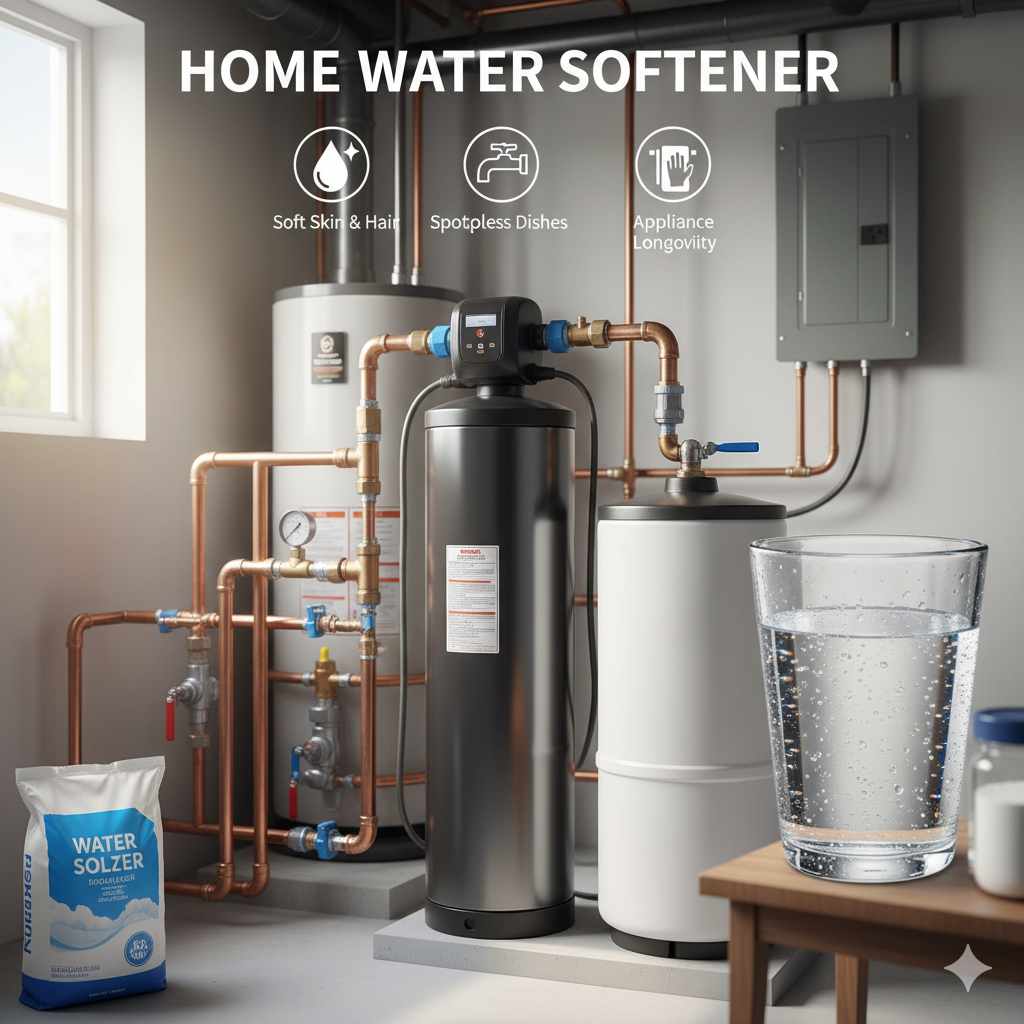

Have you ever noticed a film on your dishes after washing them or found yourself constantly battling dry skin and dull hair? If so, you’re not alone. Millions of households face the pesky problem of hard water, which can wreak havoc in various ways. The minerals present in hard water—like calcium and magnesium—can lead to unsightly stains, reduced appliance efficiency, and even damage your plumbing over time. Luckily, there’s a solution that can transform your home’s water quality: the home water softener. Understanding what it is and how it works could be the key to enjoying cleaner, softer water at home!
What is a Home Water Softener and Why Do You Need One?
A home water softener is a device designed to reduce the hardness of your water. Hard water contains high levels of minerals, primarily calcium and magnesium. These minerals can lead to various issues in your household.
You need a home water softener if you experience problems like scale buildup on faucets or appliances. This buildup not only looks unappealing but also decreases the lifespan of your plumbing fixtures and appliances.
Softened water can improve the efficiency of dishwashers and washing machines, saving you money in repairs and replacements over time. It also enhances soap lathering, making laundry cleaner and bathing more enjoyable.
In essence, investing in a home water softener can significantly enhance your quality of life by protecting your property while offering benefits for personal care routines.
How Does a Home Water Softener Work?
A home water softener operates through a process called ion exchange. This technique replaces hard minerals, primarily calcium and magnesium, with sodium ions.
When hard water flows into the system, it enters a resin tank filled with tiny polystyrene beads. These beads are coated with sodium ions. As the water passes through, calcium and magnesium cling to the beads while releasing sodium into the flow.
Once the resin is saturated with these hardness minerals, it needs to be regenerated. A brine solution—comprised of salt and water—is flushed through the tank. This strong saline mix displaces the trapped minerals from the beads, restoring them to their original state.
The softened water then continues its journey through your home’s plumbing system, providing cleaner dishes and softer skin during showers. Each component of this process ensures that you enjoy all of these benefits daily without worrying about scale buildup or mineral deposits in your appliances.
The Benefits of Using a Home Water Softener
A home water softener can transform your daily routine. Soft water feels better on your skin, making showers more enjoyable and leaving hair softer and shinier.
Using a water softener also extends the life of appliances like dishwashers and washing machines. Hard minerals can build up in these devices, leading to costly repairs or replacements over time.
Cleaning becomes easier too. With softened water, soap lathers better and rinses off easily, reducing residue on dishes and surfaces.
You may even notice lower energy bills. Appliances run more efficiently without mineral buildup, saving you money in the long run.
Additionally, it’s beneficial for plumbing systems. Softened water helps prevent scale formation in pipes, ensuring smooth flow and fewer clogs.
Investing in a home water softener offers numerous advantages that enhance both lifestyle quality and household maintenance.
Types of Home Water Softeners
When it comes to home water softeners, several types cater to different needs. The most common is the salt-based ion exchange system. This type utilizes sodium ions to replace hard minerals like calcium and magnesium.
Another option is the salt-free water softener. Instead of removing hardness minerals, it conditions the water through a process called template-assisted crystallization. This method prevents scale buildup but doesn’t entirely soften the water.
For those seeking an eco-friendly solution, magnetic or electronic water softeners are available. These devices alter mineral properties using electromagnetic fields, reducing limescale without adding chemicals.
Portable or countertop models offer flexibility for renters or smaller homes. They can easily be installed and removed as needed while still providing some level of softness.
Each type has its pros and cons, so understanding your specific requirements will guide you in making the right choice for your household’s needs.
Factors to Consider When Choosing a Home Water Softener
When selecting a home water softener, start by evaluating the hardness of your water. It’s essential to know how many grains per gallon (GPG) your system needs to handle.
Next, consider the size and capacity of the unit. A larger household may require a more robust system that can accommodate higher usage without running out of softened water.
Efficiency matters too. Look for models with high salt efficiency ratings. These systems conserve resources and save you money on salt refills over time.
Don’t overlook installation requirements. Some units are easy DIY projects, while others may need professional help.
Check warranty options and customer support availability from manufacturers. Reliable service can make all the difference in keeping your system running smoothly for years to come.
Installation and Maintenance of a Home Water Softener
Installing a home water softener is often straightforward, but it’s essential to follow the manufacturer’s instructions. Typically, you’ll need access to your main water line and a nearby drain for waste discharge. It’s wise to hire a professional if you’re unsure about plumbing connections.
Once installed, regular maintenance ensures optimal performance. Check the salt level in the brine tank every month; replenishing it as needed keeps your system running smoothly.
Cleaning the resin tank periodically can prevent buildup and improve efficiency. Most systems also require occasional backwashing or regeneration cycles—this helps flush out impurities.
Monitoring your water quality can help you identify when adjustments are necessary. If you notice scale buildup again or changes in taste, it might be time for servicing or replacement of components like filters or resin beads.
Conclusion
Understanding the importance of a home water softener can significantly enhance your quality of life. Hard water can lead to various issues, from mineral buildup on appliances to dry skin and hair. By investing in a home water softener, you not only protect your plumbing and appliances but also improve the overall comfort of your household.
Choosing the right system involves considering factors like size, budget, and efficiency levels. With proper installation and regular maintenance, you can enjoy softened water for years to come. From enjoying cleaner dishes to softer laundry, the benefits are clear.
Making an informed decision about a home water softener will pay off in both convenience and health for you and your family.