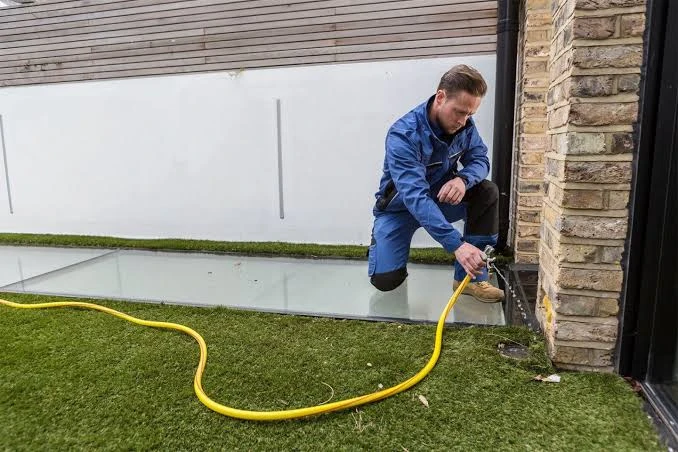

Finding a hidden leak used to mean opening up walls and floors on a hunch, often causing more damage in the search than the leak itself had caused. A trace and access plumber changes that entirely, using specialist equipment to pinpoint a leak’s exact location before any exploratory work begins. This targeted approach is now the standard method insurers expect, precisely because it minimises unnecessary disruption while still finding the problem accurately.
This guide explains what a trace and access investigation actually involves, how it connects to your buildings insurance, and what to expect from start to finish.
Trace and access is a two-part process: tracing the exact location of a hidden leak using specialist detection equipment, then gaining access to it through a small, targeted opening rather than widespread demolition. Most UK buildings insurance policies include trace and access cover, typically between five and ten thousand pounds, meaning both the investigation and initial access costs are often recoverable through your insurer.
What Trace and Access Actually Means
The term describes two distinct stages of the same job, and understanding the split helps set realistic expectations before booking.
Trace refers to locating the precise source of a leak using equipment such as thermal imaging, acoustic listening devices, and tracer gas. Access refers to the physical work needed to reach that location, typically a small, carefully placed opening rather than removing an entire section of wall or floor. Together, these two stages replace the old approach of guessing where a leak might be and opening up large areas to find it.
Why Concealed Pipe Tracing Matters So Much
Modern homes route a significant amount of pipework behind walls, under floors, and within ceiling voids, meaning a leak often isn’t visible at its actual source.
Concealed pipe tracing addresses this directly, using non-invasive detection methods to identify exactly where a pipe has failed before any physical access work begins. This matters because opening the wrong section of wall not only fails to find the leak, it also creates additional repair work and cost that a targeted investigation avoids entirely.
Insurance-Approved Investigations: How the Process Ties to Your Policy
Most UK buildings insurance policies specifically reference trace and access as a covered element, though the terms vary between insurers.
Insurance-approved investigations typically need to be carried out by a qualified engineer who can provide clear documentation of the process, findings, and cause. This documentation is what your insurer uses to validate a claim, which is why using a recognised specialist rather than attempting a DIY search matters if you intend to make a claim.
What Happens During a Trace and Access Inspection
A typical inspection follows a consistent sequence, regardless of which specific detection technologies end up being used.
- Initial consultation to understand the reported symptoms and likely area
- Pressure testing to confirm a leak is present and estimate severity
- Thermal imaging to identify probable areas of moisture
- Acoustic listening or tracer gas testing to narrow the exact location
- A small, targeted access point created to confirm and expose the leak
- A detailed report documenting findings, photos, and recommended repair
Most residential inspections are completed within a single visit, often taking between two and four hours depending on the property and how straightforward the leak proves to be.
Specialist Inspection Reports: What They Actually Include
The report produced at the end of an investigation is often just as important as finding the leak itself, particularly where insurance is involved.
Specialist inspection reports typically include the suspected and confirmed leak location, photographs and moisture readings taken during the survey, the detection methods used, and a clear recommendation for repair. This documentation gives your insurer everything needed to process a claim without requesting additional evidence later.
Comparing Traditional Leak Hunting to Trace and Access
Understanding the difference helps explain why this approach has become the industry standard.
| Factor | Traditional Approach | Trace and Access |
| Method | Exploratory opening of walls or floors | Targeted detection before access |
| Damage caused | Often significant | Minimal, localised |
| Time to locate leak | Can take multiple visits | Often a single visit |
| Insurance documentation | Limited | Detailed report provided |
| Repair cost | Higher due to unnecessary damage | Lower, more predictable |
Access Damage Restoration After the Leak Is Found
Once a leak has been located and repaired, the small access point created during the investigation needs to be made good again.
Access damage restoration typically covers replastering, retiling, or refitting flooring around the access point, returning the affected area to its original condition. Many trace and access specialists either handle this directly or coordinate with a trusted restoration team, so the process feels seamless from detection through to final repair.
The Full Property Restoration Process
For more significant leaks, restoration extends beyond simply patching the access point.
The property restoration process typically includes drying out affected areas using dehumidifiers where necessary, treating any damp or mould that developed before the leak was found, and repairing decorative finishes such as paint or plaster. Working with a single provider across detection, repair, and restoration reduces the coordination burden on homeowners dealing with an already stressful situation.
Frequently Asked Questions
What is the difference between trace and access?
Trace refers to locating the leak using detection equipment, while access refers to the physical work needed to reach and confirm it.
Is trace and access covered by home insurance?
Most UK buildings insurance policies include trace and access cover, typically between five and ten thousand pounds, though terms vary by insurer.
How long does a trace and access investigation take?
Most residential investigations are completed within a single visit, usually between two and four hours.
Will a trace and access investigation damage my property?
The process is designed to minimise damage, using non-invasive detection before creating only a small, targeted access point.
Do I need a trace and access report for an insurance claim?
Yes, in most cases. Insurers typically require documented evidence of the leak’s cause and location before approving a claim.
Who repairs the access point after the leak is fixed?
Many trace and access specialists handle access damage restoration directly, or coordinate with a trusted restoration team to complete the work.
Protecting Your Property the Right Way
Trace and access investigations have transformed leak repair from a disruptive, uncertain process into a precise, well-documented one. Combining accurate detection with minimal access work protects both your property and your insurance position throughout.
0800 Homefix provides professional trace and access leak detection across London and the South East, delivering detailed, insurance-ready reports alongside repair and restoration support, backed by a 24/7 emergency response and no call-out fee.
Also Read: cost of home improvement