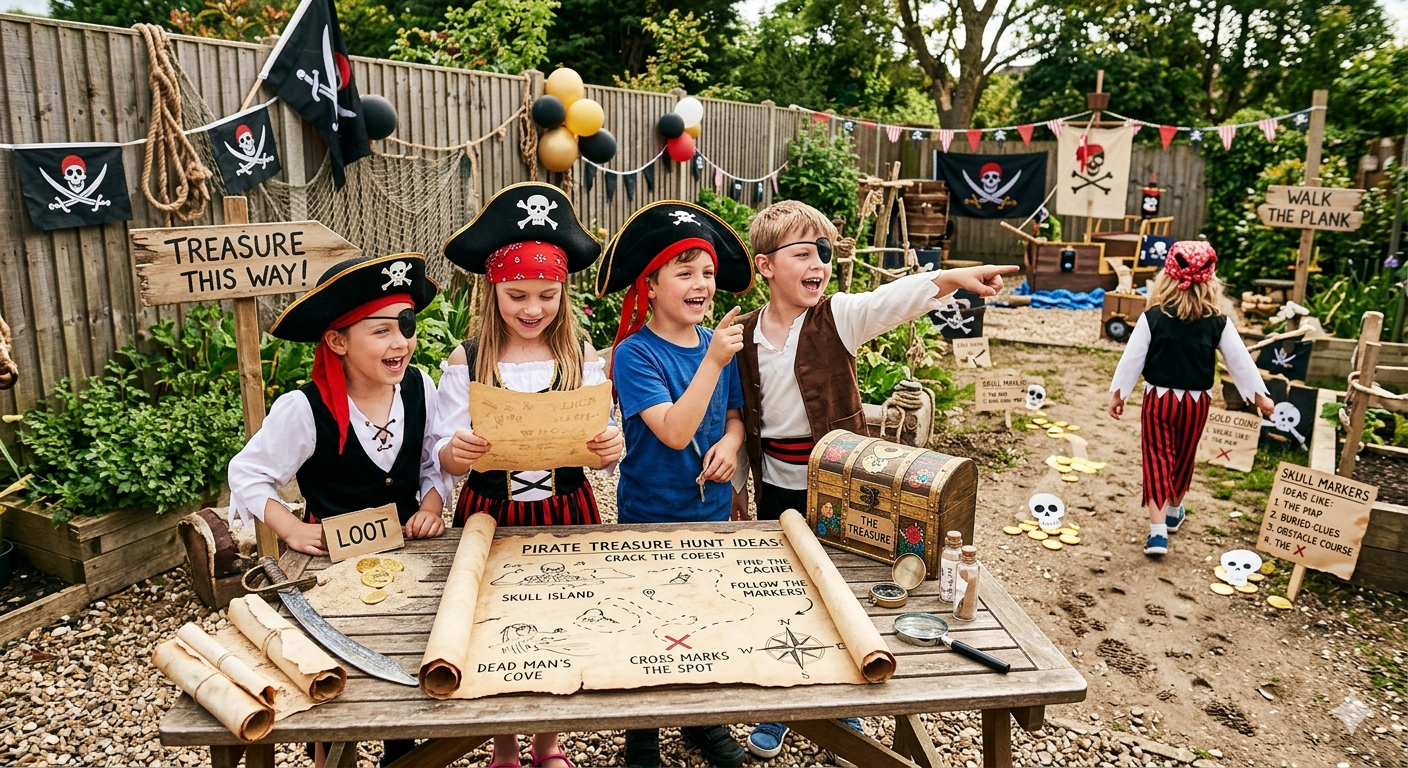

A pirate birthday party is one of those classic themes that never goes out of style. Kids love the world of eye patches, treasure maps, parrots, and hidden gold. But the real magic happens when you turn the whole party into a genuine pirate treasure hunt, where every guest becomes part of the adventure and the search for lost treasure becomes the highlight of the day.
The Story Makes the Difference
Any pirate party can have cupcakes and a few decorations, but what children actually remember is the story they lived through. A great pirate treasure hunt pulls them into a narrative from the very first minute. Maybe Captain Blackbeard hid his chest on a forgotten island decades ago, and only a team of brave young pirates can follow the weathered map to find it. When kids believe in the story, they commit to the adventure and the energy in the room changes completely.
This is why story-driven hunts work so much better than random clue lists. Each riddle should feel like part of the journey, not just a puzzle to solve. Each location should feel like a real place on the map, not just the backyard. The goal is immersion, not just activity.
What You Need for a Great Pirate Hunt
A successful pirate treasure hunt needs four core ingredients. First, an aged treasure map that shows the full route in pirate style. Second, a series of themed clues that match the story, such as messages in bottles, riddles written as sea shanties, or codes built from pirate symbols. Third, a few physical challenges that break up the mental puzzles, such as walking the plank or crossing a shark-infested ocean, which can simply be a blue blanket on the living room floor. Fourth, a real treasure chest at the end, filled with gold-wrapped chocolate coins, small toys, or personalized pirate certificates.
Designing all of this from scratch takes hours and usually results in something that feels thrown together. A much easier path is using a complete, ready-made kit such as the Pirate Treasure Hunt set, which includes every clue, the map, the story, and the finale in one printable package. You print it, hide the clues, and the adventure is ready.
Choose the Right Age Level
Pirate themes work for a wide range of ages, but the hunt itself needs to match the children. For ages four to six, the clues should be mostly picture-based with very simple words. Instead of riddles that require reading, use images of the next location, such as a photo of the kitchen sink or the couch. For ages six to nine, kids can handle short rhyming clues and basic codes. For ages nine to twelve, you can include ciphers, map coordinates, and longer puzzles that take a few minutes to crack.
Matching the hunt to the age group is the single biggest factor in whether the kids stay engaged. Too easy and they lose interest. Too hard and they give up in frustration.
Simple Ideas to Enhance the Experience
Small touches turn a good hunt into a great one. Give each child a bandana or eye patch when they arrive to put them in character. Play ocean sound effects or pirate music softly in the background. Start the hunt with a short dramatic reading of the captain’s last letter. Light a candle when you read it, and let the kids feel like they just stepped into the story.
At the end, let every child keep something small from the treasure chest. Even the simplest prize feels special when it comes at the end of a real adventure. Take a group photo of the young pirates with their loot. These are the photos parents actually print out and keep for years.
Why This Theme Keeps Working
Pirates have fascinated children for generations, and the reason is simple. The pirate world combines freedom, adventure, mystery, and a clear mission. Those are the exact ingredients of a great game. A well-planned pirate treasure hunt gives kids all of them in one afternoon, which is why so many parents come back to this theme for second, third, and fourth birthdays.