
Industrial Automation and Control System Integration: Driving Efficiency, Safety, and Innovation
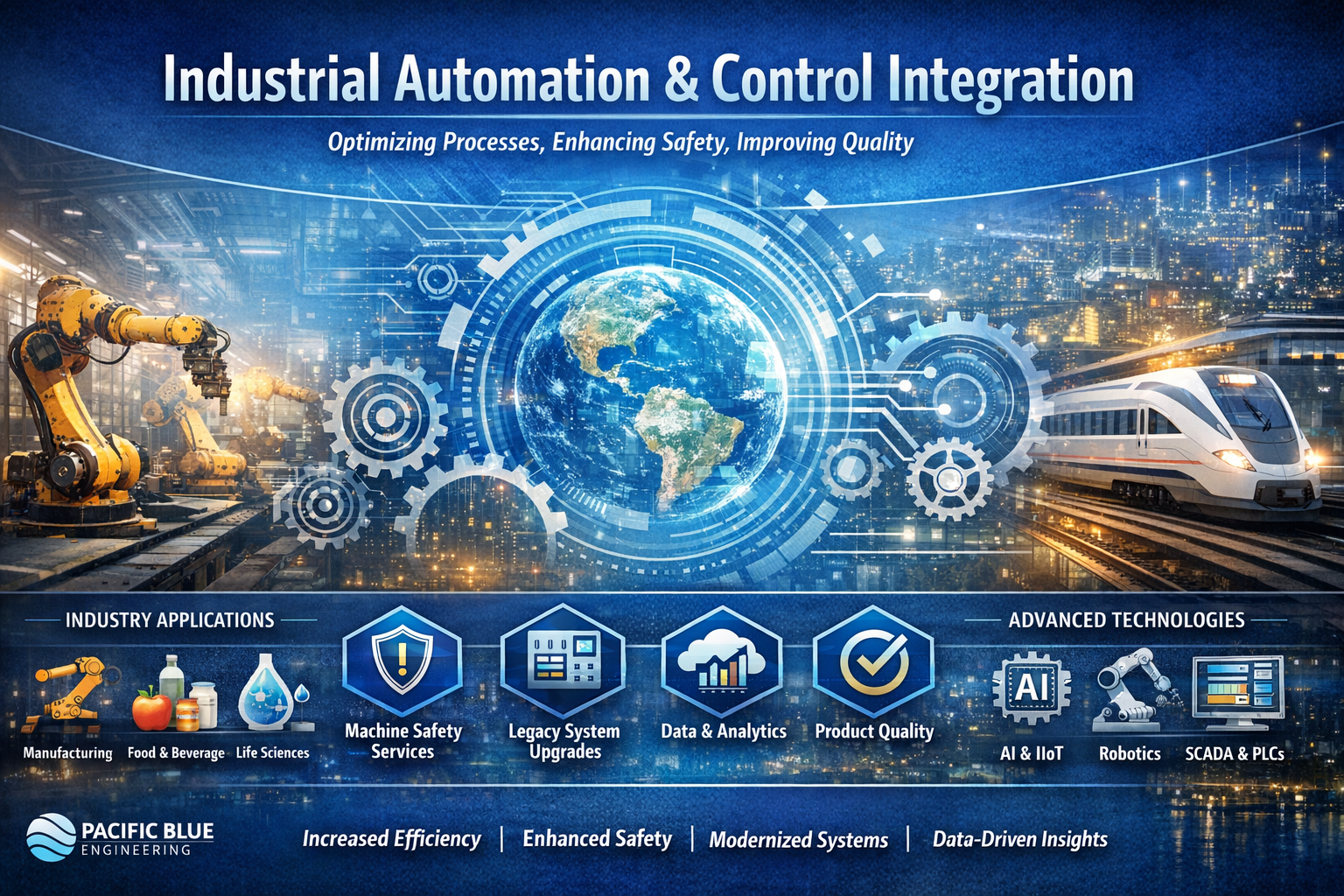
Industrial automation and control system integration have become essential pillars of modern industry, enabling organizations to streamline operations, improve productivity, and maintain a competitive edge in an increasingly complex marketplace. Companies like Pacific Blue Engineering are leading this transformation, offering specialized expertise as a control system integrator delivering tailored automation solutions across industries such as manufacturing, food and beverage, life sciences, entertainment, and transportation. Through advanced engineering and automation technologies, they help businesses optimize processes, modernize legacy controls, improve machine safety services, enhance product quality, reduce operational risk, and unlock valuable insights from their operations.
Understanding Industrial Automation
Industrial automation refers to the use of advanced technologies and control systems—such as programmable logic controllers (PLCs), distributed control systems (DCS), robotics, and human-machine interfaces (HMIs)—to perform tasks with minimal human intervention. These systems are designed to handle repetitive, complex, and high-risk processes with precision and reliability.
Automation plays a critical role in reducing manual labor, minimizing errors, and ensuring consistent output. In industries where accuracy and speed are crucial, such as pharmaceuticals or food processing, automation significantly improves both efficiency and compliance.
What is Control System Integration?
Control system integration is the process of combining various automation components into a unified and fully functional system. This includes hardware, software, communication protocols, and data analytics tools working together seamlessly.
A professional control system integrator evaluates an organization’s existing infrastructure, identifies gaps, and develops customized solutions tailored to operational needs. Whether it involves upgrading outdated systems or implementing entirely new automation frameworks, integration ensures smooth communication between systems and long-term scalability.
Key Benefits of Industrial Automation and Integration
Increased Efficiency and Productivity
Automation streamlines workflows, reduces downtime, and enables continuous operation. Integrated systems can monitor performance in real time and adjust processes to maintain optimal efficiency.
Enhanced Machine Safety Services
Safety is a top priority in any industrial environment. Implementing robust machine safety services helps protect both workers and equipment from potential hazards. These systems include safety sensors, emergency shutdown mechanisms, and real-time monitoring solutions that detect and prevent dangerous situations.
By investing in machine safety services, companies not only meet regulatory standards but also create a safer workplace, reducing accidents and associated costs.
Modernization of Legacy Systems
Many businesses still rely on outdated control systems that limit efficiency and increase maintenance challenges. Modern automation solutions replace or upgrade these legacy systems, improving performance and reducing operational risks.
Pacific Blue Engineering specializes in modernizing legacy controls, ensuring seamless transitions without disrupting existing operations.
Improved Product Quality
Automation ensures consistency by maintaining precise control over production variables. Integrated systems continuously monitor conditions such as temperature, pressure, and timing, making adjustments as needed to maintain high-quality output.
Data-Driven Insights
Modern automation systems generate large volumes of data that can be analyzed to gain valuable insights. These insights enable predictive maintenance, process optimization, and better strategic decision-making.
Industry Applications of Automation
Industrial automation and control system integration are widely used across multiple sectors:
Manufacturing
Automation enhances production lines, reduces waste, and increases output while maintaining consistent quality.
Food and Beverage
Integrated systems ensure hygiene, regulatory compliance, and consistent product standards.
Life Sciences
Precise control systems are essential for maintaining strict environmental and process conditions.
Entertainment
Automation enables complex stage effects, lighting systems, and event management solutions.
Transportation
Advanced control systems improve safety, logistics efficiency, and operational reliability.
The Growing Importance of Machine Safety Services
As automation becomes more advanced, the importance of machine safety services continues to grow. Modern safety systems are designed not only to respond to hazards but also to predict and prevent them.
These services include risk assessments, safety system design, compliance audits, and implementation of safety standards. By integrating safety into automation systems from the ground up, businesses can ensure long-term operational stability and workforce protection.
The Future of Industrial Automation
The future of industrial automation is being shaped by emerging technologies such as Artificial Intelligence (AI), the Industrial Internet of Things (IIoT), and cloud-based systems. These innovations are enabling smarter, more adaptive automation solutions that can learn from data and continuously improve performance.
As industries evolve, businesses will increasingly rely on integrated systems that combine automation, analytics, and machine safety services to stay competitive and resilient.
Conclusion
Industrial automation and control system integration are transforming the way industries operate, offering unprecedented levels of efficiency, safety, and innovation. By leveraging advanced technologies and prioritizing machine safety services, organizations can reduce risks, improve productivity, and ensure consistent product quality.
With experienced partners like Pacific Blue Engineering, businesses can successfully navigate the complexities of automation, modernize their operations, and build a strong foundation for future growth.