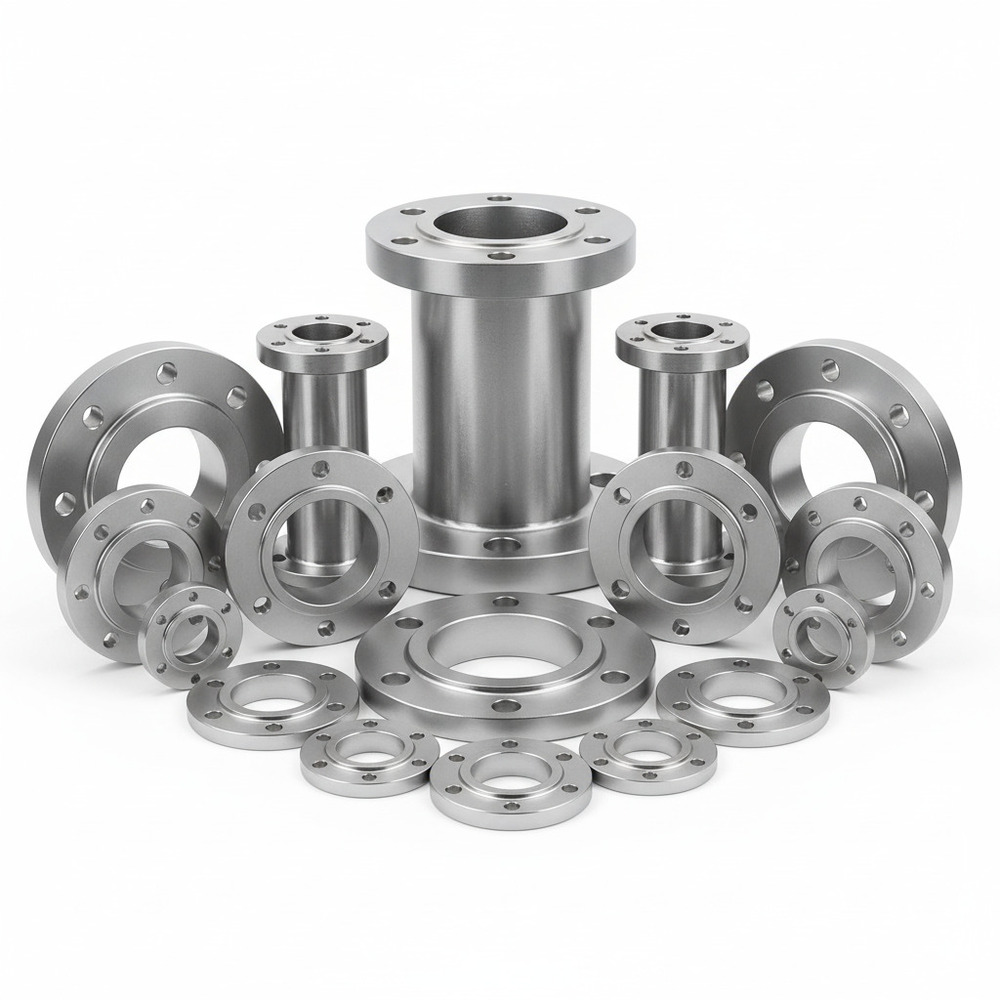

Procurement decisions involving industrial piping components rarely get the scrutiny they deserve until something goes wrong. A flange failure in a high-pressure system does not announce itself gradually. It creates immediate consequences — unplanned shutdowns, safety incidents, costly repairs, and the kind of operational disruption that affects far more than a single line item on a purchase order.
For procurement managers working in oil and gas, chemical processing, power generation, or heavy manufacturing, the challenge is not simply finding a supplier who can fulfill an order. The challenge is verifying that what arrives on-site meets the material, dimensional, and performance requirements that the application actually demands. That requires asking the right questions before any purchase is finalized.
What follows is a structured set of questions designed to guide that process. They are not a technical checklist for engineers. They are decision-support questions that help procurement professionals understand what they are buying, who they are buying it from, and what risks they are accepting when they make that commitment.
1. Does the Supplier Understand the Difference Between Material Grade and Application Fit?
When sourcing alloy steel pipe flanges, one of the most important early signals is whether a supplier can speak clearly about how specific material grades relate to actual operating environments. Alloy steel is not a single material. It represents a range of compositions designed to perform under different combinations of temperature, pressure, corrosion exposure, and mechanical stress. A supplier who cannot articulate that distinction is unlikely to guide procurement accurately.
This matters because alloy steel pipe flanges are used across industries where environmental conditions vary significantly. What works reliably in a moderate-temperature steam system may not hold up in a high-sulfur refinery environment or a cryogenic application. Procurement managers should expect a supplier to ask about the operating conditions before recommending a grade, not after.
Why Grade Recommendation Should Come With Context
A supplier who immediately quotes a price without asking about the service environment is optimizing for speed, not fit. The right grade recommendation depends on what the flange will be exposed to — not just in normal operation, but under startup conditions, pressure surges, and maintenance cycles. When grade selection is treated as an afterthought, it often creates fitment issues that are only discovered during installation or, worse, during a pressure test.
2. Can the Supplier Provide Full Material Traceability?
Material traceability is the documented chain of custody that links a finished component back to the original heat of steel it was produced from. For flanges used in critical service applications, this documentation is not optional. It is the baseline standard required by most quality management systems and by industry codes such as those published by the American Society of Mechanical Engineers.
A supplier who cannot provide mill test reports, heat numbers, and material certifications that align with the components being shipped is either sourcing from unverified channels or operating without the documentation controls that regulated industries require.
What Traceability Gaps Actually Cost
When traceability is incomplete or inconsistent, it creates compliance exposure during inspections and audits. More practically, it removes the ability to investigate a failure accurately. If a flange fails in service and there is no documented link to verified material properties, the investigation becomes guesswork. The cost of that uncertainty extends well beyond the component itself.
3. What Standards Does the Supplier Manufacture or Source To?
Industrial flange procurement happens against a backdrop of dimensional and performance standards that govern how components are made, tested, and classified. ASME, ASTM, ANSI, and MSS are among the most referenced. The question is not whether a supplier knows these acronyms, but whether their sourcing and manufacturing processes are actually aligned with them.
The Gap Between Claiming Compliance and Demonstrating It
Many suppliers list standards on their documentation without having independent verification to support those claims. The procurement manager’s role is to ask how compliance is verified — whether through in-house testing, third-party inspection, or certified quality systems. A claim without a process behind it adds no real assurance.
4. What Is the Supplier’s Quality Control Process Before Shipment?
Quality control for industrial flanges is not limited to a visual check before boxing. It includes dimensional verification, hardness testing, surface inspection, and review of documentation packages against the purchase order requirements. The question of how a supplier manages this process tells procurement managers a great deal about the reliability of what they will receive.
Incoming Inspection and Its Relationship to Delivery Confidence
When a supplier has a documented quality control process, procurement teams can reduce the burden on their own receiving inspection. When that process is informal or inconsistent, receiving inspection becomes a critical safeguard — and a resource cost. Understanding the supplier’s process in advance allows for better planning regardless of how the relationship develops.
5. How Does the Supplier Handle Non-Conforming Material?
Even well-managed suppliers occasionally ship components that do not meet specification. What separates reliable suppliers from problematic ones is how they handle that situation. A clearly defined non-conformance process, with documented corrective actions and transparent communication, is a sign of operational maturity. Vague responses or reluctance to address this question are warning signs worth noting early.
6. What Lead Times Are Realistic, and What Drives Variability?
Lead time commitments that are not grounded in actual inventory levels or production schedules create planning problems downstream. For procurement managers managing project timelines or maintenance schedules, an optimistic delivery estimate that slips by several weeks can have consequences that cascade across multiple workstreams.
Why Lead Time Transparency Matters More Than the Number Itself
A supplier who provides honest lead time ranges and explains what factors can affect them — raw material availability, current order volume, inspection requirements — is easier to plan around than one who consistently promises short windows and underdelivers. Reliability in communication is often a proxy for reliability in fulfillment.
7. Does the Supplier Have Experience With Your Specific Industry or Application?
General industrial suppliers can fulfill standard orders efficiently. But when the application involves elevated temperatures, corrosive media, high-cycle fatigue, or strict regulatory oversight, experience with similar applications matters. It affects how a supplier interprets requirements, flags potential issues, and responds when something falls outside the standard order profile.
Industry Experience as a Risk Reduction Factor
Suppliers who regularly work with refineries, chemical plants, or power generation facilities develop familiarity with the documentation requirements, inspection protocols, and material restrictions common to those environments. That familiarity reduces the back-and-forth that typically delays orders and creates errors in specifications.
8. What Is the Supplier’s Policy on Substitutions?
Material or dimensional substitutions — where a supplier ships a component that differs from what was ordered — are among the more disruptive problems in industrial procurement. They are sometimes made without notification, particularly when a specific item is out of stock. A supplier’s substitution policy, and how consistently it is applied, is worth understanding before the first order is placed.
When Substitutions Become a Compliance Issue
In regulated applications, a substituted flange that was not reviewed and approved by engineering can create significant compliance and safety exposure. Procurement managers should establish clearly, in writing, that no substitutions will be made without prior approval. Suppliers who push back on this expectation are signaling that their operational practices may not align with the requirements of critical service environments.
9. How Is Pricing Structured, and What Does It Actually Include?
Flange pricing is not always straightforward. Base price, documentation fees, testing surcharges, and freight costs can combine to create total costs that differ significantly from the initial quote. Understanding what is included — and what will appear as additional charges on the final invoice — is a basic due diligence step that prevents budget surprises and protects the accuracy of project cost estimates.
Total Cost of Ownership Beyond the Purchase Price
A lower unit price from a supplier with inconsistent quality can result in higher total costs when receiving inspections find deficiencies, when non-conforming components must be returned, or when installation issues are traced back to material problems. The purchase price is one input into total cost, not the only one.
10. What Happens After the Sale?
Post-sale support covers a range of scenarios: warranty claims, documentation requests, traceability inquiries, and emergency orders. A supplier’s responsiveness after a transaction is completed reflects the underlying health of their operations and their commitment to the relationship beyond the initial purchase. This is particularly relevant for procurement managers who are evaluating whether a supplier is suitable for ongoing or long-term supply agreements.
After-Sale Responsiveness as an Indicator of Supplier Reliability
Suppliers who are difficult to reach after payment has been made, or who treat post-sale inquiries as low priority, are not well-suited to support operations where quick resolution of component questions can affect production timelines. Testing a supplier’s responsiveness on a smaller initial order before committing to a larger volume relationship is a practical way to evaluate this dimension without significant risk.
Closing Thoughts
Buying flanges may appear to be a straightforward procurement exercise, but the downstream consequences of poor sourcing decisions can be significant. The questions outlined here are not exhaustive, but they address the areas where procurement errors most commonly occur and where the gap between expectation and delivery tends to be widest.
Procurement managers who take time to understand material traceability, compliance verification, lead time realism, and post-sale support before committing to a supplier are building a supply chain that is less likely to create operational disruptions. That kind of diligence pays dividends not in a single transaction, but across the full lifecycle of a supplier relationship.
The goal is not to treat every purchase as a high-stakes investigation. It is to establish a baseline of informed, consistent questions that make supplier evaluation repeatable and reliable — so that when critical components are needed, the confidence behind that order is earned, not assumed.