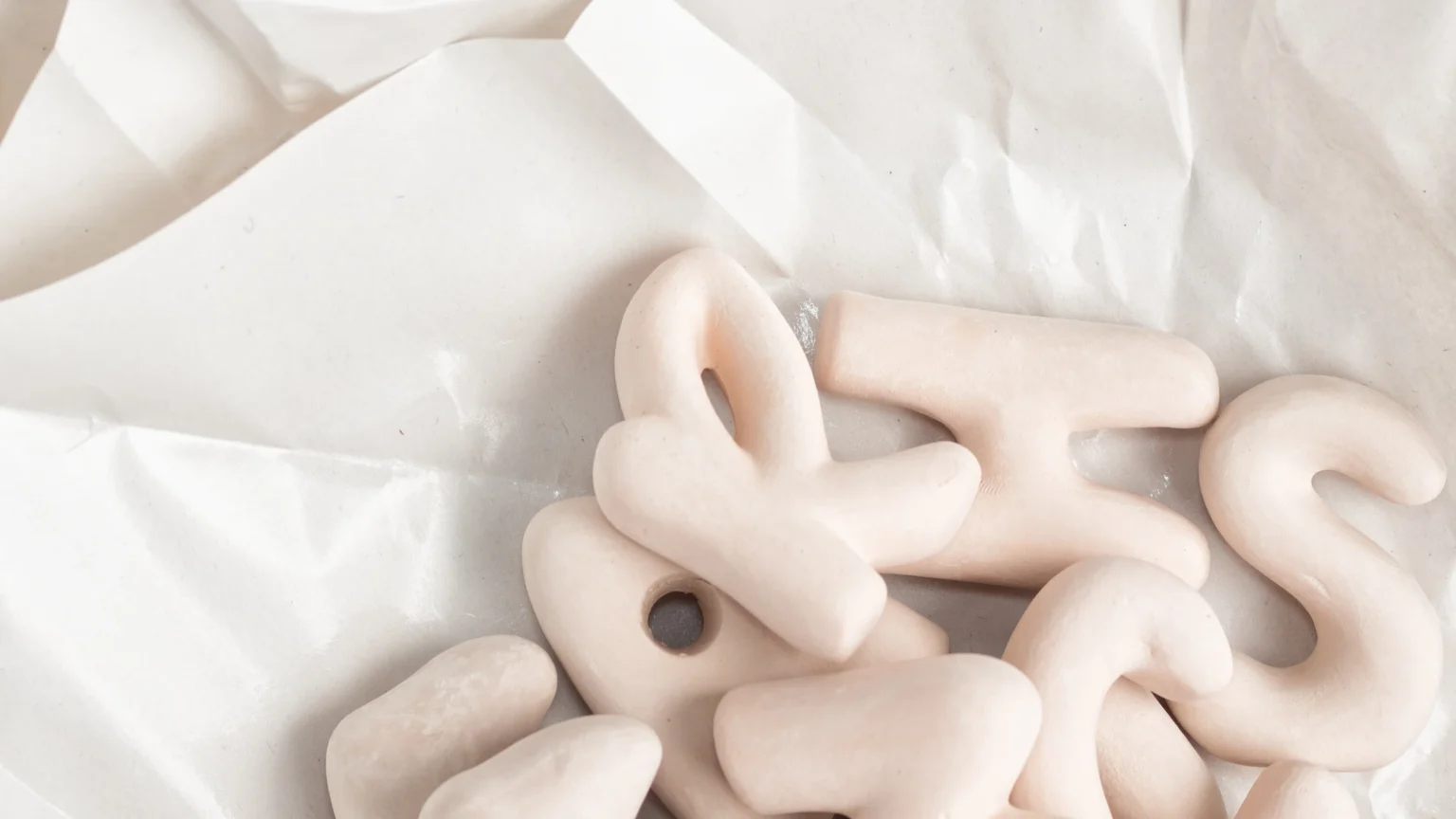

Ceramic Alphabet Letters: A Designer’s Guide for Nurseries
Ceramic alphabet letters are individual letters shaped from clay, kiln-fired, and finished with a glaze — usually displayed above a crib, on a shelf, or arranged across a wall to spell a name, monogram, or short word. They sit at the heavier, more tactile end of the wall letter category, and unlike foam or printed alternatives, the look improves with age rather than degrading.
This guide covers what they are, why they suit nurseries specifically, how to choose them, what they cost, and how to style them so the room grows with your child.
In this article:
- What ceramic alphabet letters are
- Why do they suit a nursery
- How to choose the right ones
- What they cost (and why)
- Styling ideas that grow with your child
- Letter decor as a keepsake
What are ceramic alphabet letters?
Ceramic alphabet letters are made by shaping clay into letterforms, drying them, then firing them in a kiln at high temperatures — typically around 1,200 °C for stoneware, slightly lower for earthenware. After the first firing, each letter is glazed and fired a second time so the color fuses to the body and forms a durable surface.
Most handmade studios work in stoneware or porcelain, both of which finish more cleanly than earthenware and take glaze more evenly. Sizes range from about 5 cm (small shelf accents) up to 30 cm or more (statement pieces designed for above a crib). Letters are usually sold individually, so parents can spell a name, an initial, or a short word like love, home, or grow.
Why ceramic alphabet letters suit a nursery
Most themed nursery decor — woodland animals, pastel rainbows, dinosaur murals — has a short shelf life. A child outgrows the theme, and the room has to be redone. Letters don’t carry that timing problem. A name above the crib, a single initial on a shelf, or a short word works just as well at six and at sixteen.
The case for ceramic over alternatives is mostly about how each material ages. Foam letters dent and scuff. Thin MDF can swell in humid rooms or after spills. Printed wall decals last for over a year or two. Glazed clay does none of that: it wipes clean, doesn’t fade in sunlight, and accumulates the kind of small surface character that handmade pottery is known for.
How to choose ceramic alphabet letters
Material is the biggest variable, but once you’ve narrowed it down to ceramic, a few details still separate good pieces from disappointing ones. Worth checking before you buy:
- Clay body. Stoneware and porcelain finish more durably than earthenware. Stoneware tends to look softer and more rustic; porcelain reads cleaner and more refined. Reputable studios will tell you which they use.
- Glaze finish. Matte, satin, and glossy each photograph and live with differently. Matte hides fingerprints best in a nursery. Glossy reflects light and can make smaller letters feel larger on a wall.
- Safety and standards. Look for non-toxic, lead-free glazes — the same standards that apply to children’s products generally. The U.S. Consumer Product Safety Commission publishes consumer-facing guidance on lead in items made for or used around children, and it’s worth a quick check for any decor placed within reach.
- Mounting and stability. Wall-mounted ceramic alphabet letters need real hardware — picture hooks into solid wood, or wall anchors into drywall. Adhesive strips tend to fail under the weight of glazed clay over time. Freestanding letters should sit on a properly weighted base.
- Scale. A general rule above a crib: letters between 15 and 25 cm read well from across the room without overwhelming a smaller wall. Shelf accents work best at 8 to 12 cm.
- Color consistency. Spelling a name with letters from different glaze batches can produce visible mismatches. Order the full set at once when possible, or confirm the batch with the maker.
What do ceramic alphabet letters cost?
Price scales with size, craftsmanship, and how each letter is made. A rough range across the market:
- Small mass-produced sets: €5–15 per letter
- Mid-range handmade: €15–35 per letter
- Large statement or premium handmade: €40–80+ per letter
A six-letter name in the mid-range tier lands at roughly €100–200 — comparable to a framed art print, and built to outlast it. Specialist studios like Letters of Clay, where each piece is hand-shaped, glazed, and fired individually, sit in the mid-to-premium band. Nothing is pressed from a mold, which is what drives the per-letter cost up and also what makes each set slightly different from the next.
For most parents, the math is simple. One quality set, kept across years, costs less than three or four rounds of cheap themed decor that gets replaced as the child grows.
Styling ideas that grow with your child
Restraint is the rule. Three to six letters arranged with breathing space look more designed than fifteen letters packed edge to edge. A few approaches worth borrowing from interior designers:
- The full name above the crib. Center the name over the long edge of the crib, hung roughly 25–30 cm above the top of the mattress (well clear of a reaching child). For a five- or six-letter name, 15–20 cm letters keep the proportions right.
- A single oversized initial. A 25–30 cm initial centered on the wall behind the crib reads as a statement piece on its own. It also moves cleanly into a toddler or kid’s room later without looking dated.
- Word arrangements on shelving. Dream, home, hello, grow, or a nickname spelled out on a floating ledge gives the room a clear focal point. Smaller letters (8–12 cm) work best at eye level.
- Layered displays. Combine letters with a framed print, a small ceramic vessel, a few books, and a soft toy. Vary heights and materials — flat art, dimensional letters, soft fabric — for a curated look rather than a themed one.
On color: ceramic letters land best when they pull from the room’s quietest palette rather than competing with it. Soft cream, sage, dusty terracotta, oat, and warm white work across most modern nursery schemes. Deeper glazes like ochre or navy make sense in rooms with otherwise neutral walls and bedding.
Letter decor as a keepsake
The most successful nursery purchases are the ones you never have to replace. Wallpaper murals come down, themed bedding gets outgrown, crib mobiles are forgotten. A name or initial that follows a child from room to room becomes part of how they remember their early years.
Glazed ceramic is more forgiving than most nursery materials. A small chip becomes a visible character. A subtle glaze variation between batches reads as a handmade detail. Pieces from studios like Letters of Clay are made for exactly this kind of long-life decor that earns its space over time rather than dating quickly. For parents weighing the higher upfront cost, the answer usually shows up around year three. Most of the original nursery has been swapped out by then, and the letters are still on the wall.