
Call handling capacity is defined by how fast the system distributes incoming traffic and how evenly load is shared between operators. In operations with 7,000–10,000 calls per day, even a 5% drop in routing efficiency means 350–500 calls that never reach an agent. This directly affects revenue in sales teams and increases backlog in support.
A Telephone PBX manages this distribution layer and determines how many calls are actually processed within a given timeframe.
What is a telephone PBX
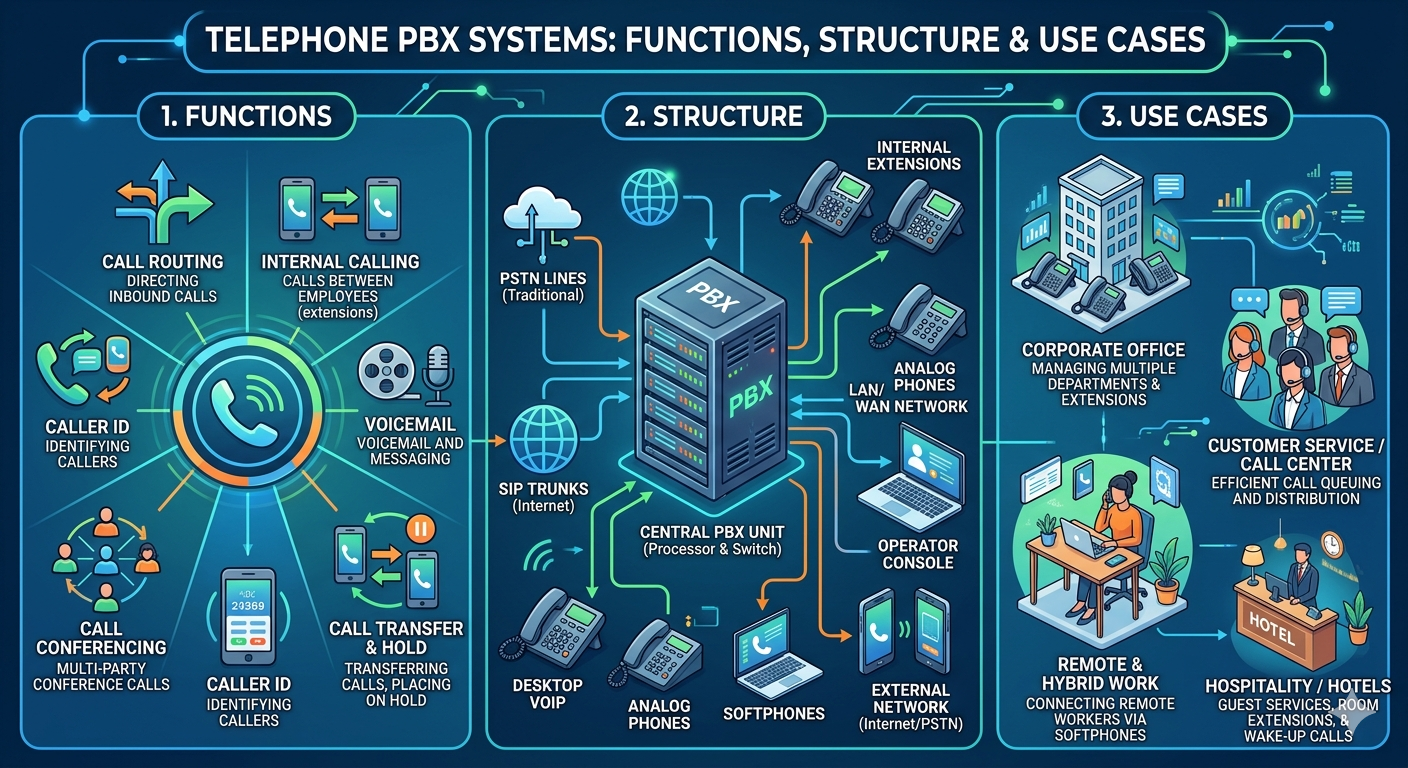
A telephone PBX connects incoming traffic with internal endpoints and applies routing rules based on predefined scenarios. Each call is assigned to a queue, extension, or automated flow depending on its entry point and current system conditions.
In practical terms, this defines how many calls are handled per hour. If routing is aligned with real workload, the system processes more calls within the same shift. If queues are overloaded or misaligned, calls accumulate and part of the traffic is lost.
Core call routing logic
Routing logic defines how calls are distributed between agents and how quickly they reach a destination.
In peak periods, up to 60% of daily traffic can be concentrated within a few hours. If distribution is uneven, some queues receive more calls than they can process while others remain underused. This creates delays that increase abandonment rate.
In DID Global projects, routing is configured based on peak load distribution. This allows teams to increase handled calls per operator by 10–15% and maintain stable connection times during high-demand periods.
Key PBX features
PBX functionality impacts performance only when it matches real call flow and traffic patterns.
IVR and call queues
IVR directs calls before they reach an agent. This reduces transfer time and helps route calls to the correct team from the start.
Queue configuration defines how long calls wait and how they are distributed. When wait time exceeds 20–30 seconds, abandonment rates increase significantly, especially in sales environments where response speed defines conversion.
In DID Global setups, queue logic is adjusted to balance load across teams and maintain response time within acceptable limits during peak traffic.
Extensions and forwarding
Extensions connect specific employees or departments to the system and define where calls are delivered.
Forwarding routes calls to alternative endpoints when the primary destination is unavailable. This keeps calls within the system and reduces the number of missed connections.
In operations with fluctuating load, forwarding helps maintain consistent handling rates without increasing team size.
PBX deployment types
Deployment type defines how quickly the system can adapt to changes in traffic volume.
On-premise vs hosted
On-premise PBX systems operate on local infrastructure with fixed capacity. Scaling requires hardware expansion, which limits flexibility during rapid growth or campaign-driven spikes.
Hosted PBX systems operate in the cloud and allow capacity adjustments without hardware changes. This makes them more suitable for operations where call volume changes daily.
In DID Global implementations, hosted PBX is used for multi-GEO setups where traffic distribution changes throughout the day and requires immediate adjustment.
Integration with VoIP
PBX systems integrated with IP-based telephony allow calls to be routed across locations based on availability and load.
This removes dependency on physical location and allows teams to handle calls from different regions within a single system.
Hybrid systems
Hybrid systems combine traditional telephony with VoIP infrastructure. They are typically used during migration phases when part of the system still depends on legacy solutions.
Over time, high-volume operations move to fully IP-based setups due to better control over routing and capacity.
Security considerations
PBX systems process all internal and external calls, which makes them a target for unauthorized usage.
Security depends on access control, authentication, and traffic monitoring. Unusual call patterns or spikes can indicate misuse or system issues.
In DID Global projects, monitoring is applied at both PBX and routing levels to detect anomalies early and maintain stable performance.
A PBX system defines how many calls are handled per hour, how evenly they are distributed, and how stable operations remain during peak load. Improvements in routing and queue management often recover 10–20% of calls that would otherwise be lost, which directly affects both revenue and service quality.