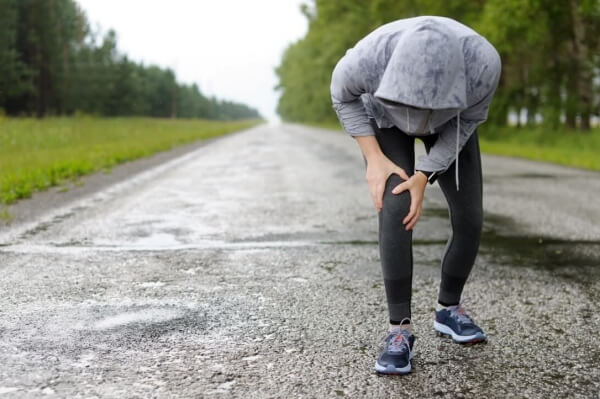

Many people report that their joints ache more when the weather shifts, particularly before rain or during cold snaps. This is a common belief, often associated with older adults or those with arthritis, and it is often dismissed as superstition.
Products like Copper Fit compression sleeves are often part of the conversation as well, since many people reach for them specifically when a change in weather makes a joint feel stiffer or more sensitive than usual. But the question of whether the weather actually affects joint pain is more complicated than a simple yes-or-no answer.
What the Research Says
Plenty of people report that shifting weather makes their joints ache, and researchers have spent decades trying to understand why. Unfortunately, the results have been inconsistent. Some studies find a clear link between falling barometric pressure and joint pain, while others find a weak or nonexistent link.
In short, something is happening for a lot of people, the effect tends to be smaller than the anecdotes suggest, and it varies enormously from person to person.
Why the Weather Might Affect Joint Comfort
Barometric Pressure
Barometric pressure is just the weight of the atmosphere pressing down on everything, including human tissue. When a storm system rolls in, that pressure drops. With slightly less outward force, the tissues around a joint can expand.
In a healthy joint with plenty of cushioning, this often goes unnoticed. In a joint where cartilage has already worn thin, the situation is different. The space inside an arthritic joint is already reduced, and tissue expansion can irritate the surrounding nerves.
Joint Lubrication Changes
Joints are lubricated by synovial fluid. When the weather gets cold, that fluid can thicken slightly. Thicker fluid can sometimes lead to stiffer movement, especially in the first few minutes after getting up from a chair on a chilly morning.
Reduced Activity
Cold, gray, or rainy weather also tends to keep people indoors and less active. Movement naturally drops, joints get less of the regular motion that helps keep them limber, and pain becomes easier to notice when there is less going on to compete for attention.
Inactivity is one of the more reliable ways to make a joint feel worse, regardless of what is happening with barometric pressure or synovial fluid.
What Supports Joint Comfort When the Forecast Turns
Since nobody can change the weather report, the practical work happens on the other side of the equation.
Movement
Gentle, consistent movement is one of the most widely recommended approaches in joint care. Walking, swimming, stationary cycling, and basic range-of-motion work all help keep joints lubricated and the surrounding muscles strong enough to share the load.
The trick in bad weather is having an indoor default, whether it be a hallway lap, a 10-minute stretching routine, or a handful of squats and lunges. Anything that prevents a rainy week from turning into a sedentary one will work.
Warmth Before Activity
A hot shower, a heating pad, or a warm compress applied to a stiff joint before moving around can make a noticeable difference for many people. Heat loosens tissue and improves circulation, which is what a sluggish morning joint typically needs.
Ice still has its place for acute swelling and after activity. However, for the general stiffness that shows up when the temperature drops, warmth is usually more effective.
Compression and Support
Compression sleeves and wraps are common options as well, offering both mild compression and warmth around the joint. They can be worn under regular clothes during everyday activities, making them easy to incorporate into a normal routine.
Support gear is not a cure and does not claim to be. It is a comfort tool, and comfort tools have real value when they make a person more likely to stay active rather than curl up on the couch.
Should You Move to a Warmer Climate?
Dry warm climates help some people experiencing joint discomfort, but they may not for everyone. The Arthritis Foundation’s overview of the best climate for arthritis makes the point that there is no single ideal place, since responses differ by person and by type of arthritis.
When To Stop Blaming the Sky
Weather sensitivity is a nuisance, not a diagnosis. Pain that is getting worse over time, joints that swell noticeably, redness and warmth around a joint, or stiffness that lasts well past the first hour of the morning are all worth a conversation with a doctor, regardless of the weather.
Blaming the barometer is easy and occasionally accurate. It also makes a convenient hiding place for a problem that deserves an actual evaluation.