

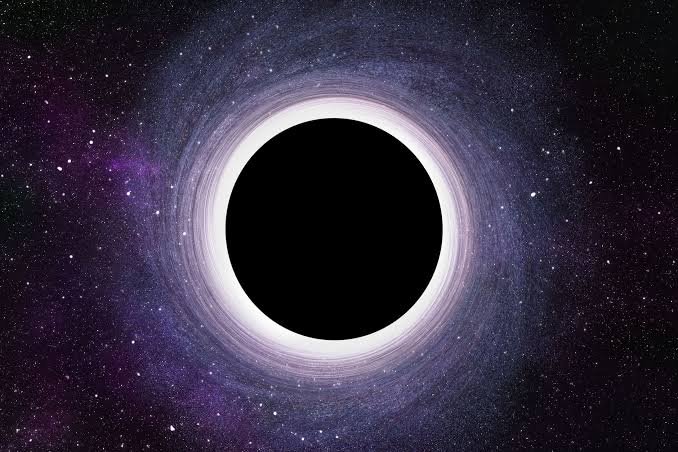

What is a Black Hole?
A black hole is a region in space where the gravitational pull is so intense that nothing, not even light, can escape from it. This phenomenon occurs when a massive star exhausts its nuclear fuel and collapses under the force of its own gravity. As the core contracts, it reaches a point of infinite density known as a singularity, surrounded by an event horizon—the boundary beyond which no information or matter can escape.
The formation of black holes generally begins with the life cycle of a massive star. Stars spend the majority of their existence fusing hydrogen into helium within their cores. However, once the hydrogen fuel is depleted, the core contracts and heats up, which leads to further fusion processes that create heavier elements. Eventually, when the star can no longer support the outward pressure of nuclear fusion, it undergoes a catastrophic collapse, leading to either a supernova explosion or resulting in a black hole if the remaining mass is substantial enough.
There are primarily three types of black holes classified based on their mass: stellar black holes, supermassive black holes, and intermediate black holes. Stellar black holes, the most common type, typically form from the remnants of massive stars and have masses ranging from about three to several tens of solar masses. Supermassive black holes, on the other hand, reside at the centers of galaxies and contain millions to billions of times the mass of our Sun. Intermediate black holes, while less understood, are theorized to exist and may form through the merging of several stellar black holes.
Distinguishing features of black holes include their event horizon, which marks the point of no return, and their unique gravitational influence on surrounding matter. The study of black holes presents significant challenges but is critical to our understanding of the universe and the laws of physics, particularly regarding gravity and spacetime.
The Anatomy of a Black Hole
A black hole is an astronomical object with gravity so strong that nothing, not even light, can escape from it. Understanding the structure of a black hole involves exploring its key components: the event horizon, singularity, and accretion disk. Each of these elements plays a significant role in defining the characteristics and behavior of a black hole.
The first major component is the event horizon, which can be thought of as the “point of no return.” It is the boundary surrounding a black hole beyond which no information or matter can escape. The event horizon varies in size depending on the mass of the black hole; for instance, a supermassive black hole has a larger event horizon compared to a stellar black hole. This feature is crucial for identifying black holes, as it marks the limits of their gravitational pull.
Next, the singularity is the core of the black hole, where density and gravitational forces become infinite. The laws of physics as currently understood break down at this point, making it one of the most enigmatic aspects of astrophysics. The singularity represents the ultimate concentration of mass, and it serves as the center around which a black hole’s gravity operates. Understanding this component poses significant challenges and is a focal point for ongoing theoretical research.
Lastly, the accretion disk consists of rotating matter that surrounds a black hole. This material, typically gas and dust from nearby stars, spirals inwards due to the intense gravitational forces at play. As the particles accelerate towards the event horizon, they heat up and emit radiation, often in the form of X-rays, making the accretion disk an important source of observable evidence for astronomers studying black holes. The dynamics of the accretion disk can also provide insights into the growth and evolution of black holes over time.
How Do Black Holes Form?
The formation of black holes is a profound area of study within astrophysics, encapsulating a variety of processes that hinge largely on the lifecycle of massive stars. To grasp how a black hole emerges, it is essential to begin with understanding stellar evolution. Stars are born from clouds of gas and dust, which undergo gravitational collapse as densities increase, igniting nuclear fusion at their cores. This essential phase in a star’s life staunchly relies on the balance between gravitational force and the outward pressure generated by nuclear fusion.
As a star ages, it exhausts its nuclear fuel, leading to dramatic changes within its core. For sufficiently massive stars, a core collapse occurs once the fusion reactions diminish and cannot counteract gravitational pull. This collapse can be incredibly rapid, resulting in extreme densities and temperatures. The subsequent explosion, known as a supernova, happens when the outer layers of the star are ejected, marking a pivotal moment in black hole formation.
Mass plays a critical role in determining whether a star will transform into a black hole. Generally, it is believed that only stars with original masses greater than approximately 20 times that of our Sun can result in black holes upon their dramatic end. Post-supernova, if the remaining core’s mass exceeds a certain limit, known as the Tolman-Oppenheimer-Volkoff limit, then gravity overwhelms all other forces, leading to the core collapsing into a singularity, forming a black hole.
Black holes can also form through the merging of neutron stars or other black holes, showcasing the dynamic nature of these objects. This process, while less common, highlights the intriguing behaviors and interactions of extreme mass and gravitational forces in our universe. Understanding how black holes form not only enhances our knowledge of stellar evolution but also contributes to the broader comprehension of cosmic phenomena.
Types of Black Holes
Black holes are fascinating celestial objects that come in various forms, primarily categorized based on their mass and formation processes. The three main types of black holes include stellar black holes, supermassive black holes, and intermediate black holes, each possessing unique characteristics and formation mechanisms.
Stellar black holes are formed when massive stars exhaust their nuclear fuel and undergo gravitational collapse. This process typically happens in a supernova explosion, leaving behind a dense core. The mass of stellar black holes usually ranges from about three to a few tens of solar masses, and they are commonly found in binary systems, where they can draw material from a companion star.
On the other hand, supermassive black holes reside at the centers of galaxies, including our Milky Way. These colossal entities possess masses ranging from millions to billions of solar masses. Their formation is still a topic of extensive research; one prevailing theory suggests that they originated from the merging of smaller black holes and the accumulation of gas over time. Observational evidence indicates that nearly all large galaxies host a supermassive black hole at their core, influencing the dynamics and evolution of their host galaxies.
Intermediate black holes are a relatively recent addition to the classification system and have masses between stellar and supermassive black holes, typically from hundreds to thousands of solar masses. They are theorized to form through the merging of several stellar black holes in dense stellar clusters, but direct evidence for their existence remains scarce. Detecting and studying intermediate black holes could provide valuable insights into the black hole formation process and their role within galaxies.
In conclusion, understanding the types of black holes—stellar, supermassive, and intermediate—not only enhances our knowledge of these enigmatic objects but also sheds light on their formation and evolution in the universe. Each type of black hole plays a crucial role in the cosmic landscape, influencing the behavior of surrounding matter and the structure of galaxies.
Gravitational Pull and Escape Velocity
The concept of gravitational pull is fundamental to understanding black holes. A black hole is formed when a massive star exhausts its nuclear fuel and collapses under its own gravitational force. This gravitational pull becomes so strong that nothing, not even light, can escape once it crosses a certain boundary known as the event horizon.
Escape velocity, the speed required to break free from a gravitational field, plays a vital role in this process. For celestial bodies such as planets or the sun, the escape velocity is less than the speed of light. However, as the mass is concentrated within a smaller volume—like in a black hole—the escape velocity increases dramatically. At the event horizon of a black hole, the escape velocity reaches the speed of light itself.
To put this into perspective, consider that on Earth, the escape velocity is approximately 11.2 kilometers per second. In the case of black holes, once matter or radiation approaches the event horizon, it must exceed this escape velocity to avoid being trapped. This threshold creates a unique environment around black holes that we cannot observe directly, as no information can escape from within that boundary.
The implications of this phenomenon are extensive. As matter spirals into a black hole, it accelerates and heats due to intense gravitational forces, emitting X-rays detectable by telescopes. Understanding gravitational pull in this context allows astronomers to gather data on black holes even though they cannot directly observe them. Through these observations, we can uncover the nature of gravitational interactions in the universe and provide insights into fundamental questions surrounding space, time, and the structure of the cosmos.
What Happens Inside a Black Hole?
The internal structure of a black hole remains one of the most enigmatic topics in modern astrophysics. At the center of a black hole, it is theorized that there exists a singularity, a point where the laws of physics as currently understood cease to be applicable. The singularity is often described as a region of infinite density, where all the mass of the black hole is concentrated. This leads to extreme gravitational forces that even light cannot escape, giving rise to the defining characteristic of black holes: their event horizon.
Surrounding the singularity, there is a region called the event horizon, which represents the point of no return for objects attempting to escape the black hole’s gravitational pull. Once an object crosses this boundary, it cannot communicate with the outside universe anymore. The event horizon acts as a shield obscuring our knowledge of what occurs inside a black hole; information about the true nature of the singularity remains hidden from any external observer.
Theories regarding what happens at and beyond the event horizon vary and often delve into complex domains of quantum mechanics and general relativity. Some propose that matter is crushed to the singularity, while others suggest that the intense gravitational forces may cause peculiar quantum phenomena, including wormholes or alternate dimensions. Current scientific understanding links these theories with ongoing debates about information loss, suggesting that information about matter that enters a black hole may be fundamentally altered or destroyed.
Despite numerous astronomical observations indicating the existence of black holes, such as the gravitational wave events detected from merging black holes, the interior remains largely speculative. These observations provide crucial indirect evidence but do not reveal the inner workings or the true nature of what lies beyond the event horizon. Future advancements in theoretical physics and observational technologies may eventually deepen our understanding of black hole interiors, potentially unlocking the mysteries held within these cosmic phenomena.
The Role of Black Holes in the Universe
Black holes, often perceived as mysterious cosmic entities, play a fundamental role in understanding the mechanics of the universe. They are formed from the remnants of massive stars that have undergone gravitational collapse, resulting in regions of spacetime where gravity is exceptionally strong. The presence of black holes significantly influences the dynamics of galaxies and star formation.
In galaxy formation, black holes are thought to act as catalysts, affecting the rate at which stars are formed. The gravitational pull exerted by a supermassive black hole situated at the center of galaxies can lead to the formation of stars as gas and dust in the surrounding area converge. This process is crucial, as it dictates not only the structure of the galaxy but also its evolution over cosmic time.
Moreover, black holes impact stellar evolution in various ways. For instance, they can siphon matter from neighboring stars, leading to the formation of an accretion disk. The intense gravitational forces within this disk can generate powerful jets and radiation, significantly influencing the environment and life cycles of nearby stars. This interaction ensures a dynamic exchange of energy and matter, reinforcing the connection between black holes and stellar populations.
The overall fabric of the universe is also intricately linked with the existence of black holes. Their gravitational influence can affect the motion of galaxies, contributing to the observed structure of the cosmos, such as galactic clusters and superclusters. Additionally, the study of black holes offers insights into the fundamental laws of physics, including theories of general relativity and quantum mechanics.
In essence, black holes serve as a key factor in the cosmic ecosystem. Their profound effects on galaxy formation, stellar evolution, and the universe’s structure illustrate their importance in the grand tapestry of cosmic phenomena.
Observing Black Holes
Black holes, with their immense gravitational pull, are inherently difficult to observe directly due to the event horizon beyond which no light escapes. However, astronomers utilize various indirect methods to study these enigmatic cosmic phenomena. One of the pioneering approaches to black hole observation involves the detection of gravitational waves. These ripples in spacetime are produced during the merger of black holes, providing critical insights into their properties. Since the first detection in 2015 by the LIGO observatory, several events have allowed scientists to analyze the masses and spins of black holes.
Additionally, x-ray emissions from the area surrounding a black hole serve as another significant indicator of its presence. When matter is drawn toward a black hole, it accelerates and heats up, emitting x-rays as it spirals into the gravitational abyss. Observatories equipped with x-ray telescopes, such as NASA’s Chandra X-ray Observatory, are pivotal in capturing these high-energy emissions, which help researchers identify black holes that might otherwise remain unnoticed.
Furthermore, advancements in telescopic technology have greatly enhanced our observational capabilities. The Event Horizon Telescope (EHT), a global network of telescopes, made headlines in 2019 by directly imaging the shadow of a supermassive black hole in the galaxy M87. This landmark achievement demonstrated the potential of synthesizing data from multiple sites to create a virtual telescope with unprecedented resolution. Through these methods, scientists can gather substantial evidence about the nature of black holes, their formation processes, and their impact on surrounding galaxies.
In conclusion, while the inherent characteristics of black holes pose significant challenges to direct observation, innovative techniques such as detecting gravitational waves, monitoring x-ray emissions, and utilizing advanced telescopes have revolutionized our understanding of these mysterious entities. Each method continues to refine our comprehension of black holes and their roles in the universe.
The Future of Black Hole Research
The field of black hole research is at a pivotal moment, with ongoing studies expanding our understanding of these enigmatic cosmic phenomena. Advances in technology are playing a crucial role in furthering this research. For instance, the development of more sensitive and expansive instruments, such as gravitational wave detectors like LIGO and Virgo, has opened new avenues for detecting phenomena associated with black holes.
These detectors allow scientists to observe the ripples in spacetime generated by the mergers of black holes, shedding light on their sizes, behaviors, and how they evolve over time. Such findings are essential in refining our models of black hole formation and growth, presenting opportunities to confront existing theories with empirical evidence.
Moreover, the advent of the Event Horizon Telescope (EHT) project has enabled astronomers to capture unprecedented images of black holes. The iconic image of the black hole in the center of the Messier 87 galaxy, released in 2019, serves as a significant milestone for the astrophysics community, providing a glimpse into the event horizon and allowing for a closer examination of the surrounding accretion disk.
As researchers continue to harness advancements such as artificial intelligence and machine learning, they are beginning to analyze vast datasets more effectively. These technologies can identify patterns and anomalies that might go unnoticed by the human eye, accelerating the pace of discovery in black hole physics.
Despite these advancements, numerous questions remain unanswered. Researchers are delving into the fundamental nature of black holes, exploring topics such as their roles in galaxy formation, their potential connections to dark matter, and the implications of hypothesized phenomena like wormholes and Hawking radiation. The mysteries surrounding black holes are vast, and each discovery often leads to new inquiries.
The future of black hole research appears promising, as technological advancements pave the way for a deeper understanding and new discoveries. Researchers in the field can anticipate exciting developments in the coming years, which will undoubtedly enhance our comprehension of the universe’s most intriguing entities.

