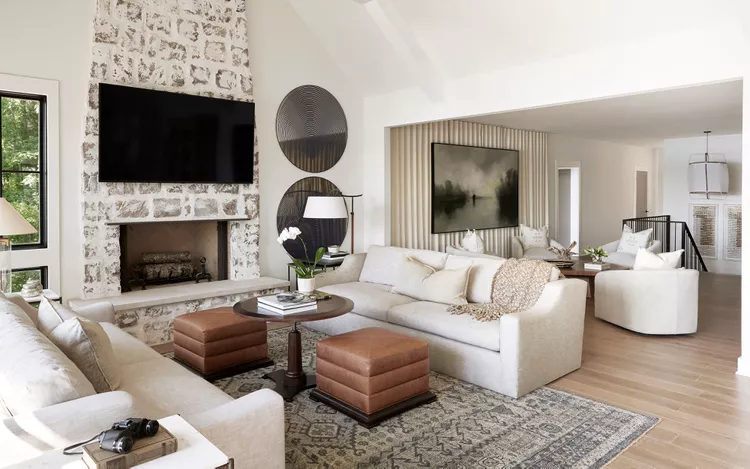

Scroll through enough interiors online and certain rooms start to blur into one. The same neutral sofa, statement lamp, coffee table books and carefully placed vase appear again and again, creating spaces that look beautiful but not always particularly personal.
There’s nothing wrong with taking inspiration from trends, it’s why they exist. But the problem comes when inspiration turns into imitation, leaving a room feeling dated as soon as the next big look arrives.
A timeless home takes a different approach. Rather than recreating a finished look, it borrows ideas, mixes influences and leaves space for personality to develop naturally.
Take Inspiration, Rather Than Copying a Look
Pinterest, Instagram and interiors magazines are brilliant places to gather ideas, but recreating a room piece by piece can quickly lead to that ‘copy-and-paste’ feeling.
Instead, work out exactly what appeals about an image. Perhaps it’s the warm colour palette, combination of old and new furniture or abundance of natural textures rather than the individual products themselves.
Taking one or two elements and interpreting them differently creates a much more personal result. A trending paint colour could appear on a cabinet rather than every wall, while a popular furniture shape could be sourced vintage instead of buying the exact piece seen online.
Start with a Timeless Foundation
The elements that are hardest or most expensive to replace are usually worth keeping relatively timeless. Flooring, fitted cabinetry and larger pieces of furniture can provide the foundation, while smaller decorative details bring in current trends.
Natural-looking materials work particularly well because they rarely belong exclusively to one design era. Wood flooring, for example, can sit comfortably alongside everything from traditional furniture to contemporary minimalism.
Warm and natural oak tones also give plenty of flexibility if tastes change. Rather than choosing flooring because it perfectly matches the current sofa or kitchen units, think about whether it could work with several different colour schemes over the years.
Mix Different Eras
Rooms can look overly coordinated when everything appears to have been bought at the same time.
Mixing furniture and accessories from different periods immediately creates more character. An antique side table can work alongside a modern sofa, while contemporary artwork can make traditional panelling feel less formal. Even a stunning parquet floor can bring that hint of heritage to an otherwise modern space.
The same applies to finishes. Timber tones don’t need to match perfectly, and combining aged woods with newer pieces can make a room feel collected rather than staged.
The trick is to create small connections between contrasting pieces. Repeating a colour, material or shape elsewhere in the room can make an eclectic combination feel intentional without making everything match.
Be Selective with Trends
Following trends doesn’t automatically make a home less timeless. In fact, experimenting with new colours and ideas is part of what keeps interiors interesting.
The difference is where those trends appear.
A bold colour seen everywhere this year might work brilliantly through cushions, lamps, artwork or a painted side table. If it falls out of favour later, those details are easy to change without completely redecorating.
More permanent choices deserve a little more consideration. Before committing, ask whether something is appealing because it genuinely suits the space or simply because it keeps appearing online.
Choose Things You Actually Like
It sounds obvious, but constant exposure to perfectly styled interiors can make it surprisingly difficult to separate personal taste from whatever happens to be popular
Rather than asking whether something is ‘on trend’, consider whether it would still be appealing without seeing it repeatedly on social media.
This is particularly useful when choosing artwork, decorative objects and furniture. Pieces connected to hobbies, travels, family or personal interests naturally give a room individuality that can’t be replicated by following a shopping list.
A home also doesn’t need to fit neatly into one named aesthetic. Mixing elements of modern, traditional, rustic or colourful design can produce something far more interesting than sticking rigidly.
Let Your Home Evolve
Some of the most characterful interiors have developed gradually.
There’s no requirement to finish every room immediately after moving or redecorating. Empty corners can stay empty until the right piece appears. Shelves can slowly fill with books, photographs and objects collected over time.
This slower approach also helps avoid impulse purchases made simply to complete a particular aesthetic. Instead, each new addition has a reason to be there.
Even signs of everyday life can add character. A wooden floor developing a natural patina, a vintage table showing its age or a favourite chair that has moved between several rooms can all tell a story that a completely coordinated interior cannot.