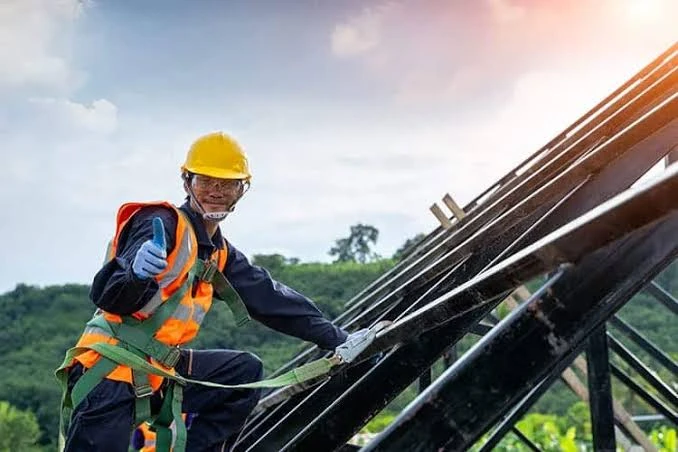

Safety is one of the most important parts of every commercial roofing project. Whether replacing a flat roof on a warehouse, office building, school, church, apartment complex, or manufacturing facility, professional roofing contractors must follow strict safety procedures to protect both their crews and everyone on the property.
Commercial roofing projects often involve working several stories above the ground while handling heavy materials and specialized equipment. Because of these challenges, experienced roofing companies use fall-protection systems, warning lines, safety harnesses, roof anchors, guardrails, and properly secured ladders to help reduce the risk of accidents.
Planning begins before the first roofing material is removed. Contractors inspect the building, identify rooftop hazards, establish safe access points, and determine where materials, dumpsters, and equipment will be located. A well-organized job site helps crews work efficiently while maintaining a safe environment.
Weather also plays a major role in commercial roofing safety. High winds, rain, lightning, snow, and ice can make roofing conditions hazardous. Professional roofing contractors continuously monitor the weather and postpone work when conditions become unsafe. Protecting workers is always more important than rushing to complete a project.
Commercial roofs frequently contain rooftop equipment such as HVAC units, exhaust fans, skylights, vents, and electrical systems. Roofing crews work carefully around these obstacles while protecting the building and ensuring roof penetrations remain watertight throughout the installation process.
Material handling is another important part of safety. Roofing membranes, insulation boards, cover boards, and equipment are often lifted onto the roof using cranes, boom trucks, or material hoists. Proper lifting techniques and coordinated communication help prevent injuries while allowing materials to be placed safely and efficiently.
Protecting the building below is equally important. Contractors establish controlled work areas, secure debris during tear-offs, protect entrances, and communicate with building owners so employees, customers, and tenants can safely move around the property while work is underway.
Housekeeping throughout the project is another key safety practice. Roofing crews continuously remove debris, organize materials, secure loose tools, and keep walkways clear. Maintaining a clean roof surface reduces trip hazards and creates a safer work environment from start to finish.
Professional commercial roofing companies also provide ongoing safety training for their crews. Regular education on fall protection, equipment operation, hazard recognition, and emergency procedures helps ensure every project is completed according to industry safety standards.
Choosing an experienced Commercial Roofing contractor means choosing a company that values safety just as much as quality workmanship. A well-planned project, trained crews, proper equipment, and attention to every detail help deliver a durable roofing system while protecting workers, building occupants, and your investment throughout the entire roof replacement process.