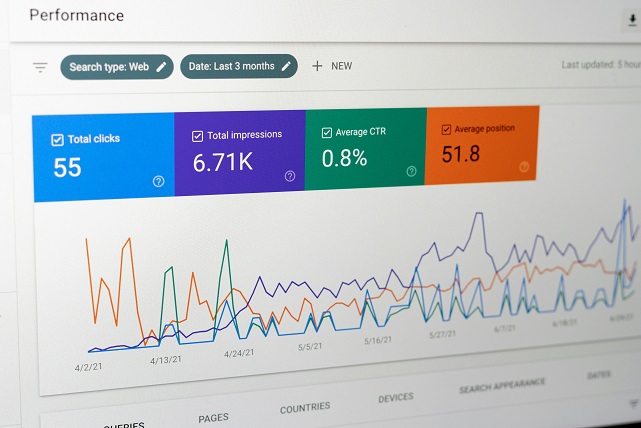

Introduction to Marketing Metrics
Marketing metrics are quantitative measurements used to gauge the effectiveness of marketing campaigns and strategies. They provide valuable insights into how well marketing efforts align with overall business goals, enabling organizations to evaluate performance, identify strengths and weaknesses, and make data-driven decisions. In today’s competitive landscape, it is crucial for businesses to adopt a metric-driven approach to marketing to ensure their strategies yield optimal results.
The importance of marketing metrics extends beyond merely tracking the success of a single campaign. These evaluations serve as a foundation for understanding customer behavior, market trends, and the effectiveness of various channels. By consistently monitoring relevant metrics, businesses can respond swiftly to changes in the market and adjust their strategies accordingly. Metrics help in revealing customer preferences, informing teams about what resonates with the audience, and guiding future marketing initiatives.
Moreover, the analysis of marketing metrics creates a clearer picture of return on investment (ROI). By accurately measuring the cost-effectiveness of individual campaigns, organizations can determine which strategies generate the highest returns. This not only aids in resource allocation but also boosts overall profitability as businesses invest in avenues that provide the greatest impact.
In addition to tracking traditional metrics, modern tools and technologies have enabled organizations to focus on more nuanced indicators like customer engagement and lifetime value. These advanced metrics allow for better segmentation of audiences and enable marketers to personalize their approach, enhancing customer satisfaction and loyalty.
In conclusion, the strategic application of marketing metrics is essential for businesses seeking to evaluate the success of their initiatives and refine their strategies. Understanding and tracking the right metrics can lead to sustained growth, improved customer relationships, and enhanced business performance.
Key Performance Indicators (KPIs) Explained
Key Performance Indicators, commonly referred to as KPIs, are quantifiable measures used to evaluate the effectiveness of an organization in achieving its key business objectives. In the context of marketing, KPIs play a pivotal role in tracking progress, understanding trends, and informing decision-making processes. By monitoring relevant KPIs, businesses can assess their marketing performance and make necessary adjustments to enhance their strategies.
Identifying the right KPIs begins with a thorough understanding of an organization’s specific goals and objectives. Different businesses may prioritize distinct aspects of performance, so KPIs must align closely with the strategic vision. For instance, a company focused on increasing revenue may track financial KPIs, such as Return on Investment (ROI) or Customer Lifetime Value (CLV). In contrast, a business aiming to improve customer satisfaction might prioritize metrics related to customer engagement or retention rates.
KPI categories can be broadly divided into four main areas: financial, customer, process, and people metrics. Financial metrics assess the economic aspects of marketing efforts, with examples like sales growth and profit margins. Customer metrics evaluate the relationship between the business and its customers, such as customer acquisition cost and net promoter score (NPS). Process metrics focus on the efficiency of marketing initiatives, including lead conversion rates and campaign response rates. Finally, people metrics involve assessing employee performance and engagement, often measured through employee satisfaction scores or productivity rates.
In summary, KPIs are essential for any business aiming to refine its marketing strategies. By selecting and tracking the appropriate indicators, companies can gain valuable insights, enhance performance, and ultimately achieve their marketing objectives more effectively.
Customer Acquisition Cost (CAC)
Customer Acquisition Cost (CAC) is a critical metric that enables businesses to evaluate the effectiveness of their marketing and sales strategies. Essentially, CAC represents the total cost associated with acquiring a new customer. This figure includes all expenses incurred during the marketing and sales processes, such as advertising costs, sales staff salaries, commissions, and any other relevant costs associated with attracting new customers.
Calculating CAC is straightforward. To determine this cost, one can divide the total expenses spent on acquiring customers by the number of customers acquired within a specified time frame. The formula can be expressed as follows: CAC = Total Cost of Sales and Marketing / Number of New Customers Acquired. This simplicity makes CAC a valuable tool for businesses looking to optimize their marketing strategies and improve operational efficiency.
Interpreting CAC in relation to Customer Lifetime Value (CLV) is essential for businesses aiming to maximize profitability. CLV represents the total revenue a business can expect from a customer throughout their relationship with a company. By comparing CAC to CLV, companies can assess whether their customer acquisition efforts are sustainable and profitable. A favorable ratio is typically considered to be 1:3; this means for every dollar spent on acquiring customers, the business should expect to generate three dollars in return over the customer’s lifetime.
Understanding the significance of CAC helps businesses refine their marketing strategies and allocate resources more effectively, identifying which channels yield the highest returns. Maintaining a low CAC relative to CLV implies that the marketing and sales practices employed are successful and economically viable, ultimately supporting long-term profitability and sustainable growth.
Return on Investment (ROI)
Return on Investment (ROI) is a pivotal metric that enables businesses to evaluate the profitability of their marketing campaigns. It offers a quantifiable assessment of the financial benefits derived from marketing initiatives compared to the costs incurred. To calculate ROI, the formula typically used is: ROI = (Net Profit / Cost of Investment) x 100. In this context, “Net Profit” refers to the revenue generated from a marketing campaign minus the total costs associated with that campaign.
The significance of ROI in marketing cannot be overstated. It serves not only as a benchmark for evaluating the effectiveness of various marketing strategies but also as a guide for future investments. By analyzing the ROI of different campaigns, businesses can identify which strategies yield the highest returns and warrant further funding. Conversely, campaigns that produce low or negative ROI may require reassessment or discontinuation. This data-driven approach fosters more strategic budget allocation, enabling organizations to direct resources toward the most effective marketing efforts.
In addition to tracking overall ROI, it is beneficial for businesses to segment this metric by different channels or campaigns. For instance, the ROI from social media marketing may differ significantly from email marketing campaigns. Understanding these nuances allows businesses to fine-tune their marketing strategies for greater effectiveness. Moreover, continuous ROI tracking can empower companies to pivot strategies as market conditions evolve, ensuring that marketing efforts are adaptable and responsive to changing consumer behaviors and preferences.
Overall, ROI is an essential metric that not only measures past performance but also supports informed decision-making in the realm of marketing. Emphasizing ROI in marketing evaluations enhances the potential for increased profitability and sustainable business growth.
Customer Lifetime Value (CLV)
Customer Lifetime Value (CLV) refers to the total revenue a business can expect from a single customer account throughout their relationship with the company. Understanding CLV is essential for businesses aiming to optimize their marketing strategies, as it provides insight into how much value each customer contributes over time. This metric is particularly crucial when evaluating customer retention strategies, as it emphasizes the financial impact of nurturing long-term customer relationships versus acquiring new ones.
To calculate CLV, businesses can use several methods, but a common formula involves multiplying the average purchase value, the average purchase frequency, and the average customer lifespan. For example, if a customer spends $100 per purchase, shops five times a year, and remains a customer for four years, the CLV would be calculated as follows: $100 x 5 purchases/year x 4 years = $2,000. This figure represents the expected revenue generated from that customer over their lifetime.
The significance of CLV extends beyond simple calculations; it aids businesses in making informed decisions about marketing budgets and resource allocation. By understanding which customers yield the highest CLV, businesses can tailor their retention strategies, focusing their efforts on retaining those who provide the most substantial financial value. Additionally, with a solid grasp of CLV, companies can better predict future profits and evaluate the effectiveness of their marketing campaigns, thereby enhancing overall long-term profitability. In essence, tracking CLV not only supports retention but also fosters sustainable growth by allowing businesses to invest strategically in their most valuable assets: their customers.
Conversion Rates
In the realm of digital marketing, conversion rates serve as a critical metric for determining the effectiveness of various marketing channels. A conversion rate is defined as the percentage of users who take a desired action after interacting with a marketing asset. This action may encompass making a purchase, signing up for a newsletter, or filling out a contact form. To calculate the conversion rate, the formula is straightforward: divide the number of conversions by the total number of visitors and then multiply by 100 to get a percentage.
Understanding conversion rates is essential for businesses as it helps assess which marketing strategies yield the highest return on investment (ROI). A high conversion rate indicates that a marketing campaign is successfully persuading potential customers to take action, whereas a low conversion rate may suggest the need for improvements in targeting, messaging, or user experience.
There are several techniques businesses can implement to improve their conversion rates. Leveraging A/B testing can help in identifying which variations of a marketing message resonate best with the target audience. Optimizing landing pages by enhancing their design, clarity, and relevance can also significantly contribute to higher conversions. Moreover, ensuring that calls to action (CTAs) are clear and compelling can facilitate user engagement. Small changes, such as adjusting color schemes or repositioning elements on a webpage, can have a substantial impact on conversion rates.
Ultimately, even minor improvements in conversion rates can lead to considerable enhancements in overall business performance. By regularly monitoring and analyzing conversion rates within various marketing channels, businesses can optimize their strategies, allocate resources more effectively, and drive sustainable growth.
Engagement Metrics
Engagement metrics are pivotal in marketing as they provide insights into how actively audiences interact with content and campaigns. These measurements allow businesses to assess the effectiveness of their strategies and inform data-driven decisions. Some of the most significant engagement metrics include click-through rates (CTR), time on site, and social media interactions.
Click-through rate (CTR) specifically gauges the proportion of users who click on a link compared to the total who view a page, an email, or an advertisement. A high CTR indicates that the content resonates well with the audience and compels them to take action, while a low CTR might suggest a need for more enticing or relevant content. This metric is crucial for understanding user behavior and optimizing future marketing efforts.
Moreover, the time spent on site is another critical indicator of engagement. It measures how long visitors spend on a website before navigating away. A longer duration generally signifies that visitors find the content valuable, enjoyable, or informative, leading to higher rates of retention and potential conversions. Analyzing this metric frequently helps marketers identify which sections attract substantial attention and which may require improvement.
Social media interactions, including likes, shares, and comments, also serve as vital engagement metrics. They reflect not only the reach of the content but also its resonance within the audience. By noting these interactions, businesses can foster community connections, adapt their messaging, and build brand loyalty. Tracking these interactions allows marketers to engage with their audience more personally and create tailored content that addresses their interests.
Overall, by keeping a close eye on engagement metrics, businesses can cultivate an understanding of customer interest and continuously refine their marketing strategies to meet audience needs effectively.
Website Traffic and User Behavior Metrics
Understanding website traffic and user behavior metrics is essential for any business aiming to refine its digital marketing strategies. Key metrics in this domain include unique visitors, total page views, and bounce rate. Each of these metrics provides critical insights into how effectively a website engages its audience.
Unique visitors represent the count of distinct individuals who visit a website during a specified time frame. This metric is pivotal for evaluating the reach of a website. By tracking changes in unique visitors over time, businesses can assess the effectiveness of their marketing campaigns. In addition to unique visitors, the total page views metric indicates how frequently a site’s pages are being viewed. Analyzing this data can reveal which content resonates most with users, allowing businesses to tailor their marketing strategy accordingly.
Bounce rate, which refers to the percentage of visitors who leave a site after viewing only one page, serves as an important indicator of user engagement. A high bounce rate may suggest that visitors do not find the content relevant or engaging enough to explore further, prompting the need for improvements. Reducing the bounce rate often involves enhancing website design, ensuring fast loading times, and creating compelling calls to action.
Furthermore, gaining insights into user behavior through additional metrics such as average session duration and pages per session can further inform marketing strategies. These metrics allow businesses to understand how long visitors stay on their site and how deeply they engage with the content. By analyzing these behaviors, companies can implement optimizations that improve user experience, ultimately leading to increased conversions and better marketing outcomes.
Conclusion: The Continuous Need for Tracking and Adjustment
In the fast-paced world of business, continuously analyzing marketing metrics is not just beneficial; it is essential. Accurate tracking of these metrics enables companies to gauge the effectiveness of their marketing strategies, understand customer preferences, and identify areas for improvement. As the business landscape evolves, so too must the approaches to marketing; thus, consistent monitoring and adjustment are vital.
Organizations that actively track their performance metrics can make informed decisions that lead to enhanced marketing effectiveness. By establishing a routine for reviewing key metrics such as conversion rates, customer acquisition costs, and marketing return on investment (ROI), businesses can not only measure their success but also pinpoint strategies that may need recalibration. These insights allow for timely adjustments to marketing campaigns, ultimately leading to optimized performance and better alignment with organizational goals.
Furthermore, the integration of metric tracking into the marketing strategy fosters a culture of data-driven decision-making. This approach encourages teams to rely on empirical evidence rather than assumptions, thereby improving the overall strategy’s reliability. It also facilitates the identification of trends and shifts in consumer behavior, providing valuable foresight that can influence future marketing initiatives.
In summary, the commitment to ongoing tracking and adjustment of marketing metrics is paramount for any business aiming to thrive in a competitive environment. By embedding this practice into their marketing strategies, organizations can boost their potential for achieving desired outcomes and ensure long-term success. Embracing a systematic analysis of metrics will empower businesses to navigate challenges and seize opportunities with greater agility and confidence.