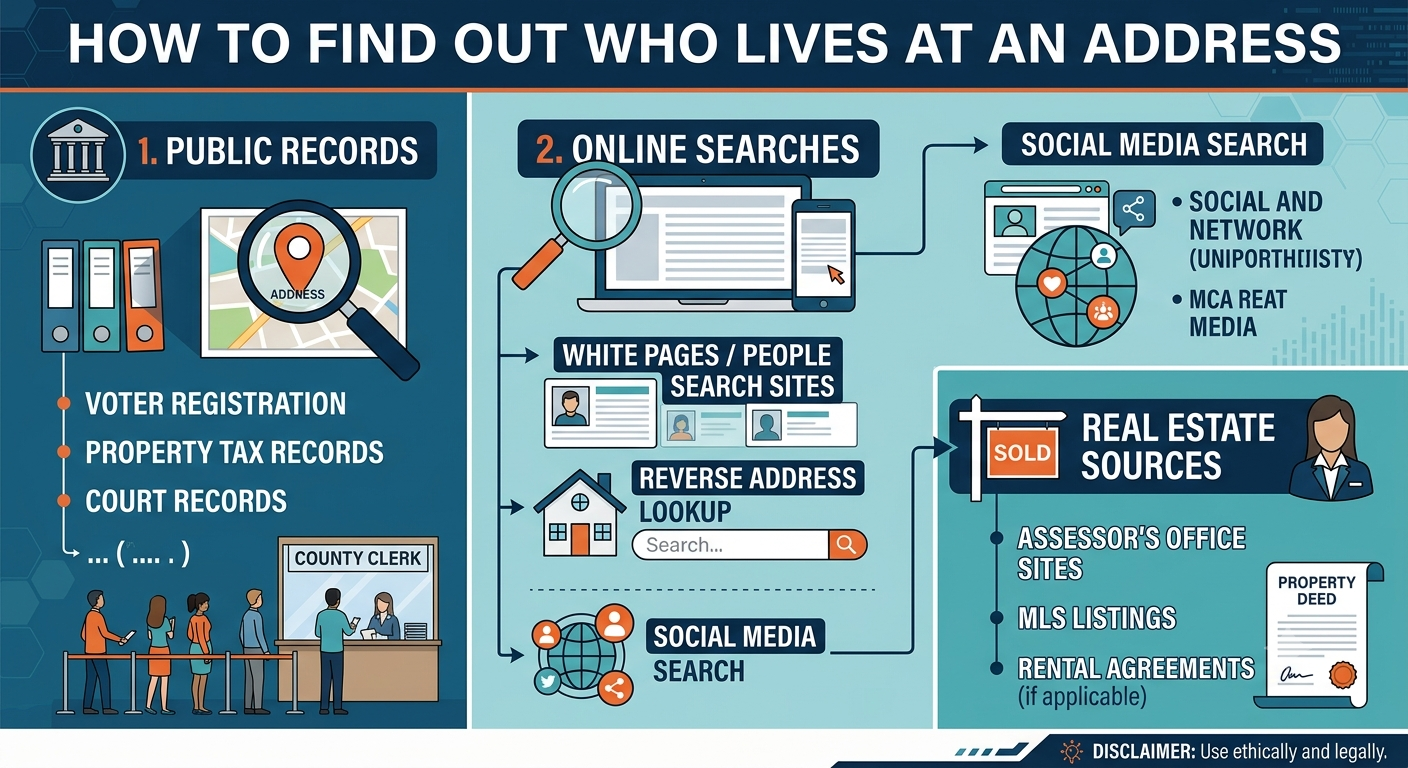

Have you ever looked at a house or apartment and wondered who lives there? You are not alone. People try to find out who lives at an address for different reasons.
They may be hoping to reconnect with an old friend or relative who moved away or understand why an unfamiliar name keeps appearing in the mail. They might want to research a rental property before signing a lease or learn more about a landlord they’ve never met in person. And sometimes, they just want peace of mind about a new neighbor.
Even business owners may need to confirm who’s connected to an address before shipping something valuable. Whatever the reason, you don’t have to hire a private investigator or spend hours sorting through complicated records.
Ways to Find Out Who Lives at an Address
Here are a few ways to find out who lives at an address.
Run a Reverse Address Search
You can enter the complete street address, including the apartment number, city, state, and ZIP code, into a reverse address lookup tool to find names connected to that location.
Results may include current residents, former residents, the property owner, possible relatives, phone numbers, or previous addresses. The exact information depends on which public records are available.
Some records remain connected to an address long after someone moves or they show information about the owner instead of the tenant. Look at dates, ages, and related locations before deciding which result is most likely correct.
Check County Property Records
County property records can help you identify the legal owner of a home. Search for the official assessor, property appraiser, tax office, or recorder website for the county where the property is located. Many county offices allow people to search by street address or parcel number.
A property record may show the owner’s name, mailing address, sale date, assessed value, and basic details about the home. When the owner’s mailing address is different from the property address, the house may be rented out. However, the record won’t usually identify the tenant.
Property databases can also take time to show a recent sale. In some counties, assessor information may be several months behind. The recorded deed is generally a more reliable source when you need to confirm legal ownership.
Search the Exact Address Online
Enter the complete address inside quotation marks in a web search. This tells the search engine to look for that exact group of words. Try searching with and without the ZIP code. You can also test different versions of the street name, such as “Road” and “Rd.”
The results may include an old property listing, a local news story, a public notice, a business filing, or a document naming someone connected to the location. If you’re researching an apartment building, include the unit number if possible.
Explore Other Public Records
Other records, like business registrations, professional licenses, building permits, court documents, and local government notices, can also come in handy. A person who operates a business from home may have listed the address on an official filing.
For an older address, try contacting a local library or public archive. City directories, historical newspapers, property maps, and older government records may show who lived at a home during a certain period.
Access rules vary between states and counties. Some records are available online, while others require an in-person request. Certain personal details may also be removed to protect someone’s privacy or safety.
Send a Letter
If you only need to reach the person currently living at the property, you can send a polite letter addressed to “Current Resident.”
Briefly explain why you are writing and provide a safe way for the person to respond. Be honest about your identity and your reason for contacting them. Don’t use misleading language or pretend that you already know the resident.
You can also mark the letter “Return Service Requested.” If that person filed a change-of-address with the mail service, your letter will be returned to you with their new address on it. It’s slower than an online search, but it’s free and can work surprisingly well.
Try a Deeper Background Search
A detailed background check combines several public records into one report. You might see things like a person’s age range, other addresses they’ve lived at, and possibly names of relatives connected to them.
This method takes a bit more time and might come with a small fee, but it’s worth it if you need clearer information for a legal, financial, or safety-related matter.
Find Out Who Lives at an Address and Respect Privacy
Public records are not always complete or current. A search may show a former tenant, property owner, relative, or someone who only used the address for business purposes. Compare information from multiple sources before assuming you have found the right person.
You should also respect the privacy of anyone connected to the property. Never use address details to threaten, deceive, stalk, harass, or repeatedly contact someone who doesn’t want to talk to you.