
You’ve cleared it, flushed it, maybe even tried drain cleaner. A few weeks later the water is draining slowly again.
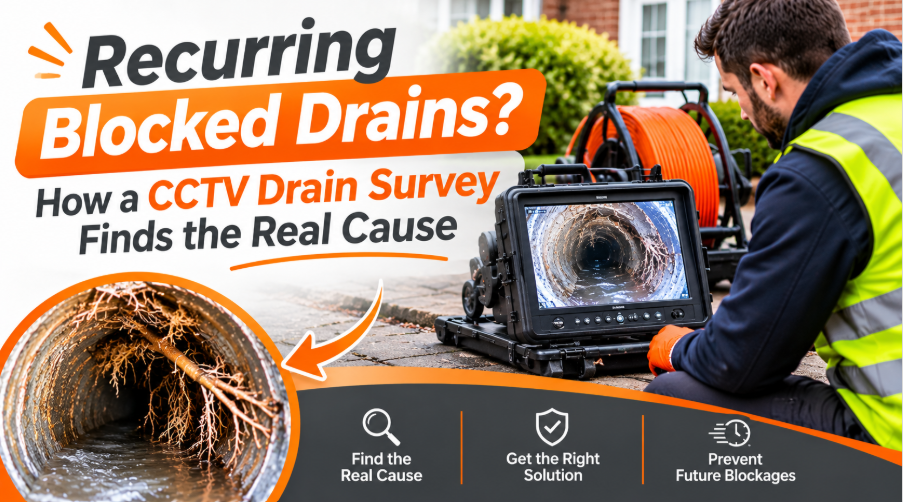
When a drain keeps blocking, the blockage usually isn’t the real problem. It’s a symptom. Something inside the pipe is causing it to happen again and again, and the only way to find out what is a CCTV drain survey. A small camera goes into the pipe so you can see exactly what’s wrong, instead of paying for the same quick fix twice.
In this guide, we’ll explain why drains keep blocking, what a drain survey can find, and how to tell when it’s time to book one.
Why Do Drains Keep Blocking?
A one-off blockage is usually down to something simple, like grease, wipes or a build-up of hair. Repeat blockages are different. If you’ve had the same drain blocked two or three times in a year, there’s almost always an underlying fault.
Rods and jetting clear the blockage, but they can’t tell you why it formed. Without seeing inside the pipe, you’re guessing. A CCTV drain survey removes the guesswork by showing you the pipe from the inside.
Hidden Causes a CCTV Drain Survey Can Find
Here are the most common problems a drain survey picks up when blocked drains keep coming back.
Tree Roots Growing Into the Pipe
Roots look for water, and a tiny crack or loose joint is all they need to get in. Once inside, they grow into a thick mass that catches paper and waste. This is one of the most common reasons for recurring blocked drains, and a CCTV drain survey shows it clearly.
Cracked or Collapsed Pipes
Older clay and pitch fibre pipes can crack, sink or collapse over time. A damaged section creates a rough spot where waste gets stuck. In bad cases, part of the pipe has fallen in completely. You can’t judge this from the surface, but a drain camera spots it straight away.
Displaced or Open Joints
Pipes are joined in sections. If the ground moves, the joints can slip out of line. Waste then snags on the edge and builds up. A drain survey shows exactly where the joint has moved.
Grease and Scale Build-Up
Over the years, grease, limescale and hardened deposits narrow the inside of the pipe. The drain still works, but with less room each year, it blocks more easily. A CCTV drain inspection shows how bad the build-up is and whether descaling would help.
Poor Pipe Fall
Drains rely on a steady slope to carry waste away. If part of the pipe has sunk, water can sit there and waste settles. This is called a belly in the pipe, and it’s very common behind repeat blockages.
Why Unblocking Only Fixes the Symptom
Drain unblocking is the right call for a one-off problem. It’s quick and it works.
But if the real cause is a root mass, a cracked section or a collapsed joint, clearing the pipe just buys you time. The blockage comes back, and each call-out costs you money. Worse, some faults get bigger the longer they’re left. A small crack today can become a collapse next year.
A CCTV drain survey costs more than a single unblock, but it can save you from paying for repeat call-outs. It gives you a clear answer, not another temporary fix.
How a CCTV Drain Survey Works
The process is simpler than most people expect, and it usually doesn’t involve digging anything up.
- Access: The engineer finds a route into the drain, usually through a manhole, gully or inspection point.
- The camera: A waterproof drain camera on a flexible rod or small crawler is fed along the pipe. It has its own light and sends live footage to a screen.
- Recording: The engineer watches in real time, notes problems and records the footage.
- The report: You get a written drain survey report with images, locations of any faults, and recommendations.
Most surveys on a normal home drain take around an hour, though this depends on the length and condition of the pipework. At Precise Drainage Solutions, our engineers show you the footage on screen as they go, so you can see any problem for yourself.
What You Get From a Drain Survey
After a CCTV drain survey, you should receive:
- Video footage of the inside of your drain
- Photos of any defects, such as cracks, roots or collapsed sections
- The location of each fault, so repairs can be targeted
- A clear explanation of what’s causing your blocked drains
- Recommended next steps, whether that’s descaling, patch lining, relining or excavation
That last point matters. Instead of being told you “might” need work, you can see the problem for yourself and decide what to do next.
What Happens After the Survey?
The right fix depends on what the camera finds.
- Heavy scale or grease: Descaling or high-pressure jetting can clear the pipe and restore flow.
- Roots: The roots can be cut out, then the damaged section is repaired so they can’t return.
- Small cracks or open joints: Patch lining or localized repairs can seal the problem without major digging.
- Widespread damage: Relining can renew the whole pipe with minimal disruption.
- Collapsed pipe: A section may need excavating and replacing.
Because the drain survey shows exactly where the damage is, you only pay to fix what actually needs fixing.
Signs It’s Time to Book a CCTV Drain Survey
You probably need a CCTV drain survey if:
- The same drain has blocked more than twice in 12 months
- You hear gurgling from sinks, toilets or drains
- There are bad smells from drains or outside your property
- You notice damp patches, sunken ground or soggy areas in the garden
- You’ve seen rats or other pests around the drains
- You’re buying or selling a property and want to know the drains are sound
- You’ve had repeated unblocking with no lasting result
If any of these sound familiar, a drain survey is the quickest way to find out what’s really happening underground.
How to Choose a Drain Survey Company
Not all surveys are equal. Before you book, check that the company:
- Provides full video footage and a written report, not just a verbal opinion
- Uses a proper drain camera and can locate faults accurately
- Explains the findings in plain English
- Gives clear, honest repair options without pressure
- Can carry out the repairs as well, if you want them to
A good CCTV drain survey should leave you better informed, not confused.
CCTV Drain Survey FAQs
How long does a CCTV drain survey take?
Most domestic surveys take about an hour, depending on how long the drain is and how easy it is to access.
Will a drain survey damage my pipes?
No. The camera is small and flexible, and it’s designed to travel through drains without causing harm.
Is a CCTV drain survey worth it for blocked drains?
If the blockages keep coming back, yes. A survey finds the root cause so you can fix it properly instead of paying for repeat unblocking.
Do I need a drain survey when buying a house?
It’s a good idea. A CCTV drain survey can reveal hidden defects that a standard property survey won’t show, so you know about repair costs before you buy.
How often should I get a drain survey?
There’s no fixed rule. Get one when problems appear, when buying a property, or every few years if your drains are old.
Stop Guessing: See What’s Inside Your Drain
Recurring blocked drains rarely fix themselves. The longer the real cause is left, the more it can cost. A CCTV drain survey shows you exactly what’s wrong and gives you a clear plan to fix it for good.
If your drain keeps blocking, book a CCTV drain survey today and we’ll show you the footage so you can see the problem for yourself.