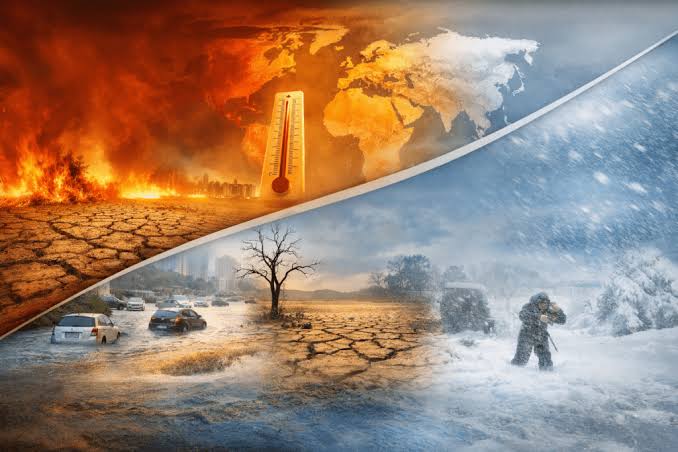

Introduction to Climate Change
Climate change refers to significant alterations in the average temperature, precipitation, and weather patterns of the Earth over extended periods. It has become one of the most pressing issues of our time, affecting ecosystems, human health, and economies globally. While climate change is a natural phenomenon, human activities, especially since the Industrial Revolution, have accelerated its pace. The burning of fossil fuels, deforestation, and large-scale agriculture have led to an unprecedented increase in greenhouse gases, primarily carbon dioxide (CO2), in the atmosphere.
Understanding climate change requires a historical perspective. The Earth’s climate has experienced fluctuations throughout its history, with periods of warming and cooling driven by natural forces such as volcanic eruptions, solar radiation variations, and Earth’s orbital changes. However, the changes observed in the past century are extraordinary in both their speed and magnitude. Global temperatures have risen significantly since the late 19th century, primarily due to the anthropogenic impacts on the environment.
The scientific basis for climate change is rooted in the greenhouse effect, a natural process where certain gases in the Earth’s atmosphere trap heat. While this effect is essential for maintaining life by keeping the planet warm, the excessive concentration of greenhouse gases results in enhanced warming. The Intergovernmental Panel on Climate Change (IPCC) has provided robust evidence demonstrating that recent climate changes are primarily the result of human activities. Furthermore, the consequences manifest in various forms, including rising sea levels, more extreme weather events, and shifting wildlife populations.
Addressing climate change is critical not only for preserving the environment but also for ensuring future generations can thrive. It necessitates collective action at local, national, and international levels, emphasizing the need for sustainable practices and policies that can mitigate its effects while promoting resilience against the inevitable shifts in climate. Recognizing the urgency of this issue is crucial for steering global efforts towards effective solutions.
Natural Factors Influencing Climate
The climate of Earth is influenced by a myriad of natural factors, each playing a pivotal role in shaping long-term weather patterns. One significant contributor to climate variations is volcanic eruptions. When a volcano erupts, it releases vast amounts of ash and sulfur dioxide into the stratosphere, which can reflect sunlight away from the Earth, temporarily cooling the atmosphere. This phenomenon can last from months to several years, demonstrating how geological events impact climate on a substantial scale.
Another essential aspect that determines climate patterns is the movement of ocean currents. Ocean currents are primarily driven by wind, the rotation of the Earth, and salinity differences, affecting temperatures across vast distances. Warm currents can elevate local climates, while cold currents often lead to cooler conditions. For instance, the Gulf Stream carries warm water from the Gulf of Mexico towards the North Atlantic, significantly influencing the climate of regions such as Western Europe.
Solar radiation is another crucial factor influencing climate. The amount and intensity of solar energy reaching the Earth fluctuate due to various natural cycles, such as the Milankovitch cycles. These cycles describe changes in the Earth’s orbit and axial tilt, consequently influencing climatic conditions over long geological periods. Variations in solar output can also result from solar flares and other solar activity, contributing to short-term climate changes.
Natural greenhouse gas emissions, primarily from processes such as respiration, decomposition, and volcanic activity, also play a key role. Although human activities have significantly increased greenhouse gas concentrations, natural emissions still contribute to the greenhouse effect, which helps to maintain a balance in the Earth’s temperatures. Understanding how these various natural components interact is essential for comprehending the overarching climate patterns observed throughout Earth’s history.
Human Activities and Climate Impact
The relationship between human activities and climate change is one of the most pressing issues of our time. As the global population has increased, so too have the demands placed on the environment. Key contributors to this phenomenon include greenhouse gas emissions resulting from industrial processes, deforestation, and the consumption of fossil fuels.
Industrial activities are among the primary sources of greenhouse gases, particularly carbon dioxide (CO2) and methane (CH4). Factories emit vast amounts of these gases during production, significantly altering the natural balance of greenhouse gases in the atmosphere. The advancement of technology has enabled increased efficiency; however, it has also led to higher outputs, thereby exacerbating the problem of climate change.
Deforestation is another critical factor driving climate change. Forests act as carbon sinks, absorbing CO2 from the atmosphere. However, large-scale logging, agriculture expansion, and urban development are leading to the rapid depletion of these vital ecosystems. As trees are removed, not only is the capacity for carbon absorption diminished, but the carbon stored in trees is also released back into the atmosphere, further contributing to global warming.
The consumption of fossil fuels, including coal, oil, and natural gas, remains a dominant energy source worldwide. The burning of these fuels for electricity, transportation, and heating releases significant amounts of CO2, making it one of the largest contributors to anthropogenic climate change. Transitioning to renewable energy sources such as wind, solar, and hydroelectric power is essential to mitigate the impacts of fossil fuel use, but the adoption rate is still slow in many regions.
Coupled, these human activities create a feedback loop that accelerates climate change. As climate patterns shift, the consequences become increasingly severe, affecting ecosystems, sea levels, and weather events globally. Addressing these human-induced factors is critical to forging a sustainable path to a more stable climate.
The Role of Greenhouse Gases
Greenhouse gases (GHGs) are atmospheric components that significantly contribute to the greenhouse effect, a natural process that warms the Earth’s surface. These gases include carbon dioxide (CO2), methane (CH4), and nitrous oxide (N2O), among others, and play a crucial role in regulating the planet’s temperature. Without the presence of greenhouse gases, the Earth’s average temperature would be significantly colder, making it unable to sustain life as we know it.
Carbon dioxide is one of the most prevalent greenhouse gases, primarily produced through the combustion of fossil fuels, deforestation, and other human activities. It has the highest contribution to climate change as it remains in the atmosphere for centuries, accumulating over time and leading to long-term warming. In contrast, methane, which is emitted during the production and transport of coal, oil, and natural gas, has a much stronger heat-trapping ability but remains in the atmosphere for a shorter duration. This makes methane particularly potent in terms of short-term climate impacts.
Nitrous oxide is another significant greenhouse gas that results from agricultural and industrial activities as well as the combustion of fossil fuels and solid waste. Its contribution to the greenhouse effect is powerful, as it is more effective than CO2 in trapping heat in the atmosphere. Understanding the roles and impacts of these greenhouse gases is imperative for developing strategies to mitigate climate change. By focusing on reducing emissions from these key contributors, we can work toward stabilizing the climate and fostering a more sustainable future.
Changes in Weather Patterns
Climate change has become an urgent global issue, impacting various aspects of life, particularly weather patterns. As the planet continues to warm, a range of changes in precipitation and temperature extremes are observed across different regions. These shifts in climate patterns are not only significant but also pose challenges to ecosystems and human societies.
One noticeable effect of climate change is the alteration in precipitation patterns. Many areas are experiencing increased rainfall in some seasons while facing severe droughts in others. This variability disrupts agricultural practices and can lead to food shortages, affecting local economies and food security. Regions that previously enjoyed relatively stable weather are now facing unpredictable shifts, making it increasingly difficult to plan agricultural cycles and manage water resources.
Furthermore, temperature extremes are becoming more pronounced due to climate change. Hotter summers and milder winters create an imbalance in the natural environment, impacting both wildlife and human health. Heatwaves are becoming more frequent and intense, leading to increased rates of heat-related illnesses and deaths. Conversely, some areas experience extreme cold spells, which can cause significant infrastructure challenges and pose threats to vulnerable populations.
Extreme weather events, such as hurricanes, floods, and wildfires, are also on the rise, attributed largely to climate change. The increasing frequency and intensity of hurricanes and storms have resulted in catastrophic damage to coastal communities and ecosystems. Similarly, prolonged droughts have devastating effects on agriculture, causing crop failures and economic downturns.
As these changes in weather patterns continue, it is essential for communities and governments to develop adaptive strategies to mitigate the impact of climate change. Acknowledging and addressing these transformations is crucial for ensuring a sustainable future for both people and the planet.
Regional Impacts of Climate Change
Climate change is a complex phenomenon that affects various regions differently due to a combination of geographical, climatic, and social factors. Understanding these regional impacts is crucial for developing effective adaptation and mitigation strategies.
Coastal areas are among the most vulnerable to the effects of climate change. Rising sea levels, primarily resulting from the melting ice caps and glaciers, pose a significant threat to these regions. Cities situated on coastlines experience increased flooding, erosion, and saltwater intrusion, which jeopardizes freshwater supplies and local ecosystems. Moreover, changes in temperature and precipitation patterns can lead to more severe storms, exacerbating the risks faced by coastal communities.
Similarly, arid regions confront unique challenges due to climate change. These areas often endure prolonged droughts, heightened temperatures, and reduced water availability. The impact of these changes is keenly felt in agriculture, where decreased rainfall and increased evaporation rates stress crop production. Consequently, food security becomes a pressing issue, potentially leading to social unrest and economic instability in these already vulnerable regions.
Polar regions are not immune to the effects of climate change, and their situations are particularly alarming. Warming temperatures have resulted in dramatic reductions in sea ice, which not only affects wildlife but also alters traditional indigenous lifestyles dependent on stable ice conditions. Additionally, the thawing of permafrost releases greenhouse gases, further contributing to climate change and creating a self-reinforcing cycle of warming.
In conclusion, the regional impacts of climate change reveal a diverse landscape of challenges, with coastal, arid, and polar regions facing particularly severe threats. A nuanced understanding of these effects is essential to devise strategies that consider the distinct needs and vulnerabilities of each area to effectively tackle the growing crisis of climate change.
Societal and Economic Consequences
The ramifications of shifting climate patterns are profound and multifaceted, influencing various aspects of society and global economies. As climate change continues to progress, its impacts on agriculture become increasingly pronounced. Farmers face unpredictable weather conditions, resulting in crop failures, reduced yields, and increased costs for adaptation. The global reliance on agriculture means that these disruptions affect food security and nutrition, leading to higher prices and potential scarcity in certain regions.
Health implications of changing climate patterns also present significant challenges. The rise in temperatures has been linked to an increase in heat-related illnesses, while altered precipitation patterns create conditions conducive to the spread of vector-borne diseases such as malaria and dengue fever. Vulnerable populations, particularly in low-income countries, are disproportionately affected, exacerbating health inequalities and straining public healthcare systems.
Infrastructure is another critical area impacted by climate change. Extreme weather events, such as floods and hurricanes, can obliterate existing infrastructure, requiring costly repairs and modifications. Urban areas, which are often ill-prepared for such events, face immense challenges in maintaining and upgrading their infrastructure. Without appropriate investments, the ability of cities to adapt to climatic changes remains compromised, affecting transportation, utilities, and housing.
Economically, shifting climate patterns necessitate a recalibration of priorities. Governments and businesses must allocate resources to mitigate effects and prepare for future climate scenarios. This includes investing in sustainable technologies and practices, which may initially seem financially burdensome but are crucial for long-term resilience. Failure to adapt can lead to economic instability, loss of livelihoods, and increased poverty rates.
Communities around the world face distinct challenges as they grapple with these changes. Factors such as geographic location, political stability, and economic resources dictate how effectively a society can adapt to climate-related shifts. As discussions around climate adaptation and mitigation grow, recognizing the interplay between societal structure and economic capacity will be vital for developing effective response strategies.
Mitigation and Adaptation Strategies
The effects of climate change are increasingly evident, necessitating a robust response that encompasses both mitigation and adaptation strategies. Mitigation focuses on reducing greenhouse gas emissions, which are a primary driver of climate change. One significant pathway to achieving this is through the adoption of renewable energy sources like solar, wind, and hydroelectric power. These energy alternatives not only reduce reliance on fossil fuels but also lower emissions released into the atmosphere.
In addition to transitioning to renewable energy, conservation efforts play a crucial role in mitigating climate impacts. This includes enhancing energy efficiency in buildings, vehicles, and industrial processes. By implementing energy-efficient technologies and practices, we can significantly cut down carbon footprints, thus contributing to a more sustainable future.
Moreover, adopting conservation techniques in agriculture and forestry can help sequester carbon and maintain biodiversity. Sustainable land management practices, such as reforestation and improved agricultural methods, can contribute to soil health and ensure that ecosystems remain resilient to climatic shifts.
On the adaptation front, communities must develop strategies to manage the inevitable consequences of climate change. This may involve upgrading infrastructure to withstand extreme weather events, implementing water conservation practices, and designing urban environments to cope with rising sea levels. Effective planning and adaptation strategies require a collaborative approach, engaging stakeholders at all levels, including governments, businesses, and local communities.
Policy measures are vital in both mitigating climate change and facilitating adaptation efforts. Governments must create and enforce regulations that limit emissions and incentivize the use of clean technologies. International cooperation is equally crucial as climate change is a global issue that transcends borders, demanding collective action.
The Future of Climate Patterns
The examination of future climate scenarios is paramount for understanding the potential implications of our current actions on climate patterns. As scientists analyze existing data and model prospective changes, several trends emerge that could shape our environmental landscape over the coming decades. One significant concern is the escalating frequency and intensity of extreme weather events, including hurricanes, droughts, and heatwaves. These phenomena are expected to become even more pronounced if current greenhouse gas emissions trajectories continue.
Furthermore, shifts in temperature and precipitation patterns will likely have far-reaching impacts on ecosystems and agriculture. Regions that are currently agricultural hubs may face challenges, while others may become more productive due to shifting climatic conditions. However, these changes are not uniform, revealing disparities that could exacerbate existing socio-economic inequalities. Areas already vulnerable to food insecurity may find themselves increasingly at risk as the climate continues to change.
Another critical aspect to consider is the response of global policies to these shifting climate patterns. The effectiveness of international agreements, such as the Paris Agreement, hinges on the collective commitment of nations to reduce their carbon footprints significantly. The future climate will be greatly influenced by the immediate and sustained actions taken to mitigate climate change. Technologies aimed at renewable energy sources and carbon capture may play a vital role in altering our path toward a more sustainable future.
In conclusion, the future of climate patterns is contingent on our current decisions and policies. The potential outcomes range widely, from catastrophic climate disruption to a more stabilized environment, depending on our efforts to address the root causes of climate change and embrace innovative solutions. Continued scientific research and collaboration among nations will be essential to navigate these complex challenges effectively.