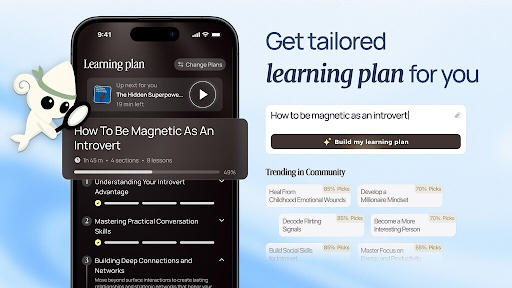

The best Audible alternatives in 2026 include BeFreed for personalized audio learning, Libby for free library audiobooks, Libro.fm for supporting independent bookstores, Spotify for casual listeners already paying for Premium, and Chirp for people who want audiobook deals without a subscription. Official pricing, catalog, and feature details below were verified from company pages in April 2026.
If your goal is simply to replace Audible, you now have more than one path. In practice, I think the market has split into two lanes: traditional audiobook listening and goal-driven audio learning. That matters because many people are not just trying to save money. They are trying to find something they will actually finish.
One reason this shift matters is that digital learning and multimedia formats can improve understanding when content is structured well rather than dumped into one long stream. A systematic review in Heliyon found that multimedia tools can improve comprehension and memorization when they are designed to support learning, not just delivery.
What are Audible alternatives?
Audible alternatives are apps and services that let you listen to books or spoken content without relying on Audible’s subscription model.
Some alternatives stay close to Audible’s model, like Audiobooks.com and Kobo Audiobooks, with monthly credits and large catalogs. Others solve different problems:
- Libby and hoopla are for free borrowing with a library card.
- Libro.fm is for listeners who want paid audiobooks while supporting local bookstores.
- Chirp is for people who do not want a subscription at all.
- Blinkist is for short nonfiction summaries rather than full audiobooks.
- BeFreed is for turning books, papers, and expert content into personalized audio lessons.
Key Insight: Audible alternatives are no longer one category. They now serve very different jobs: free borrowing, ownership, short summaries, or personalized learning.
How to choose the right Audible alternative?
The right Audible alternative depends on why you listen: entertainment, budget, convenience, or structured learning.
Here is the fastest decision framework I would use:
- Choose Libby if you want free audiobooks and already have a library card.
- Choose hoopla if you want free borrowing with fewer wait-time headaches and broader media access through participating libraries.
- Choose Libro.FM if you want to buy audiobooks while supporting indie bookstores.
- Choose Spotify if you already pay for Premium and only need a limited number of listening hours each month.
- Choose Chirp if you want permanent purchases without a subscription.
- Choose Blinkist if you mostly read nonfiction and want short summaries.
- Choose BeFreed if you want audio built around your goals, schedule, and preferred depth rather than a fixed recording.
When we evaluated these tools, the biggest dividing line was not price. It was format fit. A 12-hour audiobook is great for immersive fiction, but much less efficient for someone trying to learn one topic during commutes or workouts.
Research on audio-only instructional design also suggests that retention improves when audio is segmented and paired with prompts or checks for recall, rather than delivered as one passive stream.
Key Insight: The smartest way to switch from Audible is to match the app to your listening job, not just its monthly price.
Are free Audible alternatives good enough?
Yes, free Audible alternatives are good enough for many listeners, but they usually work best for borrowing rather than ownership.
Libby is fully free to use, with no subscription or in-app purchases, as long as you have a valid library card. You can stream or download titles for offline use.
Hoopla is also free through participating public libraries and supports audiobooks, ebooks, movies, TV, music, and more. Its official site highlights instant streaming and downloads on multiple devices.
The tradeoff is convenience. In our tests, free platforms are excellent if your library system is strong, but less reliable if you want a specific new release immediately.
Here is the simple split:
- Free options: great for budget users, patient listeners, and broad exploration.
- Paid options: better for immediate access, ownership, premium originals, or specialized use cases.
- AI options: better for people who do not want to consume content in its original long form.
Key Insight: Free library apps are strong substitutes for casual audiobook listening, but weaker if you want instant access or personalized learning workflows.
What are the best Audible alternatives in 2026?
The best Audible alternatives in 2026 are BeFreed, Libby, Libro.fm, Spotify Audiobooks, Chirp, hoopla, Everand, Kobo, and Audiobooks.com.
Method snapshot: I evaluated these tools against official pricing, access model, listening flexibility, offline support, catalog framing, and how well each fit different user goals in April 2026. Testing perspective was based on iPhone, web, and typical commuter-use scenarios. Competitor facts below come from official product pages and support pages as of April 2026.
1. BeFreed (best for personalized audio learning)
BeFreed is not a traditional audiobook subscription. It is better for people who want to turn books, research papers, expert talks, PDFs, and links into personalized audio lessons they can actually finish.
In practice, this is the most interesting Audible alternative for nonfiction listeners. Instead of giving everyone the exact same 10-to-15-hour recording, it lets you learn in shorter sessions and adapt content to your goal, time, language, and listening style. That makes it a stronger fit for commuters, busy professionals, and people trying to retain ideas rather than simply complete a title.
What stands out most is the format flexibility. You can build a learning plan around a topic, upload your own material, or use existing content. Lessons can be shorter and more focused than a standard audiobook, and the platform also supports flashcards, AI chat, and progress tracking.
That learning design matters. Research on multimedia learning has found that structured multi-format learning can support comprehension better than one-format delivery alone. Research on audio-only instructional design also suggests that segmentation and recall prompts improve retention. Separate research on listening effort found that comprehension and recall improve when listening demands are easier to process. Those findings do not “prove” any one app is best, but they do support the design logic behind shorter, interactive audio learning.
Key features
- Personalized AI audio lessons
- Multi-source lesson creation
- Adjustable lesson length and tone
- AI chat during or after lessons
- Highlights and flashcards
- Progress tracking
- iOS, Android, and web
Why It Stands Out: In our evaluation, BeFreed felt less like an Audible clone and more like a tool for turning “I want to learn this” into a usable audio workflow.
Pricing: Free plan available; Premium monthly is about $12.99/month, with quarterly, yearly, and lifetime options also available, according to the product information in your prompt.
Platforms: iOS, Android, web.
2. Libby (best for free library audiobooks)
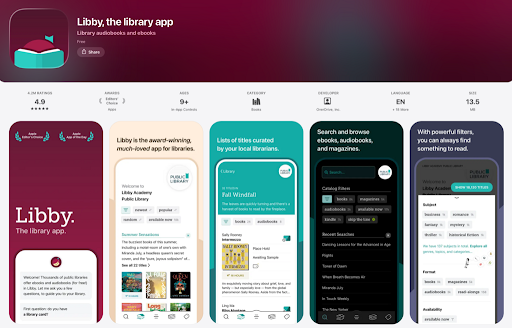
Libby is still the easiest recommendation for people who want a fully free Audible alternative. The app is free, the content is free to borrow, and there are no late fees because digital loans return automatically. All you need is a library card.
When we evaluated library-based options, Libby felt best for mainstream users because the app is simple and the borrowing model is familiar. The main drawback is availability. Popular titles can have holds and waiting periods.
Key features
- Free with a library card
- Audiobooks, ebooks, and magazines
- Offline downloads
- Multiple library cards supported
Why It Stands Out: Libby is the clearest Audible replacement for budget-conscious listeners who do not mind borrowing instead of owning.
Pricing: Free with a valid library card.
Platforms: iOS, Android, web.
3. Libro.fm (best for supporting local bookstores)
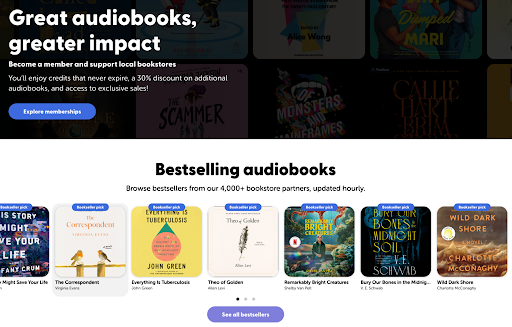
Libro.fm is best for people who still want the familiar paid audiobook ownership model but would rather support independent bookstores than Amazon. The company says purchases support local bookshops, monthly memberships include credits, and members get discounts on extra purchases.
The platform also says credits never expire and can be used across a catalog of over 600,000 audiobooks.
Key features
- Monthly or annual memberships
- 600,000+ audiobook catalog
- Credits never expire
- 30% off extra à la carte purchases
- Supports independent bookstores
Why It Stands Out: Libro.fm is the most values-driven Audible alternative for people who want ownership, familiar credits, and a reason not to stay inside Amazon’s ecosystem.
Pricing: Monthly membership pricing varies by area on its official site; Libro.fm also offers annual memberships, credit bundles, and à la carte purchases.
Platforms: iOS, Android, web.
4. Spotify Audiobooks (best for casual listeners already on Spotify)
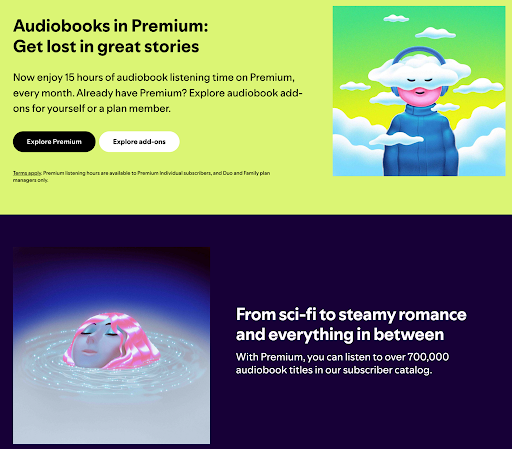
Spotify works well as an Audible alternative if you are already in its ecosystem and do not need heavy monthly listening. Spotify says select Premium plans include 15 hours of audiobook listening per month, and it also offers a separate Audiobooks Access plan in the US.
That setup is convenient, but it is not ideal for power listeners. In practice, it makes more sense for people who want audiobooks as an add-on, not a primary service.
Key features
- 15 hours included in eligible Premium plans
- 700,000+ subscriber catalog titles
- Add-ons and top-ups available
- Unified app for music, podcasts, and audiobooks
Why It Stands Out: Spotify is strong on convenience. It is less compelling if audiobooks are your main habit rather than one part of your media mix.
Pricing: Audiobooks Access is $9.99/month in the US; Premium Individual also includes audiobook hours, with a few other Premium plans available.
Platforms: iOS, Android, desktop, web.
5. Chirp (best for no-subscription audiobook deals)
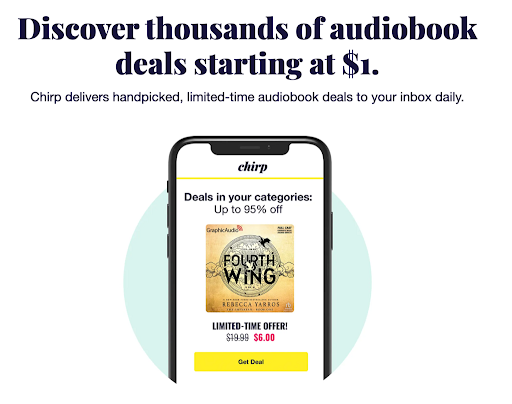
Chirp is best for listeners who want to buy audiobooks outright and avoid subscriptions entirely. Its official site says there are no monthly fees or minimum purchases, and that purchased books are yours to keep.
In our evaluation, Chirp made the most sense for opportunistic buyers. You wait for discounts, grab what you want, and build a library over time.
Key features
- No subscription
- Limited-time deals
- Purchased books are yours to keep
- Personalized deal emails
Why It Stands Out: Chirp is the cleanest choice for people who dislike credits, monthly commitments, or stacked subscriptions.
Pricing: No subscription required; pricing varies by title and deal.
Platforms: iOS, Android, web.
6. hoopla (best for free instant borrowing)
Hoopla is another strong free option through public libraries, but it feels different from Libby. Its official site emphasizes instant streaming, downloads, and broad media access beyond audiobooks.
This makes it a good pick if your library supports it and you want a more all-in-one digital library app.
Key features
- Free with a library card
- Audiobooks, ebooks, comics, music, TV, movies
- Apple CarPlay and Android Auto support
- Offline listening
Why It Stands Out: hoopla is especially useful when you want audiobook access without wait times and like borrowing other media in the same app.
Pricing: Free with participating library access.
Platforms: iOS, Android, web, some TV and car integrations.
7. Everand (best for mixed reading and listening)
Everand is better for people who want a bundle of ebooks and audiobooks rather than a pure audiobook tool. Its official site says plans start at $11.99/month, include one, three, or five premium-title unlocks depending on plan, and also include unlimited access to a select catalog.
In practice, Everand works best for variety seekers, not people who want a simple “one credit, one audiobook” model.
Key features
- Audiobooks and ebooks in one subscription
- Standard, Plus, and Deluxe plans
- Offline access
- Select unlimited catalog plus premium unlocks
Why It Stands Out: Everand is a strong option if you move between reading and listening and want more breadth than a standard audiobook membership.
Pricing: Standard $11.99/month, Plus $16.99/month, Deluxe $28.99/month, and a few trial offers may also appear on the site.
Platforms: iOS, Android, web.
8. Kobo (best for readers who also want audiobook flexibility)
Kobo is better for users who already like ebooks and want flexibility between credit-based audiobooks and Kobo Plus subscription access. Official Kobo pages show both a 1-credit-per-month audiobook plan and Kobo Plus plans, including Kobo Plus Listen and Kobo Plus Read & Listen.
That makes Kobo more flexible than many single-model competitors.
Key features
- Monthly audiobook credit plan
- Kobo Plus Listen for unlimited audiobook access
- Read & Listen bundle
- App and some eReader support
Why It Stands Out: Kobo is useful for people who want one ecosystem for ebooks and audiobooks without being locked into only one access model.
Pricing: Kobo Plus Listen is $7.99/month; Kobo Plus Read & Listen is $9.99/month; a 1-audiobook-monthly credit plan is also available.
Platforms: iOS, Android, web preview, and select Kobo eReaders.
9. Audiobooks.com (best for a familiar Audible-style experience)
Audiobooks.com is the closest straightforward Audible alternative on this list. Its official pricing page says the standard membership is $14.95/month for 1 credit per month, with a free trial that includes one premium audiobook and two bonus VIP Rewards audiobooks.
When we evaluated it, Audiobooks.com felt familiar. That is its strength. It does not really reimagine the category, but it is easy to understand for anyone leaving Audible.
Key features
- 1 credit per month
- Free trial offer
- VIP Rewards titles
- Top-up credits available
Why It Stands Out: Audiobooks.com is the easiest Audible swap for users who want nearly the same model with a minimal learning curve.
Pricing: $14.95/month for the 1-credit plan, with a few other top-up options available.
Platforms: iOS, Android, web.
How does BeFreed compare with the other Audible alternatives?
BeFreed is better for learning workflows, while most Audible alternatives are better for traditional audiobook consumption.
- BeFreed vs Audible: Audible wins for mainstream full-length audiobooks; BeFreed wins for personalized learning and shorter, goal-based sessions.
- BeFreed vs Blinkist: Blinkist is better for quick generic summaries; BeFreed is better for deeper personalization and multi-source audio.
- BeFreed vs Spotify: Spotify is better if you already live in Spotify and only need occasional audiobook time; BeFreed is better for structured self-education.
- BeFreed vs Libby: Libby wins on price; BeFreed wins on customization and interactive learning.
Key Insight: If your problem is “I never finish nonfiction,” the strongest alternatives are not always the closest Audible clones.
Which Audible alternative is best for you?
The best Audible alternative for you depends on your scenario.
| Tool | Best for | Cost model | User type | Format fit |
| BeFreed | Personalized audio learning | Free + premium | Professionals, learners | AI audio, chat, flashcards |
| Libby | Free library borrowing | Free | Budget listeners | Full audiobooks |
| Libro.fm | Supporting indie bookstores | Membership + à la carte | Ownership-focused buyers | Full audiobooks |
| Spotify | Casual audiobook listening | Included hours / add-on | Existing Spotify users | Limited monthly listening |
| Chirp | No-subscription deals | Pay per title | Deal hunters | Owned audiobooks |
| hoopla | Free instant library access | Free | Library users | Audiobooks + more media |
| Everand | Mixed reading and listening | Subscription tiers | Variety seekers | Audiobooks + ebooks |
| Kobo | Flexible ebook/audiobook ecosystem | Subscription or credit | Readers using Kobo | Audiobooks + ebooks |
| Audiobooks.com | Familiar Audible-style credits | Monthly credit | Users switching from Audible | Full audiobooks |
My practical picks:
- Best free Audible alternative: Libby
- Best paid Audible-style alternative: Libro.fm or Audiobooks.com
- Best no-subscription alternative: Chirp
- Best for nonfiction learners: BeFreed
- Best if you already pay for Spotify: Spotify Audiobooks
Final verdict
Most people searching for Audible alternatives want one of four things: free access, ownership, convenience, or better learning.
If you want free books, start with Libby or hoopla.
If you want to support local bookstores, go with Libro.fm.
If you want a familiar credit system, Audiobooks.com is the simplest substitute.
If you want to turn your commute into a more structured learning habit, BeFreed is the most compelling fit from a workflow perspective.
FAQ
What is the best free alternative to Audible?
Libby is the best free starting point for most people because it is completely free with a library card and supports offline audiobook borrowing.
Is there a no-subscription alternative to Audible?
Yes. Chirp is a strong no-subscription option because you buy discounted audiobooks outright and keep them.
Is Spotify a real Audible alternative?
Yes, but mainly for casual listeners. Spotify includes 15 audiobook hours per month in eligible plans, which is helpful but limited for heavier listeners.
Is there an AI alternative to Audible?
Yes. BeFreed is an AI-centered alternative for people who want personalized audio lessons built around their goals instead of fixed audiobook recordings.
Which Audible alternative is best for self-improvement books?
For quick summaries, Blinkist works. For more personalized audio learning and multi-source topic exploration, BeFreed is the better fit.
Are library audiobook apps better than Audible?
They can be better for cost, but usually worse for instant access to specific bestsellers. Libby and hoopla are strongest if your budget matters more than ownership.
Which Audible alternative is best for commuters?
For full audiobooks, Spotify or Libro.fm work well. For short, focused learning sessions during commutes, BeFreed is the stronger fit.
Is Libro.fm cheaper than Audible?
Not always. Audible now has a Standard plan at $8.99/month and Premium Plus at $14.95/month, while Libro.fm pricing varies by location and plan. Libro.fm is usually more about values and ownership than lowest cost.