
4,000 Australians die each year from asbestos-related diseases. Most of them handled the material decades ago, when safety standards barely existed and asbestos dust filled workplaces across construction sites, mines, and factories. The gap between exposure to asbestos and diagnosis stretches across 30, 40, sometimes 50 years of apparently normal health.
People receive these diagnoses long after the jobs ended, the workplaces closed, and the companies vanished. The disease progresses regardless of how distant the original exposure occurred.
Compensation pathways exist through dust disease tribunals, workers’ compensation schemes, and common law proceedings. This guide from vbr Lawyers covers how asbestos claims work in Australia. Let’s start.
What Qualifies as Asbestos Exposure in Queensland?
Asbestos exposure occurs when someone inhales or ingests microscopic asbestos fibres. This typically happens during occupational work or through environmental contact with asbestos materials. Queensland law recognises both types.
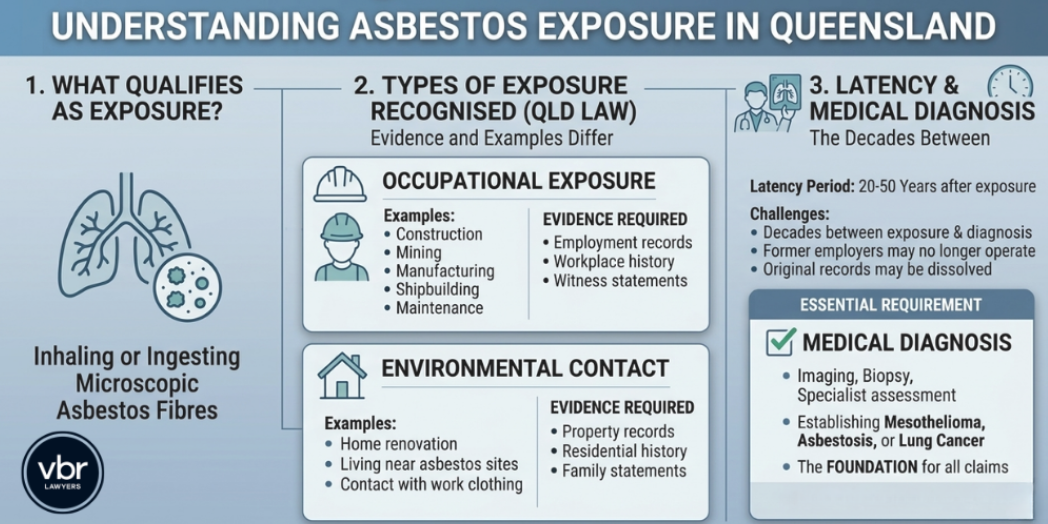
Medical diagnosis of an asbestos-related disease is required before any compensation claim can proceed. The type of exposure determines which claim pathway applies under the dust disease or workers’ compensation frameworks.
Occupational Exposure vs Environmental Contact
| Exposure Type | Examples | Evidence Required |
| Occupational | Construction, mining, manufacturing, shipbuilding, maintenance | Employment records, workplace history, witness statements |
| Environmental | Home renovation, living near asbestos sites, and contact with work clothing | Property records, residential history, family statements |
Workplace exposure includes construction, mining, manufacturing, and maintenance roles where asbestos products were handled or disturbed. Workers in these industries breathed asbestos dust daily, particularly before the 1980s. Safety controls barely existed back then.
Environmental exposure is different. It covers living in homes with asbestos materials, proximity to asbestos mines, or contact with contaminated work clothing brought home by family members. In fact, many children developed mesothelioma decades later after hugging parents who came home covered in asbestos dust from shipyards.
The asbestos exposure happened indirectly, but the consequences were just as devastating. Both exposure types can support asbestos-related claims, though the evidence requirements differ based on how and where the exposure occurred.
Latency Periods and Medical Diagnosis Requirements
Asbestos-related diseases typically develop 20 to 50 years after initial exposure. Someone might work with asbestos in the 1970s and receive a diagnosis in 2026. The decades between make proving the connection challenging.
In that situation, medical confirmation through imaging, biopsy, or specialist respiratory assessment becomes essential. Doctors must establish the presence of mesothelioma, asbestosis, or lung cancer before any claim proceeds. Keep in mind that medical evidence forms the foundation of any asbestos-related injury claim.
The latency period complicates evidence gathering when former employers no longer operate. Claims often rely on witness statements from former coworkers or union records because the original company dissolved years ago.
Asbestos-Related Diseases: Understanding the Conditions
A shipyard worker retires at 65 with clear lungs, then receives a mesothelioma diagnosis at 78 after decades of normal health. This pattern repeats across thousands of asbestos-related illness cases in Australia. The disease hides for decades before symptoms appear.
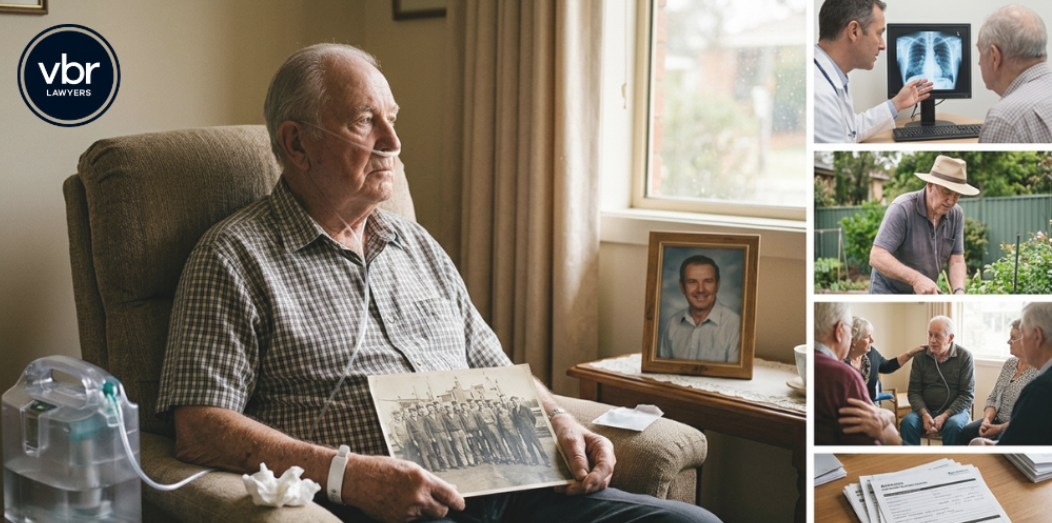
Mesothelioma is a cancer of the lung lining caused almost exclusively by asbestos exposure. There is no safe exposure threshold, and the prognosis is poor. Symptoms include chest pain, persistent cough, and difficulty breathing.
Asbestosis is different. It is a chronic lung scarring condition that develops from prolonged inhalation of asbestos fibres. The scarring causes progressive breathing difficulties that worsen over time.
Asbestos-related lung cancer and pleural plaques are also recognised conditions. The disease you develop depends on the level and duration of asbestos exposure. Medical diagnosis determines which compensation pathway applies to each asbestos-related claim.
How Asbestos Compensation Claims Work in Australia
Australia provides multiple asbestos compensation pathways, including statutory dust disease schemes, workers’ compensation, and common law negligence claims. The scheme that applies depends on when and where exposure occurred, employment status, and whether the responsible party can be identified.
Meanwhile, claims can proceed against former employers, property owners, manufacturers, or government dust disease funds when other parties cannot be located. Once you understand which pathway applies, the process becomes clearer.
The Difference Between Statutory and Common Law Claims
The main difference is in how compensation gets calculated and paid. Statutory claims provide fixed compensation amounts based on the degree of impairment. They resolve quickly but have lower maximum payouts than common law claims. Workers’ compensation and dust disease schemes fall into this category.
On the flip side, common law claims require proving negligence and allow compensation for pain and suffering, economic loss, and future care needs. There are no statutory caps on these claims. The process takes longer because court proceedings or pre-trial negotiations are involved.
Many people pursue both claim types simultaneously, where the circumstances allow. Statutory payments arrive first while common law claims progress through the legal process. This approach provides immediate financial support while preserving the right to seek full compensation.
Dust Disease Tribunal Claims in Queensland
The Dust Diseases Tribunal hears asbestos-related claims and provides a specialised process designed for time-sensitive cases. The tribunal can proceed even when employers are defunct, with compensation paid from government funds established specifically for dust disease victims.
The process is typically faster than standard court proceedings. Mesothelioma patients often have limited life expectancy and need access to compensation quickly. The tribunal recognises this reality. Plus, the vast majority of asbestos compensation claims in Queensland go through this tribunal rather than traditional courts.
Time Limits for Asbestos-Related Claims
Australian limitation laws account for asbestos diseases’ long latency periods by calculating time limits from the diagnosis date rather than the exposure date.
Different time limits apply depending on the state and claim type:
- Queensland WorkCover: six months from diagnosis
- Queensland common law: no time limit
- New South Wales and Victoria: have different timeframes
The six-month WorkCover deadline in Queensland is strictly enforced. Extensions are possible at WorkCover’s discretion if you can provide a reasonable excuse for the delay. Other states have different workers’ compensation time limits that apply to asbestos-related claims.
The Limitation of Actions Act 1974 governs Queensland claims. Date of knowledge provisions acknowledge that people may not immediately understand their lung condition relates to workplace asbestos exposure that occurred decades ago.
What Goes Into an Asbestos Claim Assessment?
Medical evidence, including diagnosis, specialist reports, and prognosis, forms the foundation of any asbestos compensation claim assessment. The claims process requires gathering documentation that links the diagnosed condition to past asbestos exposure. This can be challenging when the exposure occurred decades ago.
Here’s what goes into building an asbestos-related claim:
- Medical Diagnosis And Specialist Reports: Imaging results, biopsy findings, and respiratory assessments confirm the presence of mesothelioma, asbestosis, or lung cancer. Medical records establish the severity of the illness and expected prognosis.
- Employment History And Exposure Documentation: This establishes when, where, and how asbestos contact occurred during working life or environmental circumstances. Sometimes the exposure occurred across multiple employers or job sites, requiring a detailed reconstruction of work history.
- Linking Condition To Specific Exposure Events: This requires gathering workplace records, witness statements from former coworkers, and expert evidence about industry practices. In many cases, the exposure to asbestos dust happened at worksites that no longer exist or with employers who went out of business years ago.
- Quantifying The Injury And Losses: Medical assessments determine the degree of impairment, lost earning capacity, future medical expenses, and impact on quality of life. Keep in mind that these calculations account for both economic losses and pain and suffering caused by the asbestos-related injury.
Each piece of evidence strengthens the asbestos-related claim and supports an accurate compensation assessment.
Compensation Components in Asbestos Cases
Economic loss compensation covers past and future income reduction, medical expenses, and costs of care required due to the asbestos-related condition. Someone diagnosed at 60 loses more than their health. They lose years of earning capacity, retirement plans, and financial security. That means future medical expenses and future loss pile up quickly while income stops.
Beyond the financial calculations, non-economic loss addresses pain and suffering, loss of enjoyment of life, and the psychological impact of receiving a terminal mesothelioma diagnosis. The financial burden may sound clinical, but it’s more than numbers to a family watching their income disappear while medical appointments multiply.
Compensation gets calculated differently depending on the claim type. Statutory workers’ compensation schemes use set formulas based on impairment percentages. Common law claims work differently and allow individualised assessment of all losses without preset caps. The average payout varies wildly depending on individual circumstances and the severity of the asbestos-related injury suffered.
How Asbestos Claims Are Lodged in Queensland
You begin by obtaining a specialist medical diagnosis and gathering documentation of your employment history and potential asbestos exposure sources. Medical evidence from respiratory specialists, imaging results, and workplace records form the foundation.
The compensation scheme that applies depends on where the exposure occurred, your employment status, and the timing of diagnosis. Claims can involve dust disease tribunals, workers’ compensation schemes, or common law proceedings.
If you need information about how asbestos-related claims work, vbr Lawyers is a Queensland compensation law firm. Contact our office for further information.