
How to Compare Contractor Quotes Before Hiring
Hiring a contractor for a home improvement project can feel simple at first. You describe the job, receive a few quotes, compare the prices, and choose the one that looks most reasonable.
But in reality, contractor quotes can be difficult to compare. One quote may include detailed material allowances, labor, permits, cleanup, and project management. Another may show only a short total price with very little explanation. A cheaper estimate can look attractive at the beginning, but if important work is missing, the final cost may end up much higher than expected.
Before signing a contract, homeowners should understand what is included, what is excluded, and where the risks are hidden.
Why Contractor Quotes Can Be So Different
Two contractors can look at the same home improvement project and give very different prices. This does not always mean one is overcharging or the other is offering a bargain. It often means they are pricing the job in different ways.
One contractor may include demolition, debris removal, materials, finishing details, permits, inspections, and cleanup. Another may only include the basic labor and leave many items as allowances or exclusions.
This is why comparing only the final number is risky. A £15,000 quote may not actually be cheaper than a £19,000 quote if the lower estimate leaves out important parts of the work.
Homeowners should compare the scope of work, not just the price.
What a Good Contractor Quote Should Include
A strong contractor quote should clearly explain what the contractor is providing. It should not leave the homeowner guessing.
A proper quote should usually include:
The exact work being performed
Labor costs or labor description
Material specifications or allowances
Permit responsibilities
Timeline or estimated project duration
Payment schedule
Cleanup and debris removal
Warranty information
Exclusions or items not included
Change order process
If these details are missing, the homeowner may face unexpected costs later.
The Biggest Red Flags in Contractor Estimates
Some contractor quotes look professional but still contain warning signs. Homeowners should be careful when they see vague wording, missing line items, unclear allowances, or pressure to sign quickly.
Common red flags include:
A quote that is much lower than the others without a clear reason
No written scope of work
Large upfront payment request
Vague descriptions such as “general renovation work”
No clear material quality or allowance
Permit costs not mentioned
No timeline
No cleanup details
No written warranty
Verbal promises not included in the document
These issues do not always mean the contractor is bad, but they do mean the homeowner should ask more questions before signing.
Why Missing Line Items Can Become Expensive
Many project overruns happen because something was not included in the original quote. For example, a bathroom remodel quote may include tile installation but not waterproofing, disposal, plumbing adjustments, or fixture upgrades.
A kitchen renovation estimate may include cabinets but not electrical changes, countertop installation, backsplash work, or appliance connections.
A roofing or structural repair quote may mention repair work but not inspections, engineering review, flashing details, or replacement of damaged materials.
When these missing items appear during the project, the contractor may issue change orders. This can quickly increase the total cost.
That is why homeowners should review every quote line by line before making a decision.
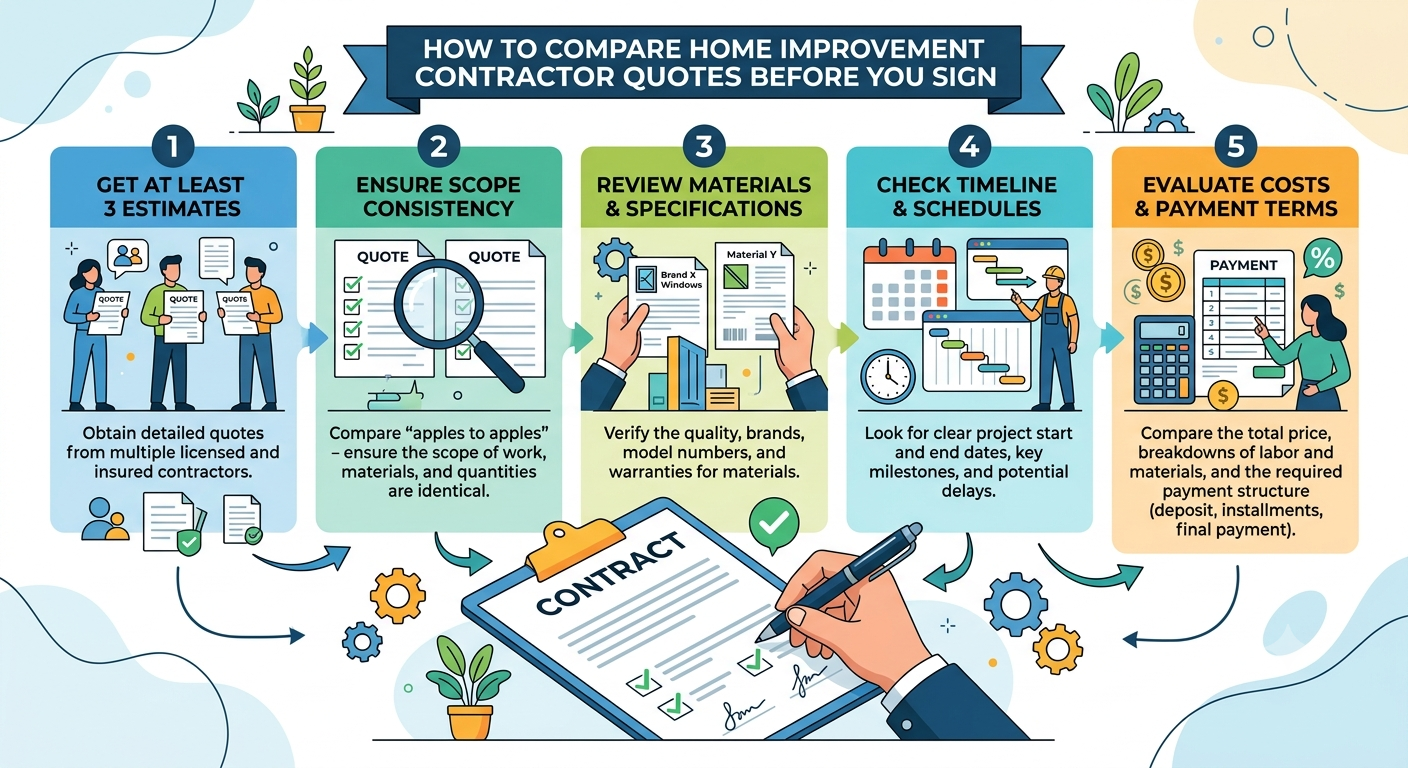
How to Compare Contractor Quotes Properly
The best way to compare contractor bids is to place them side by side and look at the details.
Start by checking whether each contractor is quoting the same work. If one quote includes demolition and disposal while another does not, the prices are not directly comparable.
Next, review material quality. A quote using basic materials will naturally be lower than one using premium materials. The homeowner should know exactly what they are paying for.
Then, look at allowances. Allowances are estimated amounts for materials or fixtures. If the allowance is too low, the homeowner may have to pay more later.
Finally, check the exclusions. Exclusions are just as important as inclusions because they tell you what the contractor is not responsible for.
Before signing anything, homeowners should review each quote carefully and compare labor, materials, allowances, exclusions, timelines, and payment terms. A tool like this contractor bid analyzer can help homeowners review contractor quotes before signing and spot missing items that may create budget risk: https://www.costtobuildhouse.com/contractor-bid-analyzer
Questions to Ask Before Hiring a Contractor
Before choosing a contractor, homeowners should ask direct questions. A reliable contractor should be willing to explain the quote clearly.
Useful questions include:
What exactly is included in this quote?
What is not included?
Are permits included or separate?
Who is responsible for inspections?
What material allowance is included?
What happens if extra work is needed?
How are change orders handled?
What is the payment schedule?
Is cleanup included?
Is there a written warranty?
If the contractor avoids answering these questions, that is a warning sign.
Do Not Choose Based on Price Alone
It is natural to want to save money on a home improvement project. However, the lowest quote is not always the best choice.
A low bid can sometimes mean:
The contractor misunderstood the project
Important work was left out
Material quality is lower
Permit or inspection costs are excluded
The contractor may rely on change orders later
On the other hand, the highest quote is not automatically the best either. Homeowners should look for the clearest and most complete estimate, not just the cheapest or most expensive one.
The best contractor quote is usually the one that explains the work clearly, includes realistic pricing, and reduces surprises.
Why Written Details Matter
Verbal promises are difficult to prove later. If a contractor says something is included, it should be written in the quote or contract.
For example, if cleanup is included, it should be written. If permits are included, it should be written. If a certain material or finish is included, it should be written.
A clear written agreement protects both the homeowner and the contractor. It reduces confusion and makes the project easier to manage.
Final Checklist Before You Sign
Before signing a contractor agreement, homeowners should make sure they have reviewed the full scope, timeline, payment terms, exclusions, and possible extra costs.
A simple checklist can prevent expensive mistakes:
Compare at least two or three quotes
Check that each quote covers the same scope
Review materials and allowances
Look for missing line items
Ask about permits and inspections
Confirm cleanup and disposal
Understand payment terms
Get all promises in writing
Keep photos, messages, and documents organized
Do not rush into a decision
Home improvement projects are already expensive. A careful review before signing can help homeowners avoid confusion, budget overruns, and stressful disputes.
The goal is not just to find the lowest price. The goal is to choose a contractor with a clear, complete, and realistic proposal.