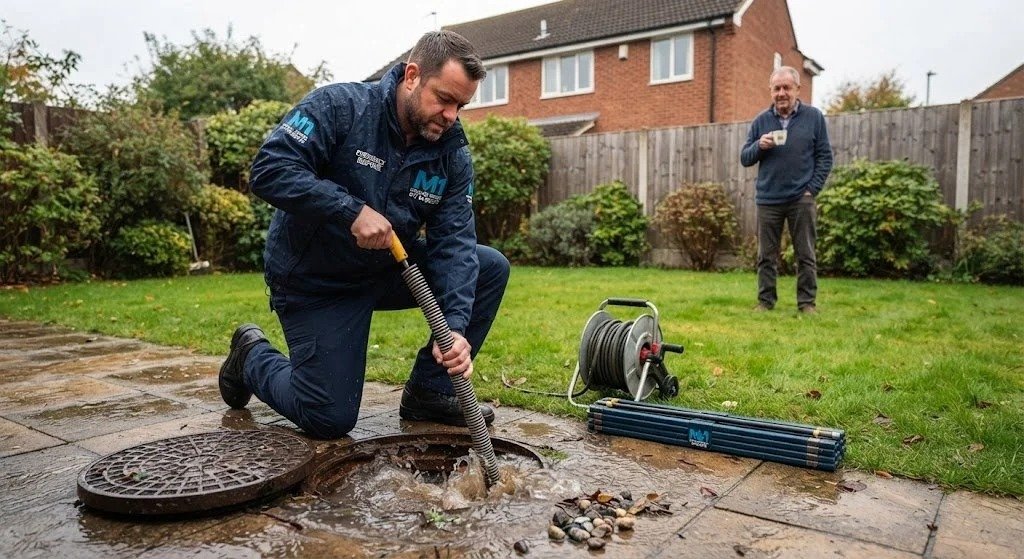

Few repair issues cause as much friction between landlords and tenants as a blocked or damaged drain. For anyone letting or renting property and looking for help with blocked drains Burgess Hill, the immediate concern is getting water flowing again. The harder question usually comes afterwards: who pays for the work, and could it have been prevented?
The answer rarely depends on the symptom alone. A blocked toilet caused by wet wipes and a blocked toilet caused by a collapsed pipe look identical from inside the bathroom, yet responsibility for each can be completely different. Drainage specialists such as DrainBoss work with landlords as well as homeowners, and identifying the cause is often what settles the matter fairly for both sides.
This guide covers the legal framework in England, the practical steps each party should take, and the habits that reduce drainage disputes during a tenancy. It is general information rather than legal advice, and the wording of a tenancy agreement can affect the position.
Who Is Responsible for Drains in a Rented Home?
For most residential tenancies in England with a term of less than seven years, section 11 of the Landlord and Tenant Act 1985 places the main repair obligations on the landlord. This includes keeping in repair the structure and exterior of the property, which covers drains, gutters and external pipes, as well as the installations for sanitation such as sinks, baths and toilets. A landlord cannot remove these duties by adding a clause to the tenancy agreement.
Tenants have obligations too. They are expected to use the property in a “tenant-like manner”, which means taking reasonable care and not causing damage through misuse. Where a tenant blocks a drain by flushing items that should not go down it, the cost of clearing it may reasonably fall on them.
The table below shows how responsibility commonly works out in practice.
| Situation | Typically responsible |
|---|---|
| Cracked, displaced or collapsed pipe | Landlord |
| Tree root intrusion into underground pipes | Landlord |
| Recurring blockage caused by a poor pipe gradient or defect | Landlord |
| Blockage caused by wet wipes, nappies or sanitary products | Tenant, if misuse can be shown |
| Kitchen drain blocked by fat and food waste | Tenant, if misuse can be shown |
| Gutters overflowing because of damaged brackets or joints | Landlord |
| Blockage in a shared sewer beyond the property | Water and sewerage company |
The words “if misuse can be shown” matter. A landlord who wants to recover the cost of a blockage needs evidence of what caused it, and an assumption is not enough.
Why the Cause of a Blockage Matters
A blocked drain can be the result of everyday waste, a structural defect or a combination of the two. A slightly displaced joint, for example, creates a ledge where paper and grease collect. In that case the blockage might look like the tenant’s fault, while the real problem is a pipe the landlord should repair.
A contractor’s report is the most reliable way to establish what happened. Useful evidence includes:
- The material removed. Engineers can usually tell whether a blockage consisted of wipes, fat, roots or silt.
- CCTV footage. A camera survey shows cracks, root ingress, collapsed sections and joint displacement that cannot be seen from the surface.
- The location of the blockage. A fault close to a kitchen or bathroom is more likely to relate to use, while one further along the run may point to a defect.
- The history of the drain. Repeated blockages at the same point often indicate an underlying problem rather than careless use.
Clear findings help both sides. Tenants are protected from being charged for defects they did not cause, and landlords have grounds to recover costs when misuse is genuine.
What Tenants Should Do When a Drain Blocks
Tenants are generally expected to report problems promptly, since a delay can allow damage to spread. Taking the following steps protects both the home and the tenant’s position:
- Stop using the affected fixture. Continuing to flush or run water increases the risk of overflow.
- Report the problem in writing. An email or a message through the agent’s portal creates a record of when the landlord was told.
- Take photos or short videos. Standing water, overflowing gullies and any damage to floors or walls are worth recording.
- Avoid harsh chemicals and DIY dismantling. Strong drain cleaners can damage older pipes and create a hazard for the engineer who attends later.
- Allow reasonable access. The landlord or their contractor needs entry to inspect and repair, and refusing access can complicate the question of responsibility.
If sewage is entering the property, tenants should treat it as an emergency and use the landlord’s or agent’s out-of-hours contact. Where several neighbouring properties are affected at once, the problem may lie in a public sewer, and the local water company should be told about it.
How Landlords Can Prevent Drainage Disputes
Most disagreements over drains can be avoided with some preparation before and during a tenancy. Prevention also tends to cost less than repeated emergency call-outs.
Practical measures include:
- A CCTV survey before letting. Recording the condition of the drains at the start creates a baseline that is useful if a dispute arises later, especially in older properties with clay pipework.
- Clear guidance for tenants. A short note in the welcome pack explaining what should not go down sinks and toilets prevents many blockages.
- Routine gutter and gully clearance. Leaves and silt build up every autumn, and overflowing gutters can lead to damp inside the property.
- Attention to trees and planting. Large trees close to drain runs increase the chance of root intrusion over time.
- A reliable contractor arranged in advance. Knowing who to call shortens the response time and reduces stress for everyone involved.
Responding quickly also matters. Water escaping from a damaged drain can affect foundations and cause damp, and a minor repair left for months can become a much larger one.
Keeping Records Throughout the Tenancy
Good paperwork makes drainage issues easier to resolve. A check-in inventory can note the condition of sinks, toilets and outdoor gullies, while contractor invoices and reports show what was found and when.
If a landlord intends to deduct the cost of a blockage from a tenancy deposit, the deposit protection scheme will expect evidence that the tenant caused it. A report from the engineer who cleared the drain, ideally supported by photos or CCTV footage, carries far more weight than a description of the problem written after the event.
Dealing With Drainage Between Tenancies
Void periods between tenants offer the best opportunity to deal with drainage. Without occupants in the property, contractors can inspect, clean and repair without anyone losing the use of a bathroom or kitchen. Using this window also reduces the chance that a new tenant inherits a problem in their first weeks.
A useful end-of-tenancy routine includes:
- Running water through every fixture. Sinks, baths, showers and toilets should drain freely, without gurgling or slow emptying.
- Checking outdoor gullies and inspection chambers. Standing water or debris may point to a blockage developing further down the system.
- Comparing the condition with the check-in report. Any change can then be discussed with the outgoing tenant while the evidence is fresh.
- Booking a CCTV survey where problems have recurred. A camera inspection between tenancies is far easier to arrange than during an occupation.
Empty properties can develop their own issues. Water in traps evaporates when fixtures are not used for several weeks, allowing sewer gases into the rooms and producing smells that new tenants notice immediately. Running water into sinks and showers and flushing toilets during viewings or inspections keeps the traps sealed.
Houses in Multiple Occupation and Shared Facilities
Properties let to several unrelated tenants place heavier demands on drainage. A house in multiple occupation may have five or six people sharing one kitchen, with cooking and washing routines that far exceed the volume the original pipework was designed for. Shared bathrooms also tend to see more hair, soap residue and unsuitable items flushed by people who feel less ownership of the facilities.
In these properties, recovering costs from a single tenant is rarely straightforward, because it is often impossible to show who caused a blockage. Landlords usually find that prevention works better than blame. More frequent drain cleaning, clearly displayed guidance in kitchens and bathrooms, and sink strainers fitted as standard all help to reduce recurring call-outs. Where blockages happen regularly, a survey can show whether the pipework itself is undersized or defective for the level of use.
When Drainage Problems Affect Living Conditions
Some drainage faults go beyond inconvenience. Sewage escaping into a home, persistent foul smells or damp caused by a leaking drain can make a property unpleasant or even unsafe to live in. In England, rented homes are expected to be fit for human habitation, and local councils can assess housing conditions and require landlords to deal with serious hazards.
For tenants, the first step is always to report the issue to the landlord or agent in writing and allow a reasonable time for repairs. If nothing happens, the council’s private housing or environmental health team can usually advise on what to do next. For landlords, a prompt response protects the property and avoids an escalation that costs far more than an early repair.
Insurance is another consideration. Landlord policies may cover accidental damage to underground pipes or the consequences of an escape of water, but they rarely pay for clearing blockages caused by misuse. Reviewing the policy wording in advance, and keeping the contractor’s report for any claim, avoids surprises when a problem occurs.
What Landlords Should Expect From a Drainage Contractor
Choosing a contractor before an emergency makes the response faster and the outcome clearer. Landlords managing more than one property benefit from working with a firm that understands rented homes, including the need for clear reporting and access arrangements agreed with tenants.
The table below sets out what a good drainage visit should provide.
| What to expect | Why it matters |
|---|---|
| Agreed price before work starts | Avoids disputes over costs, especially when recovering them from a tenant or a deposit |
| Written description of the cause | Shows whether the blockage came from misuse, a defect or both |
| Photos or CCTV footage | Provides evidence for insurers, deposit schemes and future reference |
| Recommendations for further work | Helps the landlord plan repairs rather than react to emergencies |
| Availability outside office hours | Allows urgent problems to be dealt with without leaving tenants without facilities |
A contractor who provides these consistently makes every later stage of a dispute easier, from agreeing who pays to deciding whether a longer-term repair is needed.
Communication That Prevents Disputes
Many drainage disagreements are less about the blockage itself than about how it was handled. A tenant who feels ignored is more likely to complain formally, while a landlord who receives no warning of a slow drain may face a much larger repair than necessary.
Setting expectations at the start of a tenancy helps. The tenancy agreement and welcome pack can explain how to report repairs, what counts as an emergency and who to contact outside office hours. Tenants then know that a gurgling sink or a slow shower is worth mentioning before it turns into a blocked drain.
During a repair, short updates make a difference. Letting the tenant know when a contractor will attend, what was found and whether a further visit is needed keeps both sides informed and reduces the risk of misunderstandings about cost. Once the work is finished, sharing the contractor’s findings with the tenant, where appropriate, shows that the decision on responsibility is based on evidence rather than opinion.
Good communication also helps when a tenant has caused a blockage. Explaining what was found, and how to avoid a repeat, is usually more effective than simply passing on an invoice, and it lowers the chance of the same problem returning a few months later.
Conclusion
Drainage problems in rented homes are easier to deal with when both sides understand where responsibility lies. Landlords in England are generally responsible for keeping drains and sanitation in repair, while tenants are expected to use them sensibly and report faults without delay. The cause of a blockage usually decides who pays, which is why a proper diagnosis is worth more than an assumption.
For landlords and tenants who need a clear answer, DrainBoss provides drain unblocking, CCTV drain surveys and no-dig repairs across Sussex, Surrey, Kent, Hampshire and South London. As a family-run business offering fixed pricing with no call-out charge, the team helps property owners resolve drainage issues quickly and keep a reliable record of the work carried out.