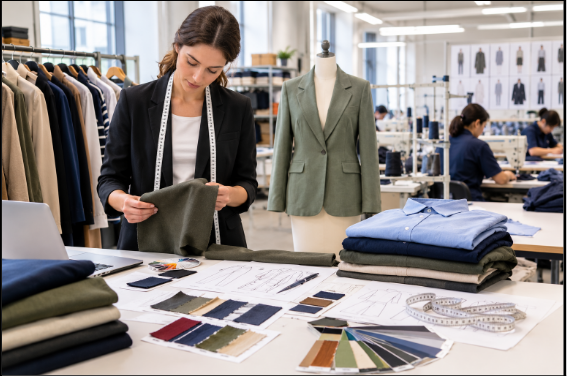

There are constant changes in the world of fashion, and for brands, creative design alone is not enough to survive. Every successful fashion line relies on an efficient production process which turns the designers’ ideas into fashionable clothes of excellent quality. From selecting fabrics and sampling to mass production and finishing of clothes, every step in fashion manufacturing process may affect the end product.
For fashion brands, retailers, private labels, and trade buyers, it is important to select the right manufacturer, as this can help save time on production, and also guarantee consistency in different collections.
Comprehension of the Fashion Production Process
Fashion manufacturing process is not just about cutting and sewing different parts of material together. It is a well thought out process that starts with design and ends with making of the whole outfit.
This process involves many steps, some of which are design development, technical design, fabric sourcing, pattern making, sampling, fit approval, manufacturing, quality assurance, and branding.
Each step has its own importance. Well-designed technical packages can assist in understanding the garments specifications by manufacturers whereas proper sampling can help brands identify any problem related to fit or construction prior to mass production.
The production process can lead to fewer mistakes, which will eventually become easy for brands to achieve uniformity in orders.
The Significance of Choosing the Right Material
Material is one of the most significant elements in any clothing item. The proper choice of fabric has an impact on the performance of the item.
Manufacturers of fashion apparel have access to various types of fabrics such as woven fabric, knit fabric, cotton, polyester, and many others.
For example, lighter fabrics may be ideal for summer wear, while heavy fabrics can be used for coats and jackets. Stretch fabrics would make a good choice since they are comfortable and stretchable.
The brand should always take into account the purpose of each garment and then choose the right fabric. The right manufacturer will assist in determining the suitability of the chosen fabric.
The Importance of Sampling
The process of sampling is among the key processes in fashion manufacturing. This allows the brand an opportunity to test the garment prior to going into full manufacturing.
When doing sampling, the brand gets an opportunity to test various aspects of the garment such as the fit, size, construction, fabrics, stitching, trims, and aesthetics of the garment.
This becomes even more crucial for brands when there are new collections or various styles coming up. Solving issues through sampling is always easy compared to finding them out after producing hundreds or even thousands of garments.
Consistency During Mass Production
After approval of the sample, comes another problem of maintaining consistency during mass production.
Clothes should conform to the specifications agreed upon throughout the entire batch of orders. Consistency in measurement, stitching, color, trims, marking, and finishing would contribute significantly to customer satisfaction.
Inspections in the manufacturing process would help detect problems. The types of inspection done are determined by the types of clothes that need to be made, and it could range from fabric inspections, stitching inspection, measurement inspection, construction inspection, brand inspection, and finish inspections.
Where products have repeat orders, consistency in manufacturing becomes even more important because customers expect the new range of products to look similar to the old range.
Brand and Finish of Fashion Garments
Branding can elevate an ordinary piece of clothing to a recognizable product. Various finishing techniques including embroidery, print, woven labels, care label, size labels etc. all can add to the finish of the garment.
Professional finishing is especially important for private label and trade buyers as their garments should be ready-to-sell after manufacturing process is completed.
Certain firms also offer other services that may include packaging, labelling, alterations, and fulfillment. This, when done in conjunction with manufacturing, simplifies the supply chain process by avoiding coordination between various suppliers.
Uniform Services within Garment Manufacturing
While both fashion garments and uniforms have their unique uses, there are a lot of similarities when it comes to manufacturing processes. Specifications, quality, consistency, and repeat manufacturing are all important for uniforms.
This is precisely the reason that uniform providers can be equally important allies to brands and distributors dealing with several categories of clothes.
Production of uniforms will call for extra factors like durability, compliance, utility, and regular supply. Such skills can go well with fashion production if a company produces both lifestyle wear and branded uniforms.
A fashion company which is flexible enough to manufacture different types of garments can create a smooth manufacturing relationship for businesses with different clothing needs.
Choosing the Right Fashion Manufacturing Partner
There are several aspects that have to be considered when choosing a manufacturing company to make their products. Besides the cost of making the products, other factors like experience, communication, quality assurance, manufacturing capabilities, MOQs, and deliveries can influence the process.
It is also advantageous to use the services of a manufacturer who has various ways to manufacture. The UK-based manufacturing may serve some specific needs, whereas managed manufacturing from overseas can give extra capacity.
Uniform World works together with fashion designers, retailers, private labels, and wholesale buyers in helping with all the aspects of manufacturing from the design requirements, sampling to bulk manufacturing and shipping.
A Fashionable and Reliable Supply Chain System
An effective fashion line is not determined by a fashionable design alone. Rather, there needs to be a dependable manufacturing process in place to make it happen.
With proper management of material selection, technical parameters, samples, mass production, brand name, quality assurance, and fulfillment, brands will be able to achieve a more reliable supply chain.
Since fashion is something that changes rapidly, partnering with a professional production company may assist organizations in adopting these trends.
For organizations that want to launch a new line, taking the time to select a proper manufacturer will definitely simplify their job.
FAQs About Fashion Production
1. What is fashion production?
Fashion production is the process of turning clothing designs into finished garments. It can include fabric sourcing, pattern development, sampling, manufacturing, quality control, branding, finishing, and delivery.
2. Why is sampling important in fashion production?
Sampling allows brands to assess fit, fabric, measurements, construction, and overall appearance before starting bulk production. It helps identify and correct potential issues early.
3. What types of garments can fashion manufacturers produce?
Fashion manufacturers can produce a wide range of garments, including shirts, trousers, jackets, dresses, outerwear, body warmers, uniforms, and other customised apparel depending on their capabilities.
4. What are included in uniform services?
Uniform services can include garment manufacturing, custom branding, embroidery, printing, labelling, finishing, alterations, packing, and fulfilment, depending on the supplier.
5. Can fashion manufacturers handle bulk production?
Yes. Manufacturers specialising in trade production can support both smaller development runs and larger bulk orders, depending on garment specifications, production requirements, and available capacity.