
In 2026, many static billboard campaigns fall somewhere between $1,500 and $30,000 per four-week cycle. Smaller posters and rural boards can cost less, while digital billboards, premium city placements, and high-demand corridors can cost more.
Comparing that range across markets is easier with a platform like AdQuick, which gives advertisers visibility into planning information before committing to a specific city or format.
New York City Billboard Costs
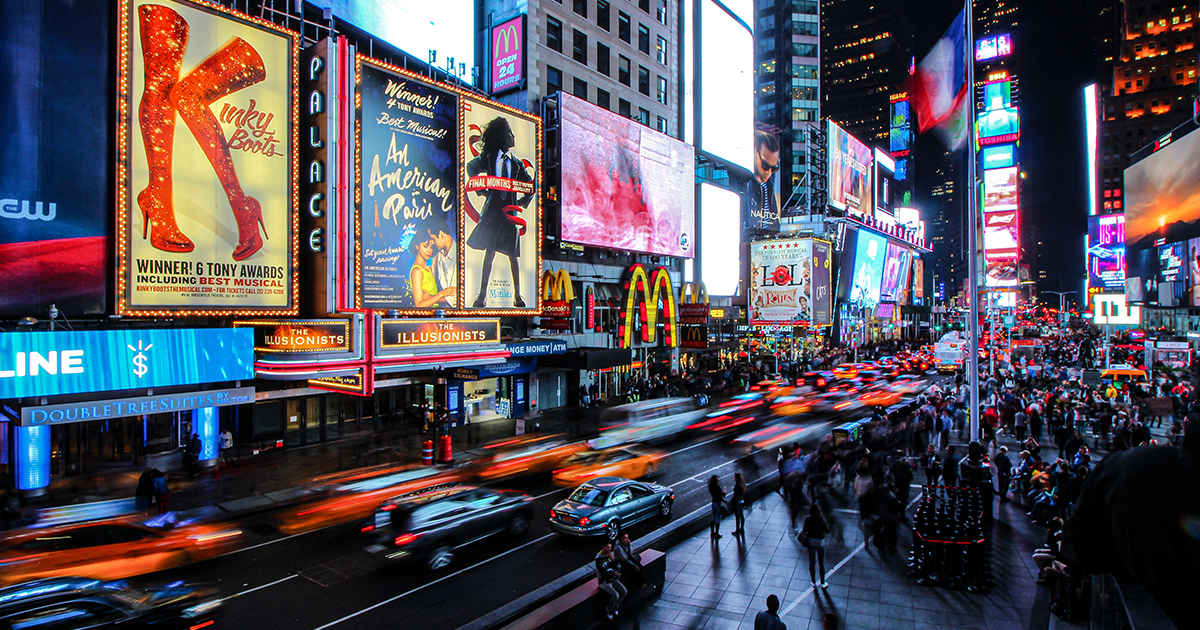
New York City is one of the most expensive billboard markets in the country. A typical static bulletin in the NYC metro area may cost $5,000 to $25,000 or more for a four-week cycle, with premium faces commanding higher rates.
The reason is simple: density, demand, and visibility. Manhattan, major commuter corridors, tourist-heavy areas, and premium digital placements command higher rates because so many people move through those spaces every day.
For brands that need national attention, New York can be a powerful platform. For smaller businesses, outer-borough placements or nearby commuter routes may offer a more practical entry point.
Los Angeles Billboard Costs
Los Angeles is another high-cost market, with many static billboard placements ranging from about $3,000 to $20,000 or more per four-week cycle. Areas like the Sunset Strip, Hollywood, downtown Los Angeles, and major freeway corridors tend to sit at the higher end.
LA billboards can be especially valuable for entertainment, fashion, beauty, consumer products, and lifestyle brands. The city’s car culture also makes roadside visibility important, since many people spend significant time commuting.
A strong LA campaign usually depends on choosing the right neighborhood or corridor. A board that works for a film launch may not be the best fit for a local service business.
Chicago Billboard Costs
In Chicago, static billboards often range from about $2,500 to $15,000 per four-week cycle. Expressway inventory, transit corridors, and dense urban placements are usually more expensive than lower-traffic neighborhood boards.
Chicago can be a strong middle ground for advertisers that want major-market reach without the highest coastal pricing. It offers commuter visibility, city density, and regional influence across the Midwest. For local and regional brands, Chicago OOH can work well when the creative is clear, readable, and tied to the routes people already travel.
Dallas, Houston, and Atlanta Billboard Costs
Dallas, Houston, and Atlanta often fall within a similar planning range, with many static bulletin placements costing between $2,000 and $12,000 per four-week cycle.
These markets are built around highways, commuting, and spread-out metro areas, which makes billboard placement especially important. A strong board near a major interstate, airport route, or commercial district can create repeated exposure throughout the month.
Miami and Philadelphia Billboard Costs
Miami and South Florida billboard placements often range from about $2,500 to $15,000 per four-week cycle, depending on seasonality, tourism, and location. Demand can rise during major events, travel seasons, and high-traffic months.
Philadelphia often costs around $2,000 to $10,000 for many static bulletin placements. Dense urban roads, commuter routes, and neighborhood visibility can make the market attractive for healthcare, education, finance, food, entertainment, and local service brands.
Mid-Tier Metro Billboard Costs
Markets like Phoenix, Nashville, Denver, and Austin often land around $1,500 to $9,000 per four-week cycle for many static billboard placements. These cities can offer strong value because they combine growing populations, commuter traffic, and active local economies.
For many brands, mid-tier metros are where billboard advertising becomes more accessible. The costs are often lower than in New York or Los Angeles, but the reach can still be meaningful.
Rural and Small-Market Billboard Costs
Small-market and rural billboards can start around $250 to $1,500 per four-week cycle. These placements may not deliver the same impression volume as major-city boards, but they can be useful for local businesses, tourism, political campaigns, home services, and regional awareness.
In smaller markets, visibility and relevance matter more than scale. A board near the right exit, the shopping area, the school route, or the town entrance can be highly valuable.
How To Compare Billboard Quotes
When comparing billboard costs, look beyond the headline price. Ask about impressions, CPM, format, visibility, production costs, posting fees, creative requirements, and flight length. For static boards, printing and installation may add to the final cost. For digital boards, share of voice and rotation details matter.
Billboard advertising agencies can help advertisers compare billboard inventory, pricing, impressions, and campaign options across markets. That kind of transparency is useful because billboard costs vary so widely by city, format, and placement quality.
Billboard Pricing Comes Down to Market, Format, and Fit
Billboard costs in 2026 can range from a few hundred dollars in small markets to tens of thousands in premium city locations. New York and Los Angeles sit near the top. At the same time, cities like Chicago, Dallas, Houston, Atlanta, Miami, Philadelphia, Phoenix, Nashville, Denver, and Austin offer a wide range of options depending on traffic and placement.