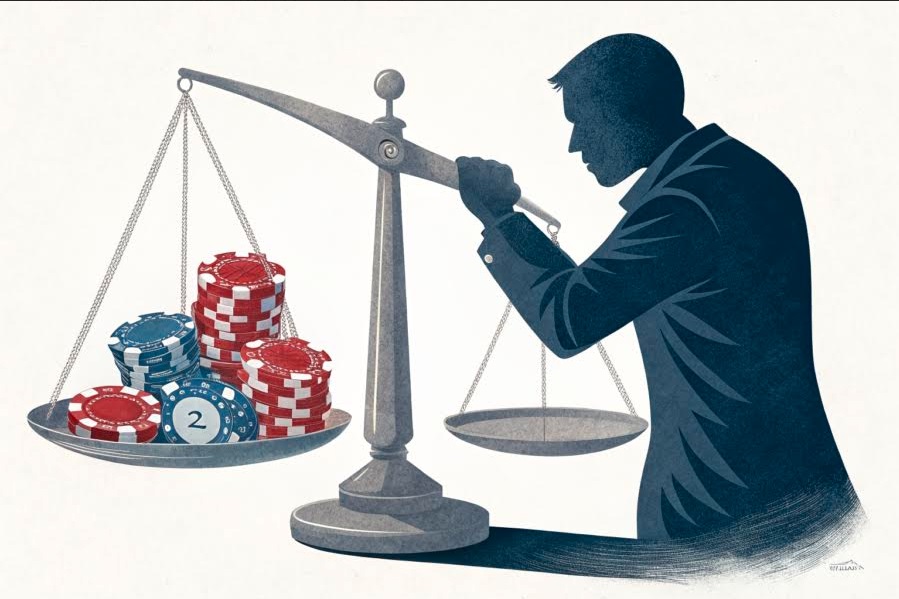

A recent Fairleigh Dickinson University survey shows that nearly half of New Jersey voters don’t want gambling to expand beyond Atlantic City, while 44% support it. Public opinion hasn’t shifted much in this regard since polls held in 2014.
New Jersey electors who voted against expansion in the past may have thought the issue was firmly settled, but now there’s a new push to expand gambling that’s currently dividing opinion in the state. Some see expansion as self-preservation, as new casinos across the Hudson could potentially attract gamblers from New Jersey.
Lawmakers consider racetrack casinos
Casinos are a major revenue source for New Jersey, and much of the growth in revenue in recent years has come from online gambling. At a licensed New Jersey online casino, players can use a casino app to play games, which makes betting very convenient.
Now lawmakers in New Jersey are deciding whether to permit physical casinos at racetracks such as Monmouth Park and Meadowlands. The size and proximity of these racetracks to metro areas make them a good choice. Monmouth Park is close to the Jersey Shore, and Meadowlands isn’t far from New York City.
Racetrack operators believe that adding these racetrack casinos could improve the long-term viability of the industry.
Legislation has been introduced that would place a constitutional amendment on the ballot to allow casino gambling at the two racetracks. This would require approval by the legislature and by voters via referendum. All attempts to do this in the past have failed. The last expansion referendum in 2016 was decisively shot down by New Jersey residents, with only 23% in favor.
Expansion advocates say that previous proposals didn’t clearly define where the casinos would be located or how the revenue would be distributed.
Some of the key players are privately saying that the effort is unlikely to move due to a lack of appetite to override opposition from South Jersey Democrats.
The opening of New York casinos is driving the debate
If new casinos open in New York, this could potentially draw wagers and revenue away from New Jersey casinos. Opening the casinos at the racetracks would be a defensive strategy.
One of the casinos in New York City is expanding a gaming facility that already exists in Queens and is expected to open this year. Two more casinos, proposed for Queens and the Bronx, are expected to be up and running by 2030. With the casino industry size constantly increasing, competition is high, and these New York casinos will intensify it.
The exclusive role of Atlantic City
In 1976, casino gambling was legalized in Atlantic City to revive its struggling economy. Since that time, the city has remained the only casino hub in the state. While gambling is one of the top drivers of tourism, casino operating profits haven’t been as good in recent years.
Opponents of expansion believe that expanding gambling would hurt Atlantic City by diluting the market. Atlantic City is still the hub of the state’s gambling industry and attracts millions of visitors on an annual basis. It generates billions of tax dollars that contribute to state programs and employs thousands of people. Southern voters, in particular, want to protect Atlantic City because they believe that without this, the ripple effects would hit the South Jersey economy.
Changes in the New Jersey gambling market
The gambling market in New Jersey has changed since the first casinos opened, and Atlantic City was the only legal casino jurisdiction outside of Nevada. Today, gambling in casinos is legal in many states, so there’s a much more competitive regional market. Online gambling in New Jersey brings in a significant tax revenue. Online casinos have to ensure the online security of players and make sure they can play safely and withdraw their winnings.
Regarding the current bill, South Jersey stakeholders, including those from both parties, will do everything they can to convince lawmakers to keep expansion off the ballot. Expansion advocates propose dedicating a portion of the profits to Atlantic City, but they say they don’t see any scenario in which such a compromise would be enough.