
Flooring decisions in the UAE carry consequences that don’t apply in milder climates. The heat, the humidity along the coast, the sand that works its way into everything, and the dramatic temperature swings between air-conditioned interiors and outdoor areas all put pressure on surfaces in ways that standard flooring products weren’t designed for. Getting it right the first time matters here more than in most places; retrofit work on floor systems is disruptive and expensive, and it tends to happen when the original choice underperforms rather than when the owner planned for it.
Why The UAE Environment Changes The Flooring Conversation
Flooring UAE projects face pressures that don’t show up in European product testing. Take a coastal site in Dubai or Sharjah; the slab underneath is at times wicking moisture upward, even in a building that feels perfectly dry to anyone walking through it. That moisture finds its way to the surface eventually. Six months later, someone is looking at grout lines crumbling or a bonded finish starting to lift, and the product gets blamed for something the substrate was doing all along. Move inland and the stress changes shape: the gap between an air-conditioned interior and 45-degree outdoor heat creates movement in the substrate that rigid surfaces don’t handle indefinitely. Add industrial use on top of either scenario and the floor is dealing with chemical exposure and heavy point loading that most residential or light commercial products weren’t designed for.
The failure pattern that comes up again and again in this market isn’t a product failing; it’s a product being asked to do something it wasn’t designed for. A finish rated for a climate with moderate humidity and predictable temperatures behaves differently here. A floor system applied over a substrate that wasn’t assessed properly will show you the problem whether the product is cheap or expensive. The environment doesn’t care what was on the specification sheet.
Flooring With Epoxy: What It Does Well And Where It Struggles
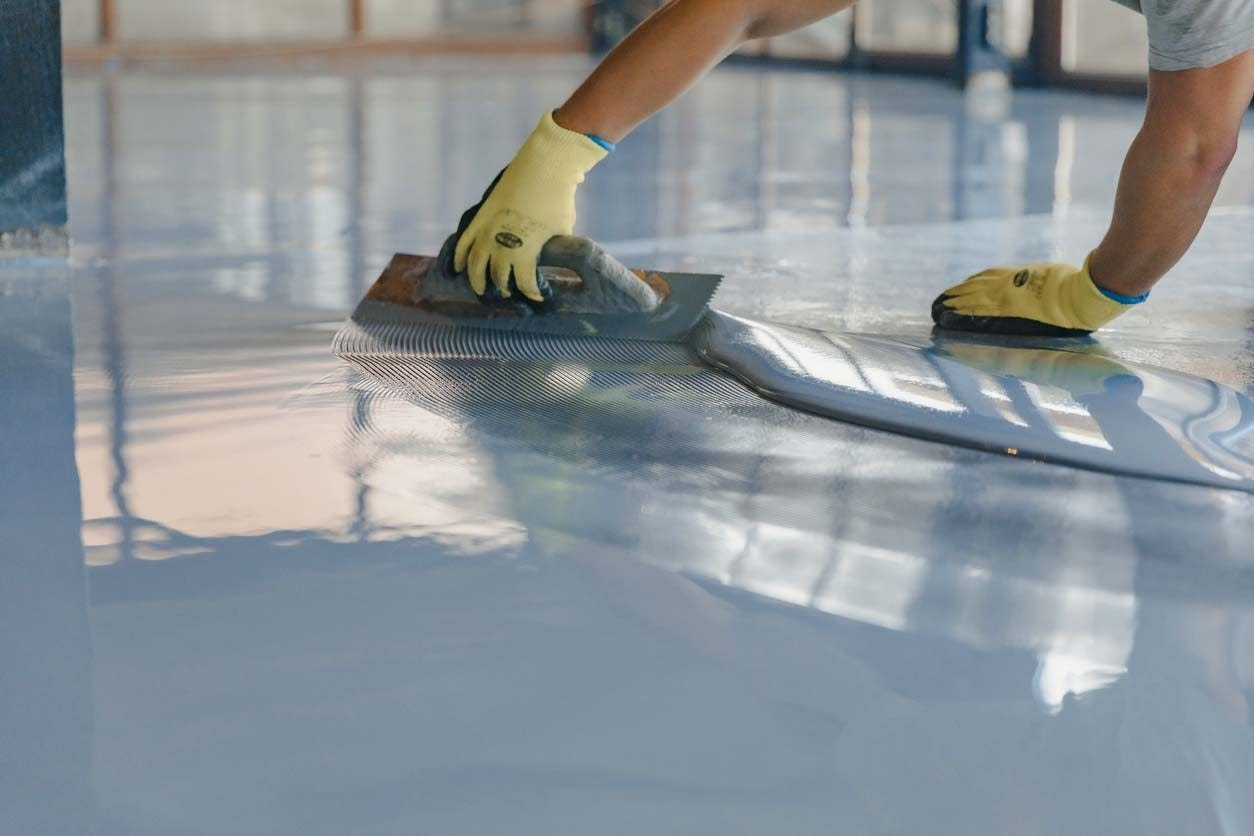
Flooring with epoxy has become the default specification for commercial kitchens, warehouses, car parks, laboratories, and industrial facilities across the region, and for good reason. A properly applied epoxy system is seamless, chemically resistant, easy to clean, and durable under the kind of traffic that would destroy tile or vinyl within months. In food preparation environments where hygiene is critical, the absence of grout lines alone makes epoxy the obvious choice.
The failure modes people associate with epoxy — bubbling, peeling, the finish lifting in sheets — rarely start with the product. They start with what was under it. Moisture coming up through an unprepared slab breaks the chemical bond between the epoxy and the concrete. A surface that wasn’t profiled correctly before application gives the epoxy nothing to grip. By the time the finish is visibly failing, the problem has usually been present since the day the floor was applied. Preparation is the job. The epoxy is just the result of doing it properly.
Thickness and system selection also affect performance significantly. A thin decorative epoxy coat applied over a residential garage floor is a different product from a multi-layer high-build system with a primer, base coat, and UV-stable topcoat for an outdoor covered car park. Both get called epoxy flooring. The performance difference between them under UAE conditions is substantial.
Waterproofing Flooring: The Layer Most Projects Skip
Waterproofing flooring is the stage that gets value-engineered out of projects most often and regretted most reliably afterward. The logic at the time is usually that the concrete seems dry, the drainage is adequate, and the cost of a waterproofing layer feels like money spent on a problem that isn’t there. The problem tends to appear six to eighteen months later, when the moisture that was always present works its way through the floor system and the finishing layer starts to fail.
In wet areas, such as bathrooms, kitchens, plant rooms, pool surrounds, balconies — waterproofing beneath the floor finish isn’t optional. It’s the system that makes the finish work. A quality waterproofing membrane applied to the substrate before tiling or coating is what keeps water from reaching the structural slab and what protects the adhesive bond of whatever finish goes on top. Skipping it reduces the upfront cost and increases the lifetime cost, usually several times over.
Choosing A System That Fits the Application
The range of flooring systems available in the UAE market is wide, and the quality range within each category is wider still. For most commercial and industrial applications, the starting point is understanding the substrate condition, moisture levels, surface profile, and structural integrity before any product is specified. A floor system that performs well in one application can fail in another if the substrate conditions are different.