
With time and changes in technology, the LASIK method has also evolved into a more accurate and effective laser eye treatment method. So, if you are searching for LASIK treatment near me, keep reading! In this guest post, the experts will discuss how LASIK has become a safer and more predictable treatment option.
The Background of LASIK Laser Operation
LASIK eye surgery is one of the most effective eye surgeries. LASIK or laser-assisted in situ keratomileusis is widely used for minimally invasive eye correction. Dr. Gholam Peyman offered a patent for LASIK in 1989. It was a revolutionary vision correction method comprising excimer laser reshaping with corneal flap creation. It became officially available for eye correction in the 1990s.
In addition, with time, it started to incorporate early techniques of 1950s keratomileusis, 1970s radial keratotomy, and 1980s laser technology.
Diagnostic Advances That Improved Patient Outcomes
Several diagnostic advances play a significant role in improving the patient outcomes of LASIK laser operation. Here are the key diagnostic advances practised by top clinics like Harley Vision that help in improving patient outcomes-
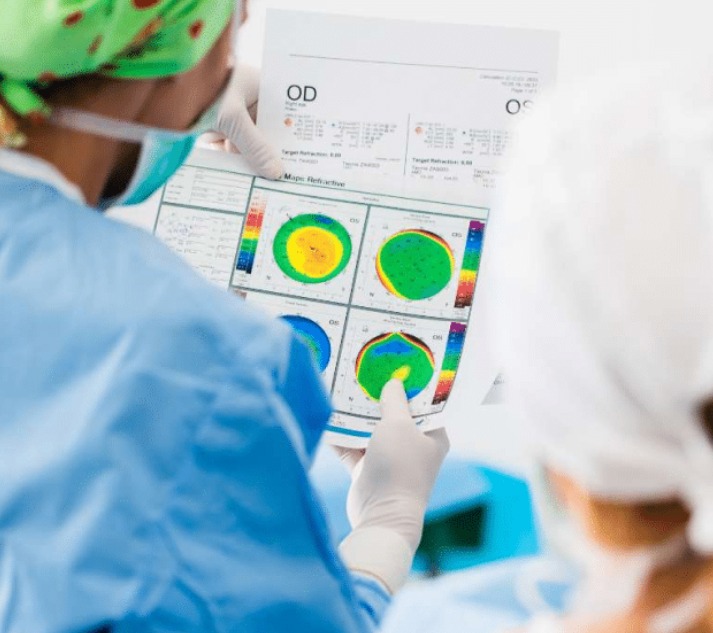
- Advanced corona topography– Modern cornea topography or mapping (like topolyser) can map upto 22,000 different elevation points in the eye. This allows experts to find the mildest imperfections and provide more accurate treatment.
- Cornea imaging- thin cornea imaging can also improve patient outcomes. This allows surgeons to treat thinner corneas more easily.
- AI and ML – AI and ML have become essential for many diagnosis tasks. For laser LASIK eye surgery, experts can use these technologies. They can help analyse OCT, wavefront, and topography.
- Real-time eye tests– Another important improvement in laser eye treatment is real-time eye testing. Modern laser platforms offer real-time eye monitoring. This improves patient safety.
- Dry eye test– Dry eye testing is also a crucial improvement in eye treatment. The analysis of tear film before surgery can help surgeons check dry eye issues.
- Epithelial thickness mapping– Minor displacement of the thinnest epithalamium flap can indicate serious conditions. It offers early detection of epithelial thickness. Also, early detection can help patients avoid serious conditions.
Evolution of Laser Technology in LASIK Procedures
The use of laser technology in the LASIK procedure began as early as 1990. Early methods depended on a mechanical blade. After that, in early 2000, laser eye treatment took a turn with the use of the Femtosecond Laser. Experts also began using the wavefront technology in 2000. Later, after 2010, eye surgeons started using topography-guided and AI-driven laser techniques.
Conclusion
With time and changes in the technology integration, LASIK treatment has become one of the most effective and safe eye treatment methods. However, always choose a reliable provider like Harley Vision when you search for LASIK treatment near me, for the best results. Remember, only the best provider can ensure optimal results.