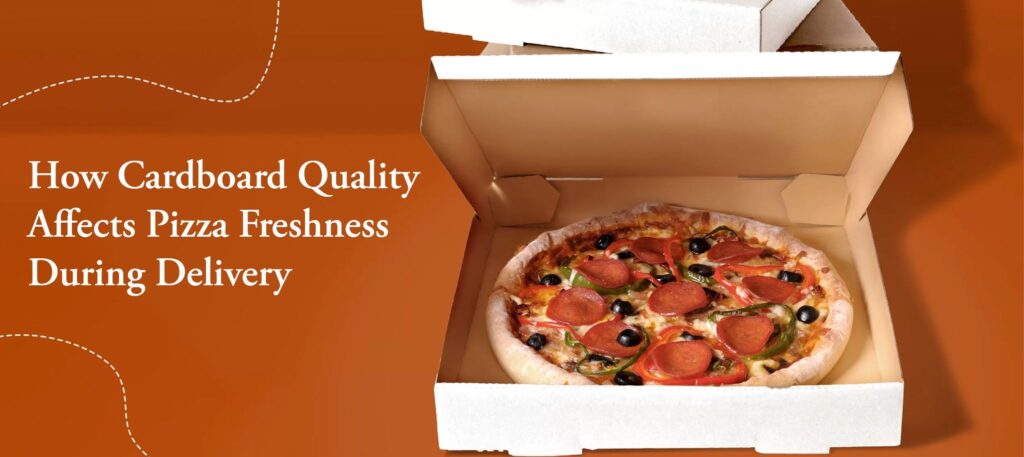

A pizza can leave the oven hot, crisp, and visually perfect but arrive at the customer’s door soft, cold, greasy, or damaged. Although delivery time and handling play important roles, the quality of the cardboard box also has a direct influence on the condition of the food.
A pizza box is not merely a container. During delivery, it must manage heat, steam, grease, pressure, movement, and changing environmental conditions. Poor-quality cardboard can absorb moisture, lose strength, allow the lid to collapse, or release heat too quickly. Higher-quality packaging is designed to maintain its structure while helping the pizza preserve the texture, temperature, and presentation customers expect.
Restaurants should therefore evaluate pizza boxes according to performance rather than price alone. The right cardboard grade, flute structure, ventilation design, dimensions, and food-safe treatments can improve delivery quality while reducing complaints and replacement orders.
Why Pizza Freshness Is Difficult to Maintain
Freshly baked pizza creates a challenging environment inside its packaging.
The pizza continues to release heat and steam after it is removed from the oven. If that moisture remains trapped, it can settle on the crust and toppings. This may soften the base, make the cheese appear wet, and reduce the contrast between a crisp crust and moist toppings.
If the box releases too much heat, however, the pizza may arrive cold. Packaging must therefore balance two competing requirements:
- Retaining enough heat to keep the pizza enjoyable
- Releasing enough steam to prevent excessive moisture buildup
The quality and construction of the cardboard affect how successfully the box manages this balance.
Cardboard Thickness and Heat Retention
Cardboard does not generate heat, but its structure can slow the transfer of heat from the pizza to the surrounding environment.
Corrugated cardboard contains a fluted layer between flat sheets. The air spaces within this structure provide a degree of insulation while also adding strength without making the box excessively heavy. Research into paper and corrugated materials has shown that their structure and thermal properties influence their suitability for insulating and protective applications.
A box made from cardboard that is too thin may lose heat quickly, particularly during longer delivery journeys or cold weather. It may also flex more easily, allowing the lid to touch the pizza.
Thicker cardboard is not automatically better in every situation. Excessive material may increase cost, storage requirements, and packaging weight. Restaurants need a board grade that matches the weight of the pizza and the typical delivery distance.
Ventilation Controls Steam and Crust Texture
Ventilation is one of the most important factors in pizza-box performance.
A completely sealed box may retain heat well, but it can also trap steam. As the steam cools, it forms moisture that may be absorbed by the crust or collect on the interior of the box.
Small ventilation openings allow some humid air to escape. Correctly positioned vents can reduce condensation while retaining much of the pizza’s heat.
Too many openings, however, may cause rapid heat loss. Too few may leave the crust soggy. The ideal design depends on:
- Pizza thickness
- Topping quantity
- Dough recipe
- Baking temperature
- Box size
- Average delivery time
- Local weather conditions
A thin-crust pizza may require a different ventilation pattern from a deep-dish or heavily topped pizza. Restaurants should test packaging with their actual menu instead of relying only on generic box specifications.
Strong Cardboard Protects Pizza Presentation
Freshness is not only about temperature. Customers also judge whether the pizza looks recently prepared and properly handled.
A weak lid may bend downward and touch melted cheese or toppings. Thin sidewalls can collapse when several boxes are stacked. A poorly constructed base may flex while being carried, allowing the pizza to slide or fold.
Quality cardboard provides better rigidity and compression resistance, helping the box retain its shape during delivery. This becomes especially important for large pizzas, deep-dish products, or orders containing several stacked boxes.
Temperature and humidity can affect the mechanical strength of corrugated cardboard. Research has found that increased relative humidity can reduce bending, edge-crush, shear, and torsional performance.
Because hot pizza releases moisture, restaurants need cardboard that continues to perform under warm and humid internal conditions.
Why Moisture Resistance Matters
Pizza contains oil, sauces, cheese, and other ingredients that can place significant stress on paper-based packaging.
Low-grade cardboard may absorb grease quickly. This can create dark stains, weaken the base, produce an unpleasant appearance, and make the box difficult to carry. In severe cases, the cardboard may become soft enough to tear.
Grease-resistant construction helps the box remain stable while preventing oil from spreading across the outer surface. However, restaurants should verify that any coatings, barriers, inks, and adhesives used in the package are suitable for their intended food-contact application.
The U.S. Food and Drug Administration explains that packaging components intended to contact food must comply with applicable food-contact requirements. These components can include paperboard treatments, coatings, adhesives, and colorants.
In the United States, the FDA announced in 2024 that manufacturers had completed a voluntary phaseout of certain PFAS-containing grease-proofing substances for food-contact paper and paperboard. Restaurants should still ask suppliers for current, market-specific information about the barriers used in their packaging.
Box Dimensions Influence Freshness
A pizza box should fit the product closely without pressing against its edges or toppings.
An oversized box allows the pizza to move during transportation. It also creates more empty air space that must be warmed, potentially affecting temperature retention. A box that is too small can compress the crust, force slices together, or cause the lid to touch the toppings.
Proper dimensions help maintain:
- Pizza stability
- Heat distribution
- Attractive presentation
- Structural support
- Efficient material use
- Easier delivery handling
Restaurants should measure the actual finished pizza rather than relying only on the advertised pan or menu size. Crust expansion and product thickness can affect the required internal dimensions.
The Value of Custom Packaging Construction
Standard boxes may work for common pizza styles, but restaurants serving heavier, thicker, or unusually shaped products may require a more specific solution.
Well-designed Custom Cardboard Pizza Boxes allow businesses to select dimensions, board strength, ventilation placement, closure style, printing, and structural features according to their menu.
For example, a restaurant may require:
- Reinforced corners for heavy pizzas
- Additional depth for raised crusts
- Stronger fluting for delivery stacking
- Carefully positioned vents
- Grease-resistant interior surfaces
- Secure locking tabs
- Inserts that limit pizza movement
Customization should improve performance rather than adding decoration alone. The most effective box is one that supports both the food and the restaurant’s delivery process.
Cardboard Quality Affects Customer Perception
Customers may never ask what grade of cardboard a restaurant uses, but they notice the results.
A rigid, clean, well-fitting box suggests professionalism and care. A soft, stained, crushed, or difficult-to-open package can create a negative impression before the customer tastes the pizza.
Quality packaging can strengthen perceptions of:
- Food freshness
- Cleanliness
- Order value
- Restaurant reliability
- Product quality
- Brand professionalism
Customers often associate packaging condition with kitchen standards. Even excellent food may appear lower in quality when it arrives in damaged packaging.
Delivery Distance Should Guide Box Selection
A box that performs well for a five-minute collection order may not be suitable for a forty-minute delivery.
Longer journeys expose the pizza to additional heat loss, moisture buildup, vibration, and stacking pressure. Restaurants with wide delivery areas may need stronger cardboard, better ventilation control, and insulated delivery bags.
Packaging decisions should be based on realistic delivery conditions, including:
- Average travel time
- Maximum delivery distance
- Number of boxes commonly stacked
- Driver handling practices
- Seasonal temperatures
- Vehicle type
- Road conditions
The cardboard box works as part of a larger delivery system. Even a premium box may struggle if drivers leave orders uncovered in cold vehicles or stack heavy items above them.
Bulk Purchasing Should Not Reduce Quality
Buying large quantities of boxes can reduce unit costs and simplify inventory planning, but restaurants should not approve a bulk order without testing the packaging first.
Businesses purchasing custom pizza boxes wholesale should request production samples and test them with freshly prepared pizzas under normal delivery conditions. A low per-unit price may become expensive if the boxes produce soggy crusts, collapse during stacking, or require frequent order replacements.
Before committing to a large quantity, restaurants should confirm:
- Board grade and thickness
- Corrugated flute type
- Box dimensions
- Ventilation design
- Grease resistance
- Print quality
- Minimum order quantity
- Production tolerance
- Storage requirements
- Supplier lead time
A physical sample is more informative than a digital rendering because it allows staff to evaluate assembly, strength, fit, and delivery performance.
Storage Conditions Can Weaken Cardboard
Even high-quality cardboard can perform poorly if it is stored incorrectly.
Paper-based packaging absorbs moisture from the surrounding environment. High humidity can reduce stiffness and compression strength before the box reaches the packing station. Research on corrugated cardboard confirms that environmental temperature and relative humidity can significantly affect mechanical properties.
Boxes should be stored:
- In a clean and dry area
- Away from floors and exterior walls
- Protected from leaks and humidity
- Away from heat sources
- In sealed or covered stacks where practical
- Using first-in, first-out inventory rotation
Restaurants should avoid purchasing more packaging than they can store safely. A discounted bulk order offers little value when part of the inventory becomes warped or weakened.
Printing and Coatings Should Not Interfere With Performance
Brand printing helps make pizza boxes recognizable, but heavy coatings or poorly selected finishes may affect how the package handles moisture, grease, or recycling.
Restaurants should make sure that printing inks do not transfer to food and that decorative treatments are appropriate for the temperatures and conditions involved.
The outside of the box can carry:
- A restaurant logo
- Contact information
- Social media details
- Reheating instructions
- Allergen reminders
- Promotional codes
- Recycling guidance
The design should leave ventilation openings unobstructed and avoid weakening fold lines or locking areas.
Sustainability and Cardboard Quality Can Work Together
Reducing material use is important, but making a box too light may increase food waste if it fails during delivery.
A durable box that protects the pizza may offer greater overall environmental value than a weaker option that leads to damaged meals, replacements, and additional delivery journeys.
Restaurants can improve packaging efficiency by:
- Selecting the lightest board that performs reliably
- Right-sizing boxes
- Reducing unnecessary inserts
- Using responsibly sourced fibre
- Choosing recyclable structures where practical
- Printing accurate disposal instructions
- Preventing food and packaging waste
The U.S. Environmental Protection Agency states that pizza boxes can generally be recycled after food scraps are removed and the box is flattened, although local recycling acceptance should always be confirmed.
How to Test Cardboard Quality
Restaurants should create a repeatable test before changing suppliers or approving a large order.
A useful evaluation can involve the following steps:
- Place a freshly prepared pizza in the sample box.
- Record the pizza’s temperature when packed.
- Transport it for the average delivery time.
- Stack the usual number of boxes.
- Inspect the lid and sidewalls for bending.
- Check for grease leakage.
- Examine condensation inside the box.
- Evaluate crust texture.
- Record the final temperature.
- Ask staff and customers for feedback.
Testing several box designs under the same conditions makes comparison easier.
Common Signs of Poor Cardboard Quality
Restaurant teams should watch for recurring packaging problems, including:
- Boxes bending during assembly
- Tabs failing to lock
- Lids touching toppings
- Bases becoming soft
- Oil appearing on exterior surfaces
- Corners collapsing during stacking
- Excessive condensation
- Pizza shifting during transport
- Boxes losing shape in storage
- Inconsistent dimensions between batches
These issues should be documented and discussed with the supplier. A small defect repeated across thousands of boxes can create substantial operational costs.
Choosing the Right Supplier
A reliable packaging supplier should provide more than a low quotation.
Restaurants should ask for material specifications, food-contact documentation, samples, production tolerances, delivery schedules, and quality-control procedures.
A good supplier should also be able to explain why a particular board grade or box structure is suitable for the restaurant’s pizza style.
Important selection criteria include:
- Consistent material quality
- Accurate dimensions
- Reliable printing
- Food-contact suitability
- On-time production
- Responsive customer service
- Clear pricing
- Realistic minimum quantities
- Replacement procedures for defective orders
Long-term consistency is especially important for growing restaurants that need every location to deliver a similar customer experience.
Conclusion
Cardboard quality has a significant effect on pizza freshness during delivery. The strength, thickness, flute structure, ventilation, grease resistance, fit, and moisture performance of the box all influence how the pizza arrives.
Poor cardboard can allow heat to escape, trap excessive steam, absorb grease, collapse under pressure, and damage the presentation. Properly selected packaging helps maintain temperature, protect crust texture, support toppings, and create a more professional customer experience.
Restaurants should test pizza boxes under real delivery conditions and evaluate total performance rather than choosing packaging based only on price. They should also consider storage conditions, supplier consistency, food-contact requirements, and the needs of their particular pizza style.
When high-quality cardboard is combined with correct handling and efficient delivery procedures, the box becomes an important freshness-management tool rather than a simple disposable container.