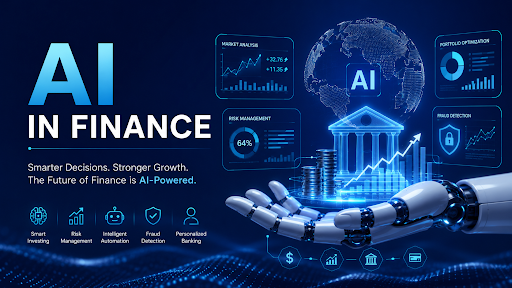

Finance leaders are expected to deliver more than accurate reporting and financial control. They must provide forward-looking insights, improve productivity, manage risk and help organizations make faster strategic decisions. As finance functions respond to these demands, AI in Finance is becoming an important enabler of transformation, while Gen AI in Finance is expanding what can be automated and how financial information can be analyzed and communicated.
Together, these technologies can reduce manual work, accelerate analysis and give finance professionals more time to focus on planning, decision support and business partnering. However, realizing this value requires organizations to connect AI investments with clear finance priorities, reliable data and appropriate governance.
This article explores how AI in Finance and Gen AI in Finance are changing financial operations, their most valuable applications, business benefits and considerations for successful implementation.
What is AI in Finance?
AI in Finance refers to the use of artificial intelligence technologies to improve financial processes, analysis and decision-making. It includes machine learning, predictive analytics, intelligent automation, generative AI and increasingly AI agents.
Organizations can apply these capabilities across financial planning and analysis (FP&A), accounts payable, accounts receivable, accounting, reporting, treasury, risk and compliance.
Traditional finance automation typically follows predefined rules. AI can analyze patterns, interpret information and generate recommendations, allowing organizations to address more complex and knowledge-intensive activities.
What is Gen AI in Finance?
Gen AI in Finance is the application of generative artificial intelligence to financial processes and workflows. It can understand and generate natural language, summarize complex information, create financial narratives and help employees interact with enterprise data conversationally.
For example, finance professionals can use generative AI to summarize variance drivers, prepare initial management commentary, interpret policies or quickly retrieve information from large volumes of financial documentation.
This makes Gen AI in Finance particularly valuable for activities that combine financial data with analysis, communication and professional judgment.
Why AI in Finance matters
Finance functions often manage large volumes of transactions and data while facing pressure to operate efficiently and provide increasingly sophisticated business insights. Manual processes can consume capacity that could otherwise support planning, analysis and decision-making.
AI in Finance can automate routine activities while improving access to financial information. Machine learning can identify patterns and anomalies, predictive analytics can support forecasting, and intelligent automation can streamline transactional workflows.
For CFOs, the opportunity extends beyond finance efficiency. AI can strengthen finance’s ability to provide timely insights that improve resource allocation, working capital decisions and enterprise performance.
Core technologies transforming finance
Several technologies are contributing to the development of intelligent finance operations.
Generative AI
Generative AI can summarize financial results, draft management commentary, explain variances, prepare reports and retrieve information from finance policies and documentation.
Machine learning
Machine learning analyzes historical and operational information to identify patterns, detect anomalies and support more sophisticated forecasting.
Predictive analytics
Predictive models can help finance teams anticipate revenue, expenses, cash flow and other financial outcomes under different business conditions.
Intelligent automation
Automation can streamline high-volume activities such as invoice processing, reconciliations, journal preparation and workflow routing.
AI agents
AI agents represent an emerging capability that can potentially coordinate multistep activities across finance systems while escalating exceptions or higher-risk decisions to employees.
Together, these technologies are expanding the scope of AI in Finance from individual task automation toward more connected financial processes.
Key applications of Gen AI in Finance
Organizations can apply Gen AI in Finance across multiple areas of the function.
Financial planning and analysis
Generative AI can summarize forecasts, explain performance drivers and help FP&A teams analyze scenarios more efficiently. Combined with predictive analytics, it can improve the speed of planning and performance analysis.
Management reporting
Finance teams can use generative AI to create first drafts of management commentary and summarize financial performance for different audiences, reducing time spent preparing repetitive narratives.
Accounts payable
AI can extract invoice information, identify exceptions and support approval workflows. Generative capabilities can also summarize complex exceptions for finance professionals.
Accounting and reporting
AI can support reconciliations, identify unusual transactions and assist with documentation. Human review remains essential for material accounting judgments and financial reporting decisions.
Treasury and cash management
Predictive AI can strengthen cash forecasting, while generative capabilities can help treasury professionals interpret trends and communicate potential liquidity implications.
Risk and compliance
AI can analyze transactions, identify unusual patterns and summarize regulatory or policy information, helping finance teams focus attention on higher-risk activities.
These applications demonstrate how Gen AI in Finance can complement established automation and analytics capabilities rather than operating as a separate technology layer.
Business benefits of AI in Finance
The value of AI depends on where and how it is implemented. High-value applications can improve several dimensions of finance performance.
Greater productivity
Automating repetitive transactional and knowledge-intensive work can release finance capacity for analysis, business partnering and strategic initiatives.
Faster insights
AI can analyze large volumes of financial information and summarize important trends, helping finance teams respond more quickly to business questions.
Improved planning
Predictive models and AI-supported scenario analysis can help finance leaders understand potential outcomes and make more informed resource allocation decisions.
Stronger controls
AI can continuously analyze transactions and identify anomalies or exceptions that warrant further investigation.
Better employee experience
Reducing repetitive work and simplifying access to financial information can enable finance professionals to spend more time on activities requiring expertise and judgment.
Best practices for implementing Gen AI in Finance
Successful implementation requires more than selecting an AI platform. Organizations need to determine where AI can materially improve finance performance and whether the necessary foundations are in place.
- Start with clearly defined finance problems and desired business outcomes.
- Prioritize AI use cases based on potential value, implementation complexity and time to value.
- Strengthen financial data quality, accessibility and governance before scaling AI.
- Integrate AI capabilities into existing finance workflows and enterprise platforms.
- Maintain human accountability for material judgments, approvals and high-risk decisions.
- Establish governance for security, privacy, model performance and regulatory compliance.
- Measure results using relevant finance KPIs rather than focusing only on technology usage.
These practices can help organizations move from experimentation toward scalable AI in Finance.
Challenges organizations need to address
Gen AI in Finance introduces several considerations that are particularly important because finance manages sensitive information and business-critical decisions.
AI-generated outputs may be incomplete or incorrect, requiring validation and appropriate human oversight. Data access must also be carefully controlled to protect confidential financial information.
Fragmented data and legacy systems can further constrain AI performance. Organizations may need to simplify processes and strengthen technology foundations before implementing more advanced capabilities.
Finance teams also need new skills to understand how AI works, evaluate its outputs and determine where professional judgment remains essential.
The future of AI in Finance
The next stage of AI in Finance is likely to move from isolated assistants toward AI agents capable of coordinating multistep finance activities. These agents could retrieve information, analyze transactions, initiate approved actions and route exceptions to the appropriate finance professional.
Gen AI in Finance will also make financial information increasingly conversational, allowing executives and finance professionals to interact with enterprise data using natural language.
As these capabilities develop, finance operating models will need to evolve. Roles, controls, governance and performance measures will need to reflect a working environment where employees and intelligent technologies increasingly operate together.
Conclusion
AI in Finance is changing how organizations execute financial processes, analyze performance and support enterprise decisions. Gen AI in Finance expands this opportunity by bringing natural-language capabilities to reporting, analysis, knowledge management and other traditionally labor-intensive activities.
Organizations that focus on high-value use cases, strengthen their data foundations and establish appropriate governance will be better positioned to scale these capabilities. The long-term opportunity is not simply a more automated finance function, but one that delivers greater productivity, stronger insights and more strategic value to the enterprise.