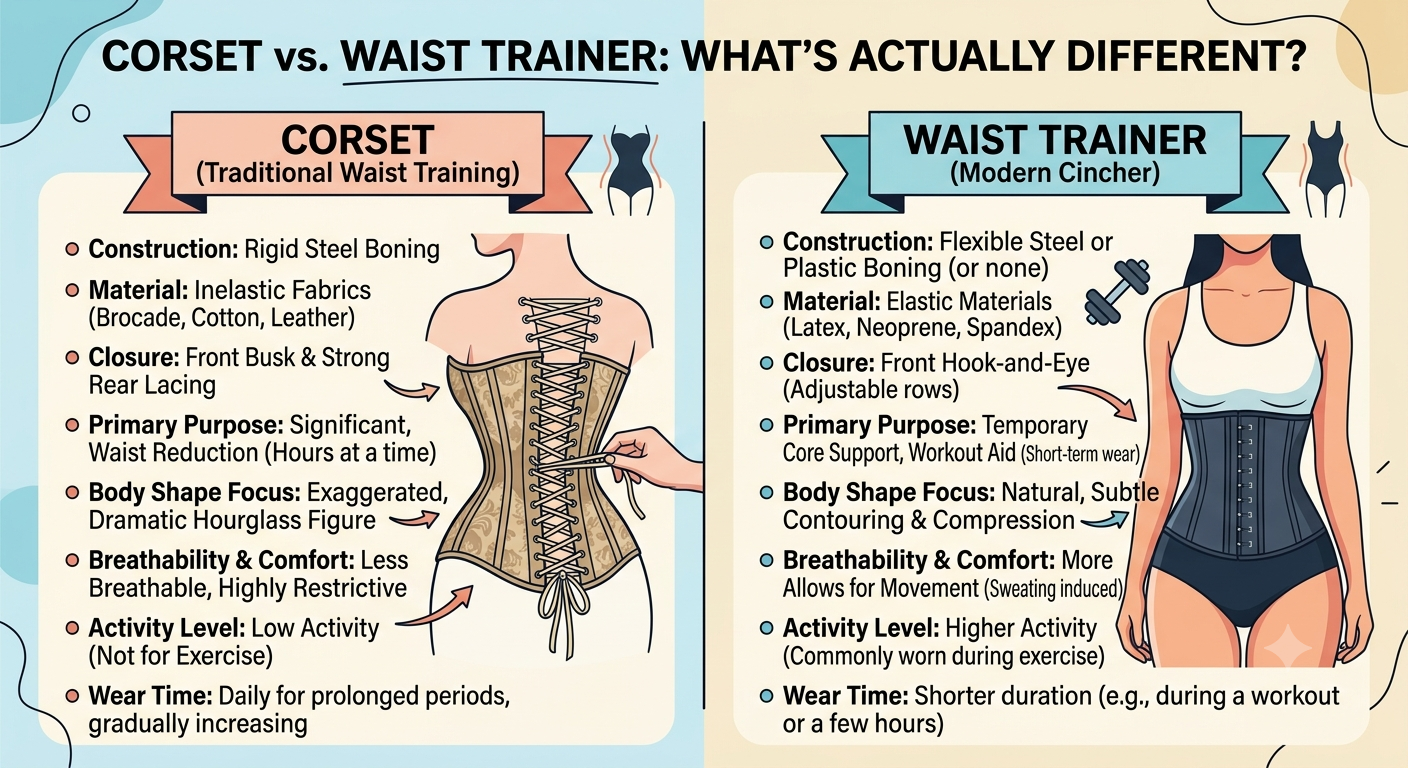

These two terms get used interchangeably so often that a lot of people assume they’re the same product with two different names. They’re not. A corset https://restrictstore.com/ and a waist trainer are built for different purposes, use different materials and construction methods, and are worn in completely different ways. Knowing the distinction matters if you’re trying to choose the right piece for what you actually want — whether that’s a structured fashion statement or a workout accessory.
What a Corset Actually Is
A corset is a structured garment built with rigid boning — traditionally steel or plastic — sewn into vertical channels throughout the body of the piece. The boning is what gives a corset its defined shape and its ability to hold that shape independently, even off the body. Lacing at the back allows for adjustment and a custom fit, and the construction is designed to be precise: panels are cut and shaped to follow a specific silhouette.
Corsets are primarily a fashion and styling garment today. They’re worn as outerwear, layered with other clothing, and chosen for the silhouette and visual impact they create. Leather corsets in particular lean into this — the rigid structure combined with the material’s natural body makes for a piece that holds its shape dramatically and reads as a clear design statement.
What a Waist Trainer Actually Is
A waist trainer, by contrast, is usually made from stretchy, compressive materials like latex or spandex blends, often reinforced with flexible boning rather than rigid steel. It’s designed to be worn under clothing, frequently during exercise or throughout the day, with the goal of providing compression rather than creating a sculptural silhouette.
Waist trainers prioritize flexibility and comfort for extended, often hidden wear. They’re built to move with the body during activity, which is the opposite design goal of a corset, where the structure is meant to hold a fixed shape regardless of movement.
Construction Differences That Actually Matter
The clearest way to tell the two apart is to look at the materials and boning. A genuine corset will have rigid boning, often steel, running through structured fabric or leather panels, with a back-lacing closure that allows for significant adjustment. A waist trainer will typically use flexible boning, stretch fabric, and a front closure system like hooks or a zipper, built for ease of wearing under clothes rather than visual structure.
This construction difference is also why the two products produce such different results when worn. A corset’s rigid boning creates a defined, often dramatic silhouette change while worn. A waist trainer’s stretch materials provide compression and a smoothing effect, but without the same structural transformation.
Purpose: Fashion Statement vs. Functional Garment
This is really the core distinction. A corset is, in most modern contexts, a fashion piece — chosen for how it looks, how it’s styled, and the silhouette it creates as part of an outfit. It’s meant to be seen, and its construction reflects that: visible lacing, finished seams, and design details that work as outerwear.
A waist trainer is a functional, mostly hidden garment, worn under clothing for compression, posture support during workouts, or smoothing under fitted outfits. It’s rarely meant to be seen, and its construction prioritizes comfort during extended or active wear over visual design.
Which One Should You Actually Be Looking For?
If the goal is a structured, visible piece that becomes a focal point of an outfit — something styled over a shirt, paired with tailored trousers, or used to define a silhouette for an evening look — a corset, particularly a leather one, is the right category to be shopping in.
If the goal is compression wear for exercise, postpartum support, or smoothing under clothing, a waist trainer is built for that purpose and a corset is the wrong tool — rigid steel boning isn’t designed for the kind of repeated movement and stretch that waist trainers are built to handle.
A Simple Way to Remember the Difference
Think of a corset as architecture and a waist trainer as athletic wear. One is built to hold a fixed, dramatic shape and be seen. The other is built to move with the body and stay hidden. They share a general silhouette goal — a defined waist — but almost everything about how they’re built and worn separates them.