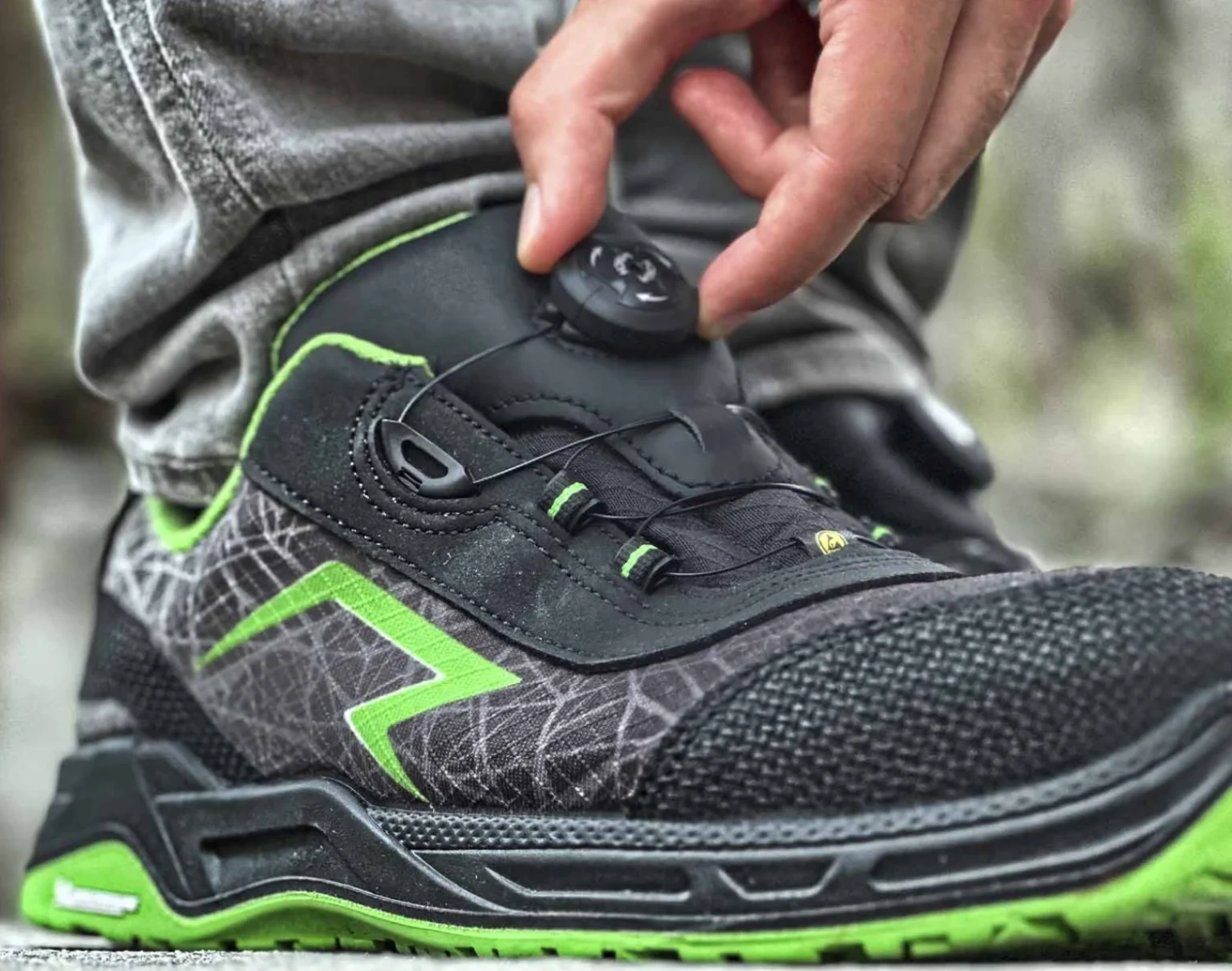

After 8–12 hours on our feet, our bodies begin to operate under constant strain. Our feet swell, pressure on the knee joints increases, tension builds in the lower back, and our concentration levels drop. In the UAE climate, this problem is exacerbated by the heat and scorching concrete surfaces. Ordinary footwear is unable to cope with such strain, whilst heavy, old-style boots only accelerate fatigue. There is a solution! Modern lightweight safety shoes are now designed as a complete system of anatomical comfort.
How the dual-density sole works
The foundation of modern safety footwear is the double-density sole with a PU/PU construction. This is an engineered load-distribution system. The inner layer, made of low-density polyurethane, is responsible for shock absorption. When walking, it is the heel that takes the brunt of the impact against concrete or metal. The shock-absorbing layer reduces the vibration transmitted to the spine and joints. The outer layer is high-density. It is responsible for:
- Abrasion resistance. The outer layer of the sole wears down more slowly when in constant contact with concrete, metal and abrasive surfaces.
- Slip resistance on smooth surfaces. A special tread pattern improves grip on tiles, polished concrete and metal surfaces.
- Stability during sharp turns and when carrying loads. The rigid outer layer helps maintain balance under lateral loads and during vigorous movement whilst carrying a load.
The anatomical curve of the sole and the built-in arch support also play a key role. This design supports the arch of the foot and helps prevent muscle strain during long shifts. Modern models from the talansafetyshoes.com/prod-cat/lightweight-safety-shoes/ range are designed with natural biomechanics and prolonged work on hard surfaces in mind.
The benefits of high-quality suspension
- Reduces the strain on the knees when walking on concrete. The shock-absorbing layer in the sole partially absorbs the impact of each step on a hard surface.
- Reduces lower back fatigue by the end of the shift. Proper weight distribution helps to reduce tension in the back muscles during prolonged periods of standing.
- Reduces pressure on the heel and Achilles tendon. The cushioned heel area minimises micro-vibrations and strain on the ligaments during continuous movement.
- It helps you stay focused for longer whilst working. The less physically tired your legs are, the lower the risk of mistakes and a drop in concentration towards the end of your shift.
Why does the microclimate inside work shoes affect productivity?
In hot conditions, the foot can release up to a hundred millilitres of moisture per shift. If the footwear does not wick this moisture away, overheating occurs, leading to rapid fatigue and blisters. Modern safety shoes uses breathable materials and a multi-layered breathable lining. The lining acts as a moisture-wicking system: it absorbs sweat and gradually wicks it away.
Genuine leather with a thickness of 2.0–2.2 mm is particularly effective. Unlike cheap synthetic materials, it maintains a comfortable temperature and is less prone to overheating in the UAE climate. Natural fibres also reduce the risk of unpleasant odours. The system is complemented by antibacterial insoles, which prevent the growth of fungal bacteria during prolonged use.
Why does the weight of work shoes affect fatigue?
Even a few hundred extra grams start to make a difference after thousands of steps per shift.
| Type of safety shoes | Average weight per pair | Workload for a 12-hour shift |
| Heavy-duty boots (with steel toe caps) | ~1.8–2.0 kg | High fatigue |
| TALAN lightweight safety footwear | ~1.1-1.3 kg | Reduced by 30–40% |
| Sports safety shoes | ~0.9-1.1 kg | Minimum load |
The table clearly illustrates why modern businesses are switching to lightweight safety shoes with a streamlined design.
Protective elements that are barely noticeable
Modern composite toe caps are gradually replacing traditional steel toe caps in safety footwear. Composite toe caps are lighter and do not make the toe area of the shoe feel heavy. At the same time, they fully comply with the EN ISO 20345 safety standards.
Another key feature is the Kevlar insole. Unlike a rigid steel plate, it maintains the sole’s flexibility and allows the foot to move naturally whilst walking.
Why has anatomical comfort become a safety feature
Nowadays, comfortable safety footwear is seen as a means of reducing workplace injuries. The less fatigue an employee experiences, the lower the likelihood of errors, falls and joint strain.
That is precisely why Talan safety shoes in the UAE are manufactured using equipment from Italy and Germany, designed to ensure a precise anatomical fit and optimal shock absorption. Production in the UAE, and TÜV Rheinland certification and distribution through Verona Shoes FZE enable the footwear to be tailored to the region’s actual conditions and the requirements of modern workplaces.