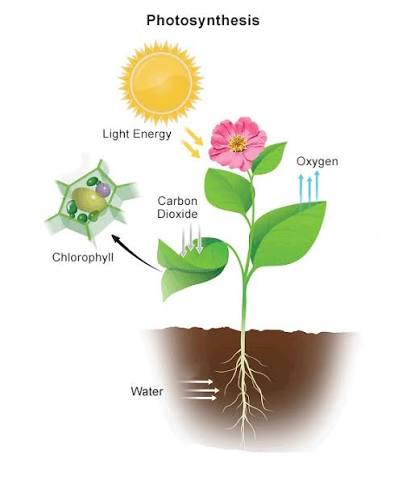

What is Photosynthesis?
Photosynthesis is a biochemical process that occurs in green plants, algae, and some types of bacteria, whereby these organisms convert light energy, typically from the sun, into chemical energy stored in glucose. This transformation is essential for life on Earth, as it serves as the foundation for the food chain and is the primary source of energy for most organisms. The equation representing photosynthesis simplifies this complex process; it illustrates how carbon dioxide and water, in the presence of sunlight and chlorophyll, are transformed into glucose and oxygen. The general formula is expressed as follows: 6CO2 + 6H2O + light energy → C6H12O6 + 6O2.
During photosynthesis, sunlight is captured by chlorophyll, the green pigment found within the chloroplasts of plant cells. This energy is then used to split water molecules into hydrogen and oxygen. The liberated oxygen is released as a byproduct into the atmosphere, which is critical for the survival of aerobic organisms, including humans. The hydrogen from the split water molecules combines with carbon dioxide absorbed from the atmosphere to form glucose. This glucose not only serves as an energy source for the plants themselves but also provides energy for herbivores that consume these plants, thereby supporting a diverse ecosystem.
The importance of photosynthesis transcends individual organisms; it plays a vital role in regulating atmospheric carbon dioxide levels and contributes to the nutrient cycles that sustain various forms of life. By facilitating the conversion of light energy into chemical energy, photosynthesis enables plants to grow, reproduce, and thrive in diverse environments, thereby ensuring a stable and balanced ecosystem. In conclusion, photosynthesis is a fundamental process essential for life on Earth, highlighting the intricate connections within our biosphere.
The Role of Chlorophyll
Chlorophyll is a vital pigment found in plants, algae, and some bacteria, playing a crucial role in the process of photosynthesis. This green pigment primarily resides in the chloroplasts of plant cells, where it serves as the primary facilitator of light absorption. The ability of chlorophyll to effectively capture sunlight is fundamental; without it, plants would lack the necessary means to convert solar energy into usable chemical energy.
The process begins when chlorophyll absorbs light, predominantly in the blue and red wavelengths, while reflecting green light, which gives plants their characteristic color. When chlorophyll molecules absorb photons, they become excited and enter a higher energy state. This energy is then used to initiate a series of biochemical reactions that ultimately lead to the synthesis of glucose from carbon dioxide and water. It is through this mechanism that carbon fixation occurs, contributing to the plant’s growth and energy storage.
Moreover, chlorophyll plays a significant role in the formation of oxygen as a byproduct of photosynthesis. During the light-dependent reactions, the absorbed solar energy splits water molecules, leading to the release of oxygen into the atmosphere. This contribution is not only vital for plant life but also essential for maintaining the planet’s oxygen levels, supporting aerobic life forms. Thus, the importance of chlorophyll extends beyond mere energy conversion; it also plays a pivotal role in sustaining life on Earth by facilitating the ecological balance.
In summary, chlorophyll is integral to the photosynthetic process, enabling plants to harness sunlight effectively and convert it into chemical energy. Its functions are vital for the health of ecosystems, underscoring the interconnectedness of life through the continuous cycle of energy transformation. Understanding the role of chlorophyll enhances our appreciation of how plants contribute to both their own survival and the broader environment.
The Process of Photosynthesis
Photosynthesis is a vital biological process that allows plants, algae, and certain bacteria to convert light energy into chemical energy. It occurs in two primary stages: the light-dependent reactions and the Calvin cycle. Each of these stages plays a crucial role in producing the energy that sustains these organisms and, in turn, the ecosystems they inhabit.
The light-dependent reactions take place in the thylakoid membranes of chloroplasts. When sunlight strikes chlorophyll, a pigment located in these membranes, it triggers the absorption of light energy. This energy then splits water molecules into oxygen, protons, and electrons through a process known as photolysis. Oxygen is released as a byproduct, while the electrons move through a series of proteins in the electron transport chain. This movement generates adenosine triphosphate (ATP) and nicotinamide adenine dinucleotide phosphate (NADPH), two essential energy carriers that will be used in the next phase of photosynthesis.
Following the light-dependent reactions, the process continues with the Calvin cycle, which occurs in the stroma of chloroplasts. This cycle does not require light directly; instead, it uses the ATP and NADPH produced earlier to convert carbon dioxide from the atmosphere into glucose. The Calvin cycle involves three phases: carbon fixation, reduction, and regeneration. First, carbon dioxide is fixed into a five-carbon sugar, ribulose bisphosphate (RuBP), by the enzyme ribulose bisphosphate carboxylase/oxygenase (RuBisCO). This unstable six-carbon compound quickly splits into two three-carbon molecules, known as 3-phosphoglycerate (3-PGA).
In the reduction phase, ATP and NADPH are utilized to transform 3-PGA into glyceraldehyde-3-phosphate (G3P), a three-carbon sugar that can eventually form glucose and other carbohydrates. Lastly, in the regeneration stage, some G3P molecules are utilized to regenerate RuBP, allowing the cycle to continue. Through these intricate steps, photosynthesis creates glucose, the primary energy source for plants and a foundational component in the food chain.
The Importance of Light
Light plays a critical role in the process of photosynthesis, acting as the primary energy source that drives the transformation of carbon dioxide and water into glucose and oxygen. The two main types of light that contribute to this vital process are sunlight and the visible light spectrum. Both have distinct characteristics and impacts on the efficiency of photosynthesis.
Sunlight, which is composed of various wavelengths, is essential for plants as they utilize its energy to produce food. It contains a mixture of ultraviolet, visible, and infrared light. Among these, the visible light spectrum—specifically blue and red light—has the most significant effect on photosynthesis. Studies have shown that blue light promotes the production of chlorophyll, the pigment responsible for absorbing light in plants. On the other hand, red light is crucial for stimulating the overall growth and development of plants. The absorption of both blue and red wavelengths leads to the optimal functioning of the photosynthetic machinery within plant cells.
The efficiency of photosynthesis is affected by light intensity as well. When light is abundant, photosynthetic rates increase; however, beyond a certain point, plants can experience saturation. This saturation leads to diminished returns in the efficiency of light utilization, as additional light does not significantly enhance the rate of photosynthesis. Moreover, different species of plants have adapted to thrive in various light conditions. For instance, shade-loving plants possess adaptations that allow them to maximize light absorption in lower light environments, whereas sun-loving plants are adapted to harness higher intensities of sunlight.
In summary, light serves as a fundamental element in the photosynthesis process, with sunlight and visible light playing prominent roles in influencing plant growth and productivity. Understanding how these light types impact photosynthesis can help in optimizing growth conditions in agricultural practices and enhancing crop yields.
Carbon Dioxide and Water: The Raw Materials
The process of photosynthesis is essential for plant life and, by extension, for life on Earth. Central to this process are two key raw materials: carbon dioxide and water. Plants absorb carbon dioxide from the atmosphere primarily through small openings known as stomata, found on their leaves. This gas is crucial as it serves as one of the building blocks for glucose, the sugar molecule that serves as an energy source for plants.
Water, on the other hand, is absorbed through the roots of the plant from the soil. The roots are equipped with specialized structures that facilitate the uptake of water, which is then transported through the plant to the leaves. In addition to being a raw material for photosynthesis, water plays several other critical roles in plant health. It not only helps in nutrient transport but also provides structural support and aids in various biochemical reactions.
Both carbon dioxide and water undergo a series of transformations during photosynthesis. In the presence of sunlight, chlorophyll, the green pigment in plants, captures light energy and uses it to convert carbon dioxide and water into glucose and oxygen. This reaction primarily takes place in the chloroplasts, specialized organelles found in plant cells. The general equation for photosynthesis summarizes this conversion: carbon dioxide and water, in the presence of sunlight, yield glucose and oxygen. Hence, the role of carbon dioxide and water is not merely as inputs; they are integral to creating the energy foundation that sustains the entire life cycle of plants and the ecosystems that depend on them.
In this way, understanding the involvement of these two key ingredients in photosynthesis illustrates their importance not only to plants but also to life on Earth, as they contribute to the oxygen-rich atmosphere that is vital for the survival of many organisms, including humans.
The Products of Photosynthesis
Photosynthesis is an essential biological process that occurs in green plants, algae, and some bacteria. Through this process, these photosynthetic organisms convert light energy into chemical energy, resulting in two critical products: glucose and oxygen.
Glucose, a simple sugar, is produced during photosynthesis and serves as a primary energy source for plants. The chemical equation of photosynthesis can be summarized as follows: carbon dioxide and water, in the presence of sunlight, are transformed into glucose and oxygen. This transformation is vital as glucose provides the energy necessary for various plant functions, including growth, development, and reproduction. Plants utilize glucose to synthesize other carbohydrates, fats, and proteins, which are essential for their structure and energy storage. Furthermore, glucose can be converted into starch, which serves as a long-term energy reserve that the plant can draw upon when needed.
In addition to glucose, oxygen is another significant byproduct of photosynthesis. As plants convert carbon dioxide and water into glucose, oxygen is generated as a waste product and released into the atmosphere. This release of oxygen is crucial for maintaining the balance of gases in our environment. It supports the survival of aerobic organisms, including humans, who rely on oxygen for respiration. Without photosynthesis and the consequent production of oxygen, life as we know it would be unsustainable, as most living organisms depend on it for their survival.
In summary, photosynthesis results in the production of glucose, which serves as an energy source for plants, and oxygen, which is released into the atmosphere. Both products play vital roles in the biological and ecological processes that sustain life on Earth.
Photosynthesis and the Ecosystem
Photosynthesis is a crucial biological process that allows plants, algae, and some bacteria to convert light energy, typically from the sun, into chemical energy in the form of glucose. This transformation not only sustains the life of the organisms conducting photosynthesis but also has profound implications for ecosystems and human existence. At the base of food chains, photosynthesis is the primary means by which energy enters the ecosystem, fueling diverse forms of life.
Through photosynthesis, plants absorb carbon dioxide from the atmosphere and release oxygen as a byproduct. This exchange is vital for maintaining the balance of gases in our environment. The oxygen produced during the photosynthetic process is essential for the survival of most living organisms, as they rely on it for respiration. Without photosynthesis, Earth’s atmosphere would lack sufficient oxygen to support life as we know it.
Moreover, the significance of photosynthesis extends beyond providing oxygen. It plays a pivotal role in carbon fixation, helping mitigate climate change by absorbing carbon dioxide—a major greenhouse gas. As plants uptake this gas and convert it into organic material, they contribute to reducing the overall levels of CO2 in the atmosphere. This process is essential for combating global warming and promoting a healthier planet.
Photosynthesis also contributes to the sustenance of food webs. Herbivores rely on plants as their main food source, establishing the foundation of various food chains. In turn, carnivores depend on these herbivores for energy. Thus, photosynthesis indirectly supports all animal life, including humans, who ultimately rely on agricultural products derived from plants.
In summary, photosynthesis is not just a simple conversion of light to energy it is a fundamental process that sustains ecosystems, supports food chains, and regulates atmospheric conditions. Its role in maintaining ecological balance underscores the importance of preserving plant life and promoting sustainable practices in agriculture and land use.
Factors Affecting Photosynthesis
Photosynthesis is a complex process that is influenced by several key factors. Understanding these factors is essential for comprehending how plants convert light energy into chemical energy. The rate at which photosynthesis occurs is significantly affected by light intensity, temperature, and the availability of water and carbon dioxide.
Light intensity plays a crucial role in photosynthetic rates. At low light levels, plants may not be able to produce sufficient energy to sustain their growth. However, as light intensity increases, the rate of photosynthesis generally rises, up to a certain point. Beyond this threshold, additional light does not enhance the rate of photosynthesis and may even cause damage to the plant’s cells. Thus, the optimal light conditions are necessary for efficient photosynthesis.
Temperature is another vital factor influencing the rate of photosynthesis. Each plant species has an optimal temperature range in which photosynthesis operates most efficiently. At low temperatures, the reactions involved in photosynthesis can slow down significantly, while excessively high temperatures can denature the enzymes involved in the process, leading to reduced photosynthetic activity. Therefore, maintaining a suitable temperature is essential for optimal photosynthesis.
The availability of water is also critical, as water is a raw material for photosynthesis. A deficiency in water supply can lead to stomatal closure in leaves to minimize water loss, which in turn restricts carbon dioxide intake. Similarly, carbon dioxide availability is fundamental to the photosynthesis equation, as it forms glucose during the process. Elevated levels of carbon dioxide can enhance photosynthesis, particularly in controlled environments such as greenhouses.
In conclusion, understanding the factors affecting photosynthesis is crucial for optimizing plant growth and productivity. Light intensity, temperature, and the availability of water and carbon dioxide all play significant roles in determining how effectively plants can perform photosynthesis.
Conclusion: The Significance of Photosynthesis
In essence, photosynthesis is a fundamental biological process that sustains life on Earth. It enables plants to transform light energy from the sun into chemical energy stored in glucose, which serves as food for the plants themselves and, indirectly, for all organisms that depend on them. This process not only supports the plant kingdom but also forms the foundation of the food web, illustrating the interconnectedness of life forms.
Moreover, photosynthesis plays a crucial role in the regulation of atmospheric gases. During this process, plants absorb carbon dioxide and release oxygen, contributing to the essential balance needed for aerobic life forms, including humans. The oxygen produced during photosynthesis is vital for respiration, making photosynthetic organisms indispensable to sustaining life.
The environmental significance of photosynthesis cannot be overstated. By converting carbon dioxide into glucose, this process acts as a natural carbon sink, helping to mitigate the effects of climate change. As human activities continue to increase carbon emissions, the role of photosynthesis as a means to sequester carbon and stabilize ecosystems becomes increasingly important.
As we reflect on these points, it is clear that photosynthesis is more than just a process that occurs in plants; it is a life-sustaining mechanism crucial for ecological balance. Understanding and preserving the conditions necessary for photosynthesis is essential for the health of our planet and the well-being of all its inhabitants. In conclusion, the importance of photosynthesis transcends mere plant growth; it is a key pillar in the survival of life on Earth, maintaining the air we breathe and the food we consume.